

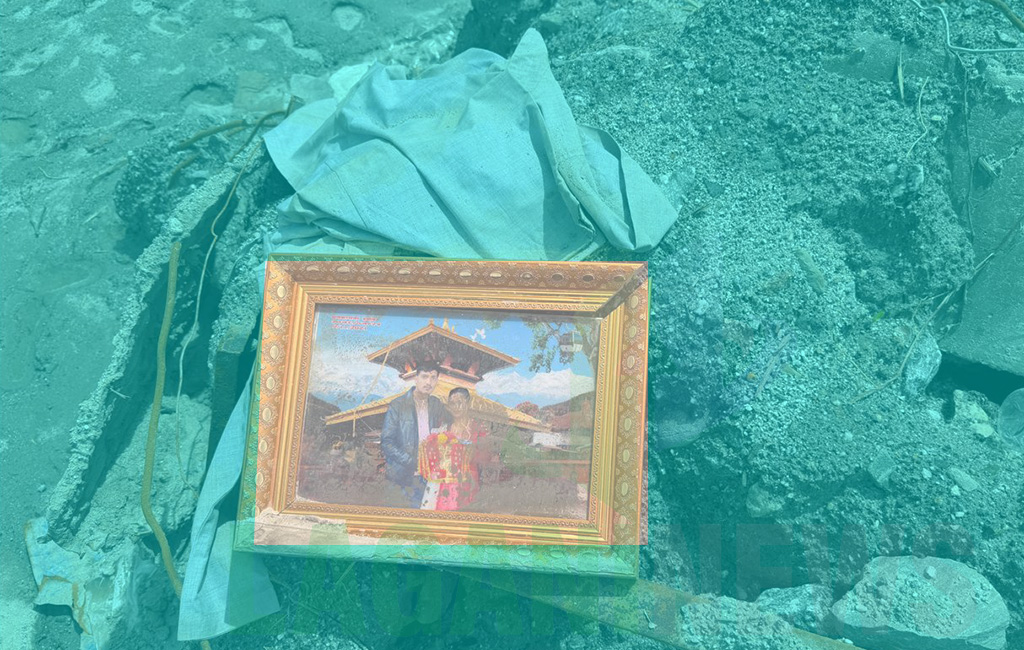
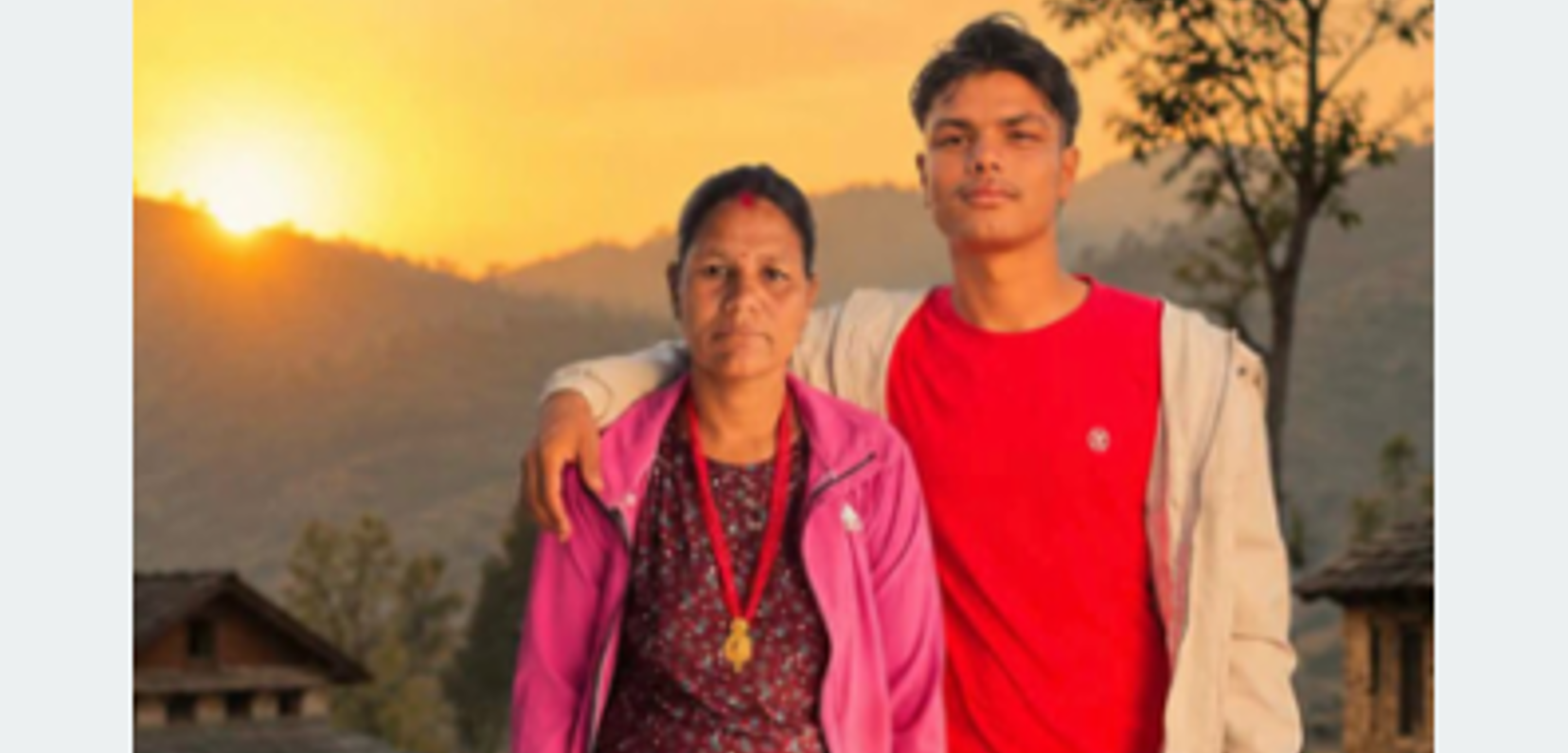
A photograph has been found on the banks of the Trishuli River at Devighat, Nuwakot. It shows a couple who visited Manakamana on November 9, 2021. The photograph was recovered partially buried in sand and stone following the floods of August 10.
It is not known whether the couple survived.
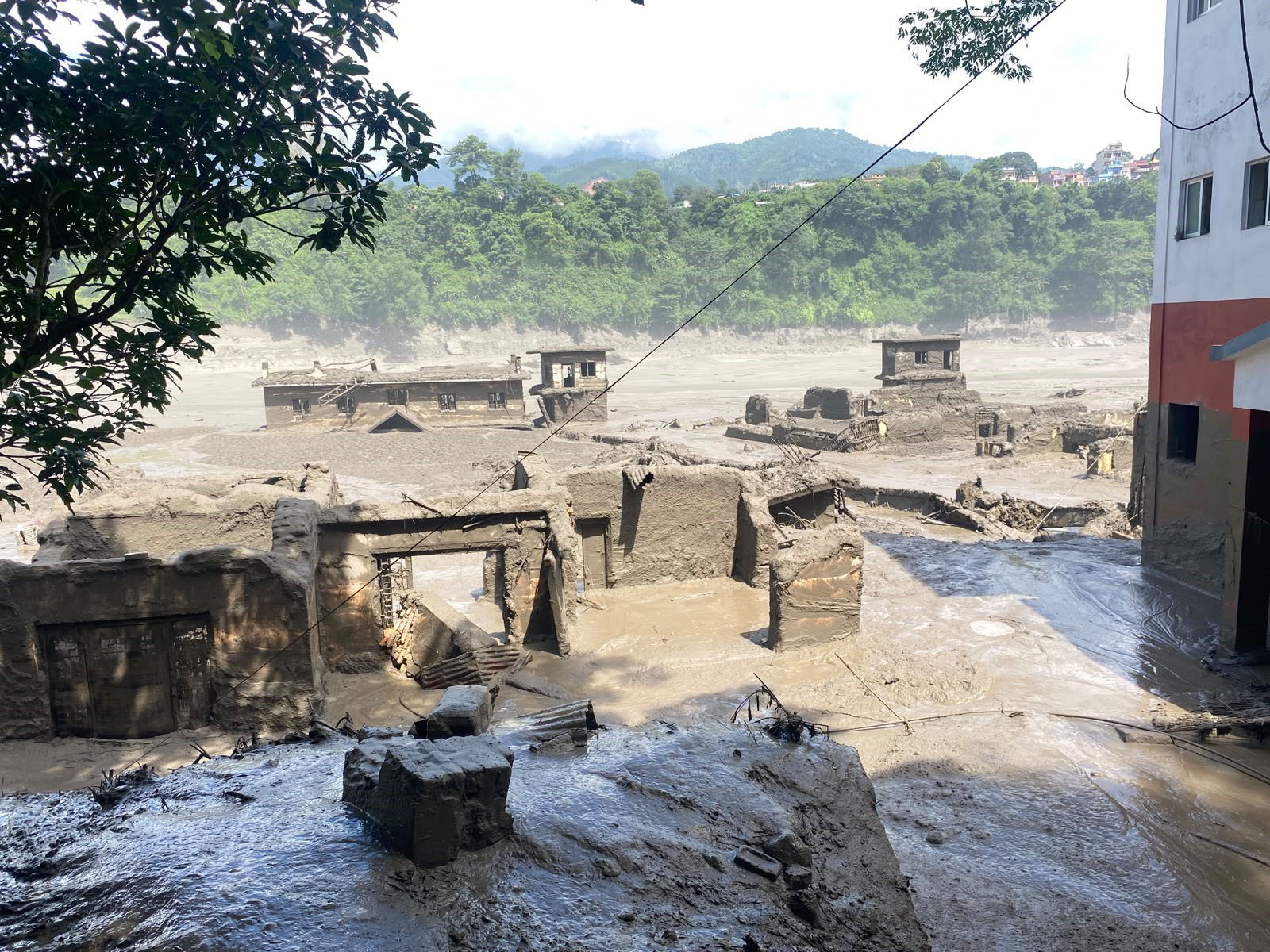
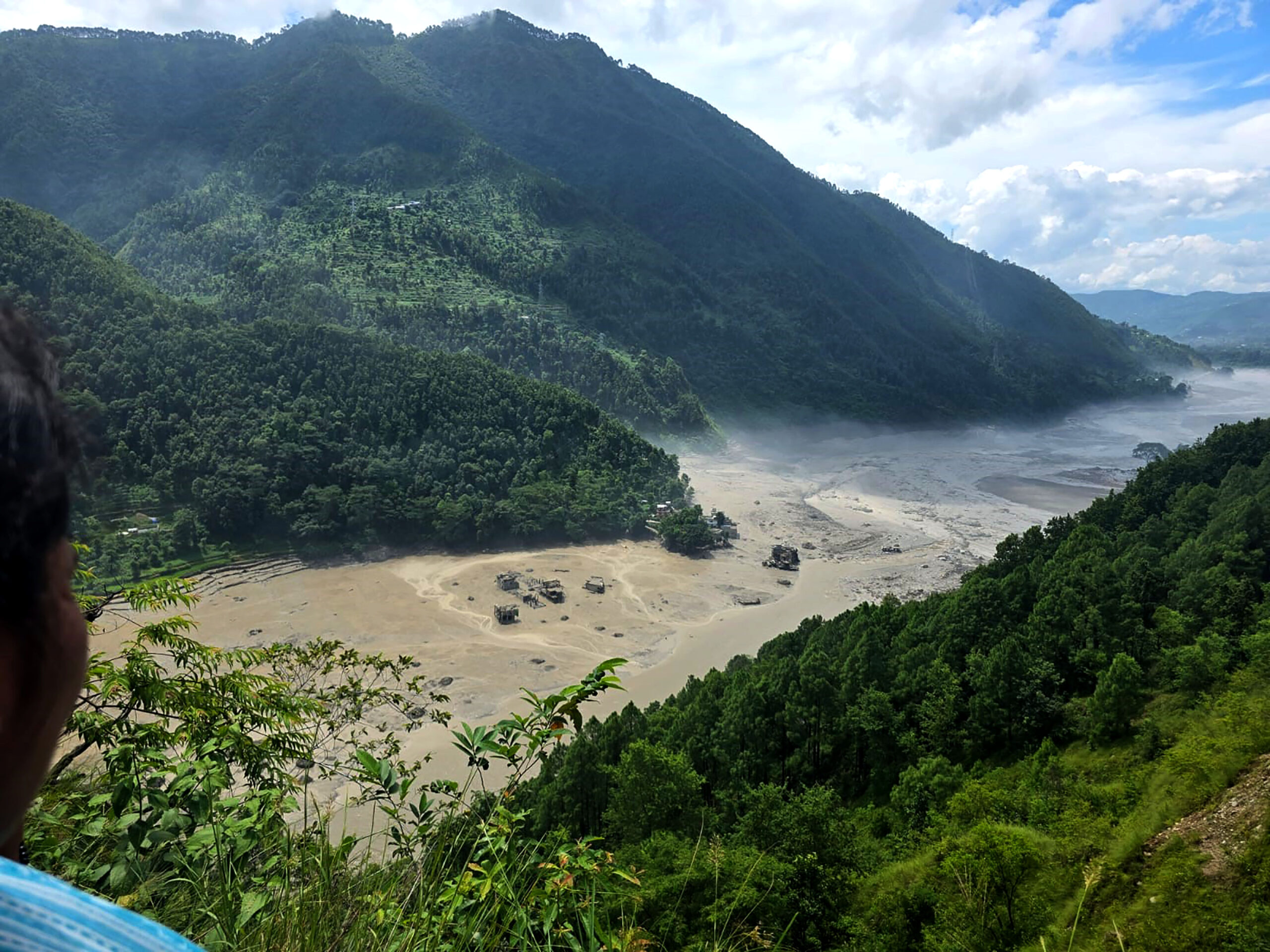
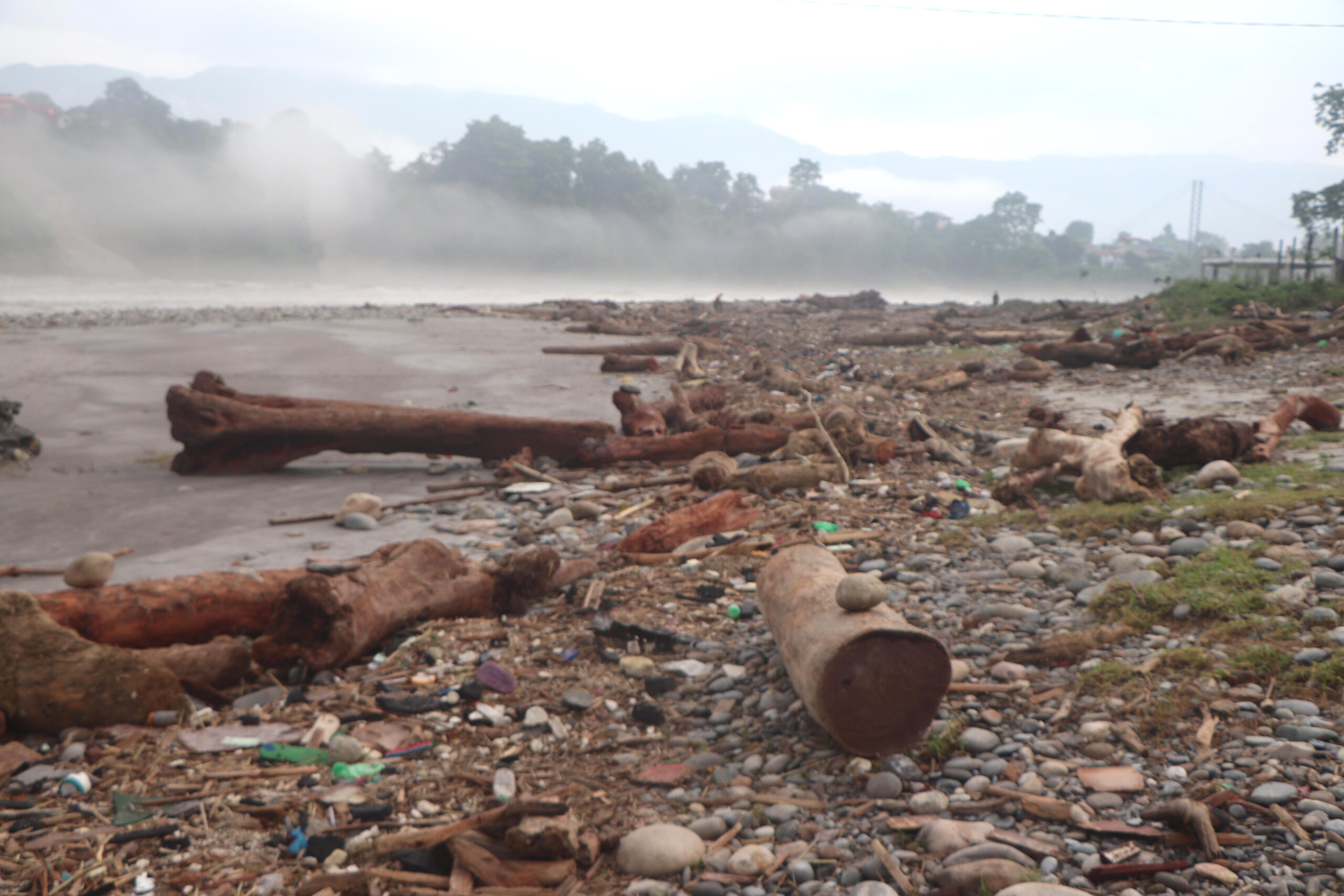
Nine days after the floods, many settlements along the Trishuli have not returned to normal. Communication across the river remains cut off in several areas. Routes that previously took five minutes to cross now take up to five hours; in some places, roads no longer exist. Structures that once stood have been replaced by deposits of sand and stone. One resident said his friend’s house had stood at a location that is now unrecognizable.
Officials, including the Prime Minister and cabinet ministers, have stated that relief and rescue operations are ongoing. Images of helicopters and relief distribution have circulated widely on social media. However, accounts from the field indicate uneven delivery: in some areas, relief materials dispatched from Kathmandu have not yet arrived. Several villages in Rasuwa and Nuwakot remain difficult to access after bridges were destroyed. Local reports suggest that more people are currently searching for missing relatives than seeking relief supplies.
Crowds searching for missing family members continue to gather at Teaching Hospital and at the Nepal Army battalion in Bidur. Two men from Makwanpur travelled by scooter to Rasuwa to search for relatives; upon reaching the village, they had not located them and did not know whether they were alive. Road access to the area remains uncertain.
A week after the floods, some families have begun performing funeral rites without recovered remains, using symbolic effigies made of kush grass in place of a body. This practice has become more common where neither survivors nor remains have been found.
These conditions have drawn renewed attention to the disproportionate impact of climate change on low-emission countries. Nepal accounts for an estimated 0.3 percent of global carbon emissions. The country has limited heavy industry, relies substantially on hydropower, and has one of the lowest per capita emission rates in the world. It nonetheless ranks among the countries most exposed to flooding, landslides, glacial lake outburst floods, drought, and irregular rainfall patterns.
The photograph recovered at Trishuli is one instance among many reported losses following the floods. Analysts and officials have pointed to such events as part of a broader pattern in which countries with minimal historical emissions face significant exposure to climate-related disasters largely attributed to emissions from larger industrialized economies.









प्रतिक्रिया दिनुहोस्