

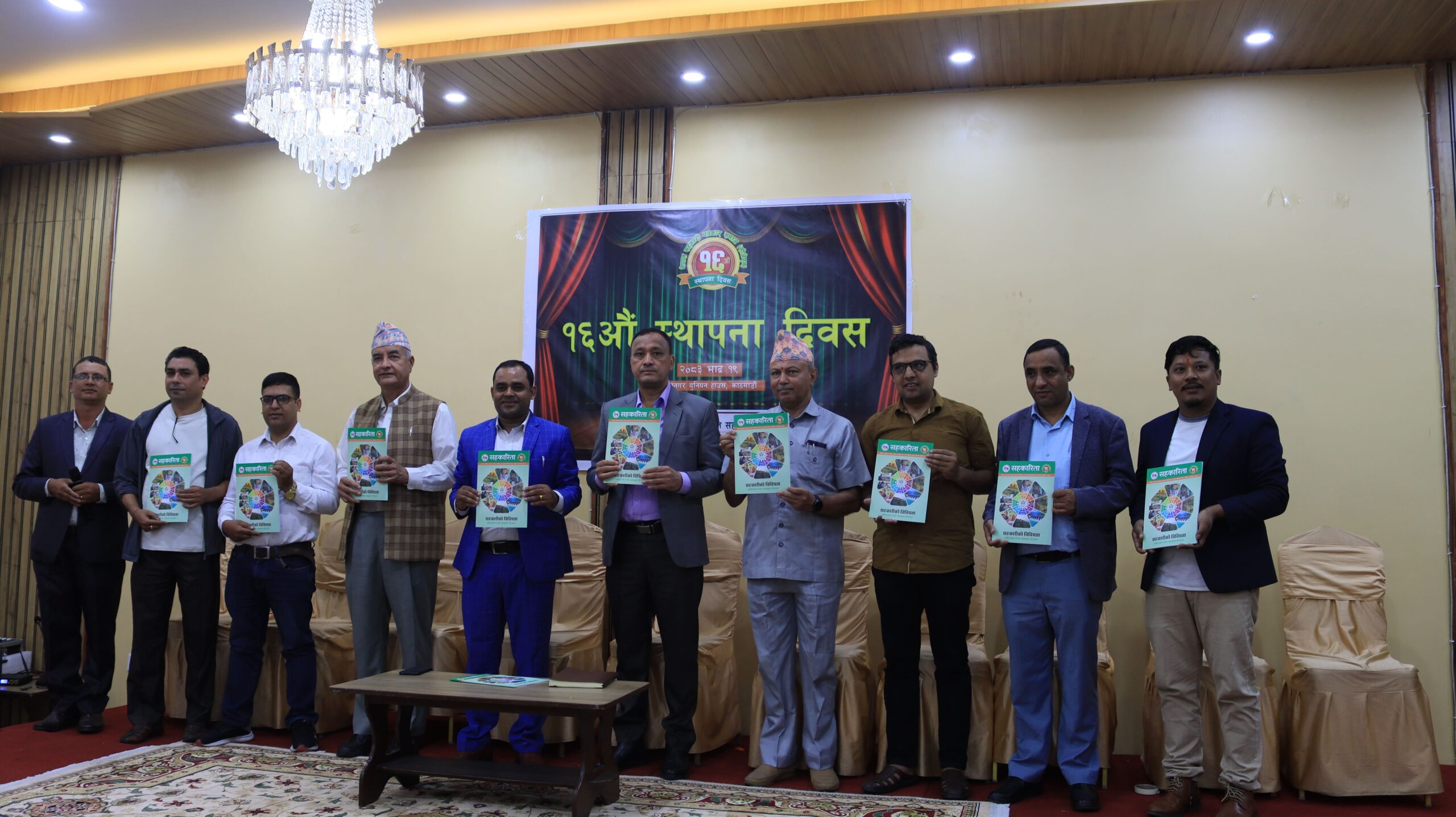
Kathmandu. Madan Bhujel, secretary of the Ministry of Land Management, Cooperatives and Poverty Alleviation, has said that the ministry is preparing the draft of two separate acts related to cooperatives.
Speaking at a programme organized on the occasion of the 16th establishment day of the Society of Cooperative Journalists (CJN) here today, he said the need of formulating new acts to address the policy-level confusion, duplication of regulation and disputes regarding jurisdiction in the cooperative sector.
The process of formulating two new acts, the existing Cooperative Act and the Act to operate the Cooperative Regulatory Authority, has been forwarded.
Secretary Bhujel said that there has been some confusion and duplication in the cooperative regulation and coordination after the distribution of powers in the federal, provincial and local level governments. He also expressed the belief that the new act would help in removing this confusion.
He also expressed the view that there was confusion between the Office of the Registrar of Cooperatives (erstwhile Department of Cooperatives) and the National Cooperative Regulatory Authority regarding jurisdiction.
He said that although the definition of these two bodies has been revised in the recent amendment of the Cooperative Act, there is still confusion about the role. “There is confusion whether the regulation of savings and credit cooperatives will be done by the authority or by the office of the Registrar of Cooperatives. Because as soon as the cooperative is mentioned, it starts with savings and loans. Therefore, the new Act will make it more clear to remove this duplication,” he said.
Stating that the country’s prosperity was impossible without cooperatives, he said that cooperatives have a huge contribution to rural economy, capital collection, investment and production.
He said, “The prosperity of the nation is not possible without cooperatives. It has a great contribution to the country’s capital collection, investment, production, empowerment, awareness and rural economy. There is no alternative to strengthening it.” ’
Secretary Bhujel said that the government had to play a controlling role due to the serious weakness of some cooperatives and their directors.
He said, “Some cooperatives became problematic. They went beyond their principles and there was a serious weakness of the directors. This led to mistrust. The main problem that the ministry is facing on a daily basis is how to return the savings of the savers and how to raise the troubled cooperatives. ’
Secretary Bhujel assured that adequate discussion and consultation would be held with the stakeholders of the cooperative sector while formulating the new Act.
On the occasion, he urged the journalists to point out the anomalies, anomalies and weaknesses of the government in a transparent manner.
On the occasion, Vice President of National Cooperative Federation D.B. Basnet said that serious discussions were necessary between the federation, central union, ministry, department and cooperative journalists to resolve the problems seen in the cooperative sector.
He was of the view that a clear action plan should be prepared by holding common discussion among the stakeholders regarding the present situation, problems and reforms of the cooperative sector.
Stating that the CJN has been continuously informing about the positive and negative aspects of the cooperative movement, the journalists’ alertness has helped significantly to strengthen the cooperative movement.
Vice-chairperson Basnet said that preparations are being made to organize a one-day discussion to identify where the cooperative movement should work, what issues it should advocate for with the government and what role of which agency.
He stressed that concrete initiatives should be taken to solve the problems of the cooperative sector should not be limited to speeches and statements. He said that the federation, NEFSCUN, ministries and departments should clarify their roles and move forward.
On the occasion, Chairman of Nepal Federation of Savings and Credit Central Cooperative Unions (NEFSCUN) Chandra Prasad Dhakal said that the main agenda of promotion of cooperatives could be overshadowed if only priority was given to the return of savings and loan recovery of the problematic cooperatives.
He said that along with the work of repayment of savings and loan recovery, the issue of cooperative promotion should also be taken forward equally. He said that the current problem has arisen because the previous governments did not pay enough attention to the cooperative sector.
Reminding that the constitution has accepted the cooperative sector as the third pillar of national economy, Dhakal expressed concern over the narrowing of scope of cooperative movement in recent period.
He stressed that while action should be taken against bad cooperatives, cooperatives doing good work should be protected and encouraged. He said that the entire cooperative movement should not be weakened due to some institutions with problems.
He also expressed dissatisfaction over the decision to reduce the number of branch offices of NEFSCUN. He claimed that this could affect the services provided to the member organizations and the general public.
On the occasion, Bagmati Province Savings and Credit Cooperatives Association (Bagmati Proscun) President Uddhav Sapkota complained that the registrar’s office had issued directives to the cooperatives to immediately adjust the savings and loan transactions.
According to him, the confusion has arisen when the Registrar’s Office issued unnecessary directives when the Cooperative Act has given a time limit of three years.
He said, “When such a directive comes with a time limit of three years, how will the member institutions come to ask for savings tomorrow? This has created confusion and confusion in the regular savings and share purchase of the members.” ’
On the occasion, Sapkota said that cooperatives have played a significant role in improving the economic condition of farmers and laborers who are out of the banking access in Nepal.
Sapkota demanded that the right to manage the liquidity of the cooperative associations should be retained in the new Act. He said that the associations should be given the option to register the bank or open another cooperative bank with full banking facilities.
Blood Donation Program
The CJN has also organized a blood donation program on the occasion of the establishment day in view of the recent natural disaster in the country.
Out of them, 28 blood donors have donated blood. President Arjun Khatiwada said that the blood donation program has been organized with the aim of supporting humanitarian work.
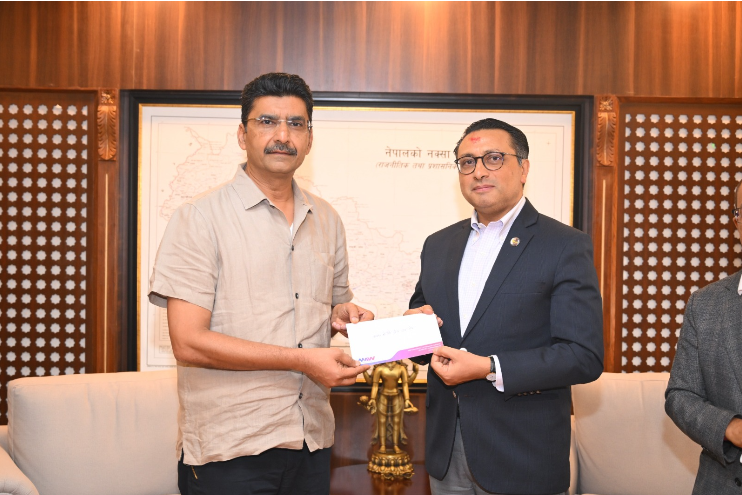
The CJN has decided to contribute to the Prime Minister Natural Disaster Relief Fund, expressing sorrow over the loss of lives and property due to flooded Bhotekoshi River in Rasuwa, Nuwakot and Dhading districts.
The CJN has decided to postpone the National Cooperative Journalism Award-2083 this year and deposit the amount for the award in the fund. It has also decided to add the amount collected from the CJN working committee, advisors and members and contribute it to the Prime Minister’s Relief Fund through the Ministry of Cooperatives.
The society also released the CJN Souvenir 2083 published on the occasion of its establishment day.












प्रतिक्रिया दिनुहोस्