


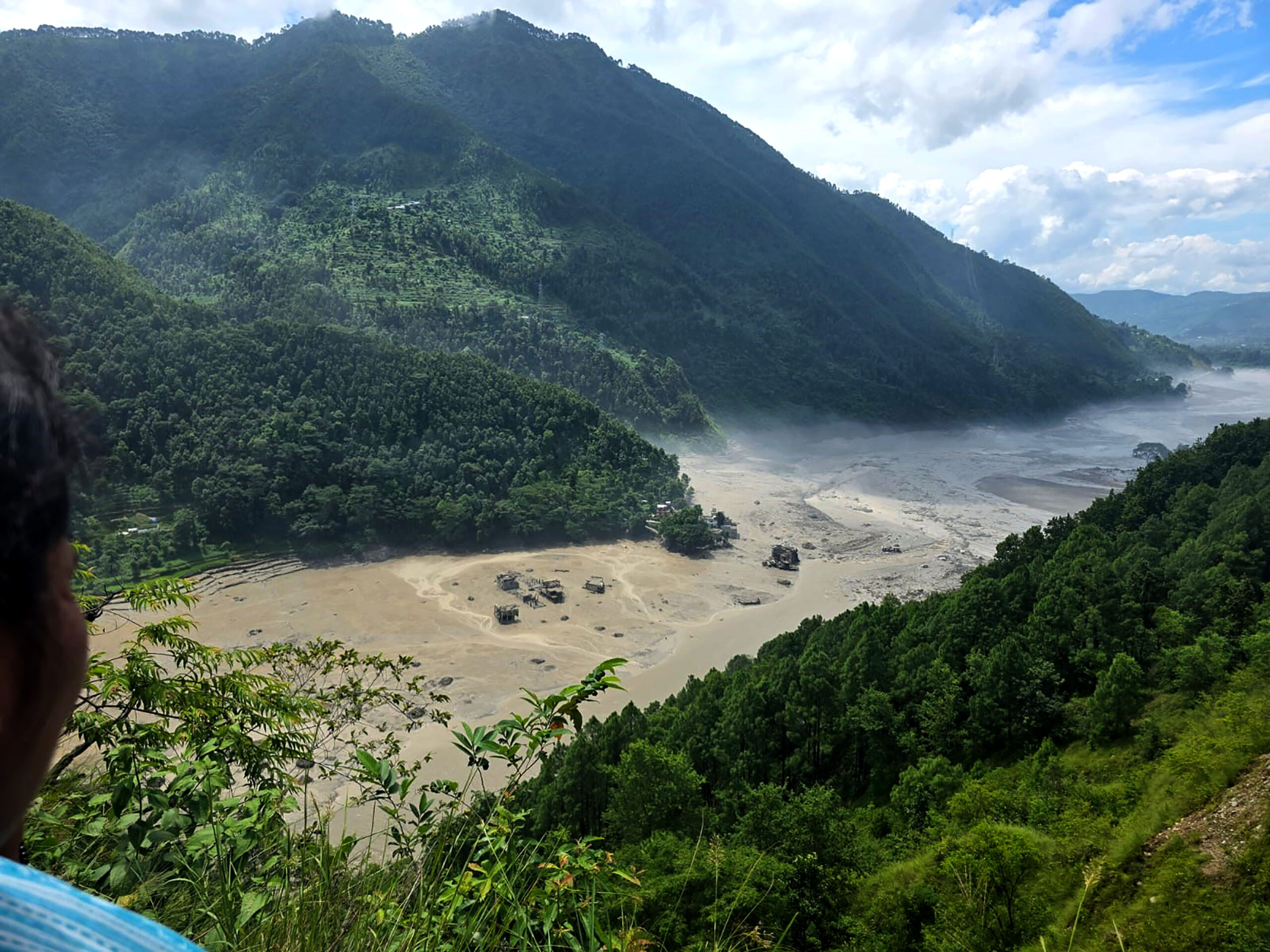
Kathmandu. The Ministry of Energy, Water Resources and Irrigation has initiated a study to find scientific basis and evidence of the devastating floods in the Bhotekoshi River in Rasuwa.
The Ministry of Energy has stated that a scientific study will be conducted to find out the origin of the catastrophic floods and the associated mountain soil hazards, the occurrences and the possible role of climate change.
According to spokesperson Mohan Kumar Shakya, the ministry is forming a committee comprising experts on Monday to carry out the scientific study.
Spokesperson Shakya said that the decision was taken as per the proposal of the secretariat of the Water and Energy Commission to carry out the scientific study to carry out the study not only as a normal flood or heavy rain but as a potential ‘series disaster’ that has developed in the high mountainous region due to the interlinking of various geographical, glacial, hydrological and other risks.
In the preliminary study of the Secretariat of the Water and Energy Commission, there is no scientific evidence to adequately verify where the Rasuwa incident originated, the physical process by which the disaster started and how those processes spread to the lower areas through the Bhotekoshi-Lhende river system. Therefore, the Water and Energy Commission has concluded that there is a need to scientifically reconstruct all the events before concluding climate change as the cause of the event.
According to the ministry, the study will be conducted in three phases. In the first phase, the timeline of events and the geographical damage will be studied from the high Himalayan region to the Bhotekoshi/Lhende river system and the coastal area. In this phase, the interrelationship between glaciers, rocks and soil slope instability, landslides, mudslides, river flows and floods will be studied.
In the second phase, the immediate and underlying physical causes of the event will be identified. In the third and critical phase, the extent to which anthropogenic climate change has affected the probability, intensity or preparedness of these risks will be scientifically assessed.
Earlier, on September 26-28, 2024, the incidents of heavy rainfall, floods and landslides in Nepal were assessed by a study by the international scientific study group ‘World Weather Attribution’ as human-caused effects related to climate change. The Ministry of Energy has come to the conclusion that the Rasuwa-Bhotekoshi incident could be of a different nature, so the study should be done on the basis of scientific evidence rather than direct comparison or predetermined conclusions.
The proposed study will involve experts in glaciology and glaciology, geology, geology and landslide science, hydrology and river hydrology, meteorology and climate science, remote sensing, disaster risk management and climate change factor analysis.
Bearing in mind the trans-border nature of the Bhotekoshi/Lhende river system, it has been proposed to incorporate the scientific and hydrological information available from the Chinese side in the study and develop necessary scientific cooperation and data exchange mechanism.
According to the ministry, the proposed high-level scientific committee will conduct an on-site visit to the possible source of the disaster. During the site inspection, detailed photographs and video records will be prepared and drones and satellite observations will also be used as per the requirement.
The ministry has mandated the expert committee to give two months to carry out the study.













प्रतिक्रिया दिनुहोस्