


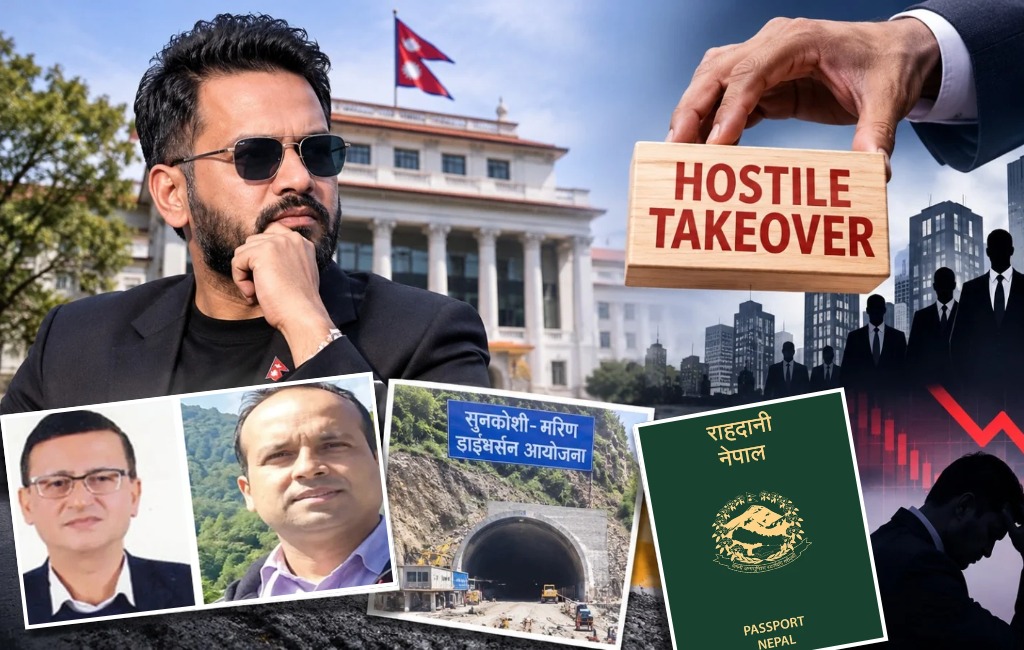
Kathmandu. Gautam Adani, a businessman with close ties to the Narendra Modi-led government in India, has expanded his business empire in the last decade, from the media to the airports and cement industries. The Adani Group also dramatically took control of NDTV, which is considered critical of the Modi government. The incident sparked a widespread debate about the relationship between political power and business ownership in India.
In Nepal too, the recent government activities have raised similar apprehensions among businessmen and investors. The manner in which high-ranking officials are being detained in government contract disputes, interference in administrative decisions by the Prime Minister’s Office and arresting businessmen has raised questions about the ownership of the private sector and the security of investment.
Investors have started expressing concern that the government’s approach in the Sunkoshi-Marin diversion project and e-passport contract dispute may create a situation of dramatic change in the ownership of a business enterprise in the future.
Contract cancelled by raising DG in kidnapping style
A few days ago, the police detained the Director General of the Irrigation Department Rajauria and Project Director Krishna Prasad Rijal in connection with the contract related to the Sunkoshi-Marin Diversion Project. Questions have been raised on the style of the government’s decision-making process by saying that they were taken to the Prime Minister’s Office in a kidnapping style.
After this incident, the contract dispute of the project has again come into the limelight. The contract of Raman Patel-Raman JV, which is said to have family ties with Prime Minister Balendra Shah, was cancelled by the government formed after the Genji movement.
At that time, Balen Shah was the mayor of Kathmandu Metropolitan City. However, people close to Ghising say that Kulman Ghising, who had influence in the then government and was holding the responsibility of the Ministry of Energy and Physical Planning, was pressured by Balen’s secretariat not to break the contract.
Following Ghising’s directive, the project terminated the contract agreement with Patel-Raman JV on November 22, 2082.
The Patel-Raman JV, which started construction in January 2009, was awarded the contract to complete the project by July 2084. However, the then government terminated the contract saying that the physical progress of the project was only 10 percent when the contract period was about 61 percent over.
It was claimed that the contract was terminated for not showing any interest in increasing the progress of the project and not paying attention to the issue of improvement in the works as per the provisions of the agreement.
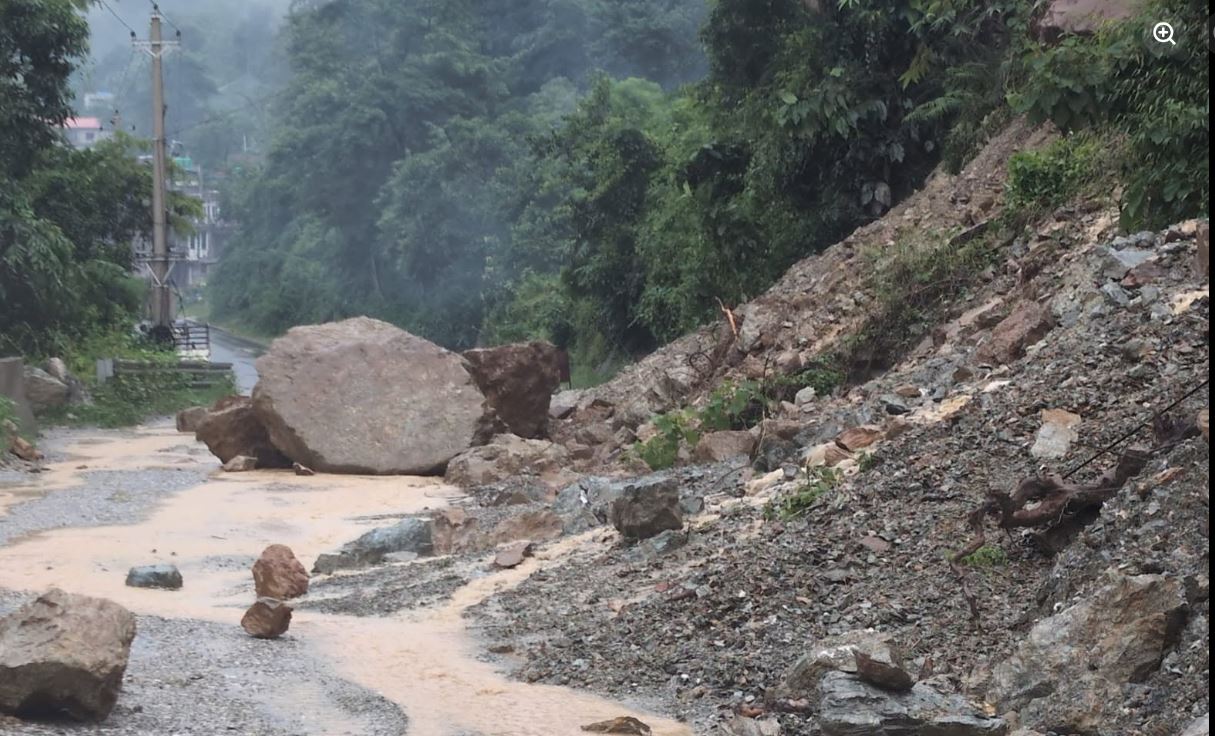
The project is under construction in a way to divert water from the Sunkoshi River to Marin rivulet of Sindhuli through a 13.1-kilometer-long tunnel.
After the cancellation of the contract, the bank guarantees worth Rs 3.60 billion were forfeited, including Rs 2.4 billion as performance guarantee and Rs 1.20 billion as upfront payment.
The company had been awarded the contract for the project at a cost of Rs 14.08 billion. At the time of the cancellation of the contract, the government had paid Rs 2.14 billion to the construction company, or about 15 percent of the total contract amount.
After the cancellation of the contract, Raman Mahato of Raman Construction wrote a status on social media thanking everyone. In this status, his well-wishers also congratulated him for breaking the contract of Sunkoshi-Marin. Now the status is not in a position to be seen publicly.
PMO’s interference in e-passport contract {{TAG_OPEN_strong_64 TAG_CLOSE_strong_64}}
Earlier, there was a dispute over the interference of the Prime Minister’s Office in government contracts and administrative decisions.
The French company IDEMIA was defeated in the international bidding process for the supply of e-passports and data management. The company had been printing passports in Nepal since 2021.
German companies Veridos and Muhlbauer won contracts worth about 7.65 billion rupees, which were the lowest bidders in international competition.
However, Prime Minister Balendra Shah’s secretariat had said that the contract awarded to the German company should be cancelled and given to the French company IDEMIA.
In this case, the summons of Prem Rai, the chief of the Commission for the Investigation of Abuse of Authority, and the case filed against the then Director General of the Department of Passports, Tirtha Raj Aryal, and other officials are also seen as examples of government interference.
In both the Sunkoshi-Marin and e-passport cases, the concerned officials are said to have worked in consultation with the departmental ministers. The contract for the Sunkoshi-Marin project was cancelled when Energy and Irrigation Minister Biraj Bhakta Shrestha was not in Nepal, while the dispute over the e-passport arose amid the disagreement of Foreign Minister Shishir Khanal.
Finance Minister’s policies revoked from PM’s status
Regarding the working style of Prime Minister Shah, Finance Minister Dr. Swarnim Wagle has also been controversial in some policies brought through the budget.
The Prime Minister’s decision to remove the Finance Minister’s policy on equitable fees in health and education on the basis of a status written on social media had raised questions about the government’s decision-making. Later, the government removed these policies through a formal decision.
Entrepreneurs say that such activities of the government have created an atmosphere of fear in the private sector and business establishments.
‘Risk of being pressured to sell shares of a businessman’s company to another’
Investors are apprehensive that the government’s latest working style may affect the ownership of business enterprises.
“Now there is a danger that there will be pressure to pick up a businessman and sell his company’s shares to another,” said an investor.
According to businessmen, if the government continues in this way, the share ownership of some large business enterprises may increase dramatically and the possibility of it being transferred to another group.
If such a situation arises, it will raise serious questions on the investment security, business freedom and corporate governance of the private sector of Nepal.
“No one has seen Balen’s Adani in India like Adani so far,” said a businessman, “In a few days, it will be clear which businessmen have been targeted by the prime minister and who will benefit.” ’
If the government does not ensure transparency, the rule of law and business freedom, then the relationship between political forces and private business can pose new risks. The question that investors are now raising is this: Is there a situation where the ownership of a business enterprise will change on the basis of criticism of the government or administrative disputes?









प्रतिक्रिया दिनुहोस्