

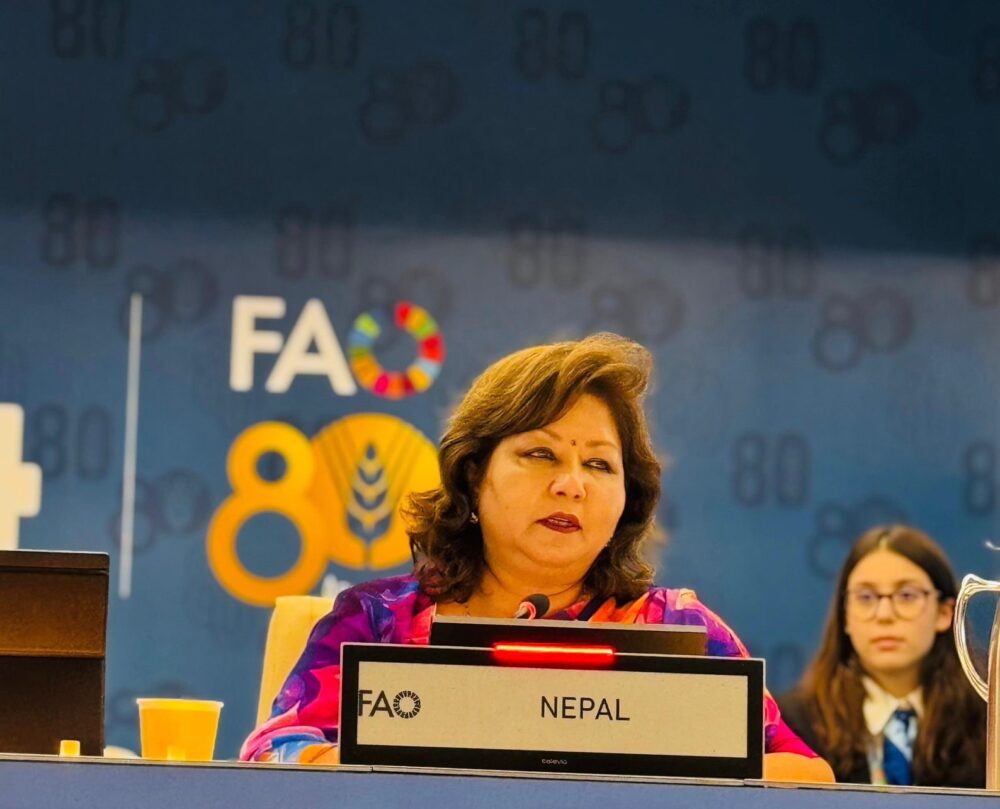
Kathmandu. On the occasion, Minister for Foreign Affairs Dr Arju Rana Deuba stressed the need for stronger cooperation among the affected countries to mitigate climate risks. Addressing a high-level session on least developed countries and landlocked and small island nations organized on the sidelines of the 44th General Assembly of the United Nations Food and Agriculture Organization in Rome, Italy today, she said there should be no further delay in stronger cooperation in reducing climate risks.
“The least developed, landlocked and small island nations are at great risk of climate change. It is also badly affecting agricultural production and livelihoods in those countries. Nepal has recently concluded the Sagarmatha Dialogue to cooperate with the world through its agenda. In the days to come, cooperation with a common agenda is necessary among all nations. ‘
Minister Deuba also stressed the need for climate adaptation financial assistance, early warning system and development of rural infrastructure for the Himalayan countries. International investment and capacity building, including universal and inclusive measures, are essential to combat climate risks, she said.
“Only technology, collaboration and solidarity can bridge the gap between possibilities and achievements. Nepal has always called for promoting south-south and north-south cooperation, technology transfer, market expansion and access to financial resources. ‘
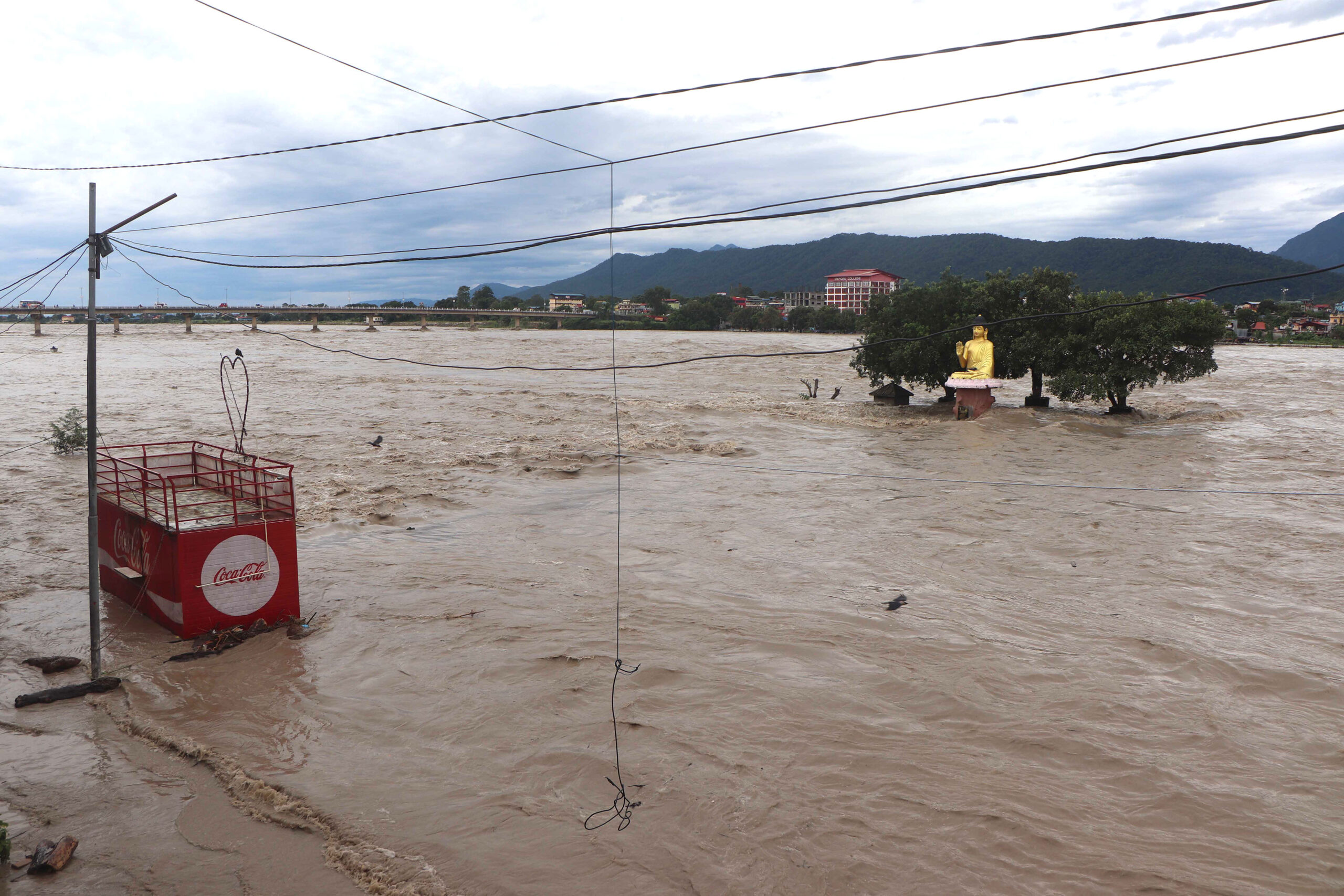
She said these countries, including Nepal, are now facing common crises like food insecurity, malnutrition and climate change, and it is also jeopardizing the achievements. Minister Rana said Nepal was facing multi-dimensional challenges such as climate-related disasters, poor infrastructure, loss of biodiversity and limited access to technology and finance.
She said the FAO’s “four better” such as better yields, better nutrition, better environment and better living can play an important role in transforming the agricultural system. Minister Rana shared that Nepal is modernising climate-friendly farming system, high-value crops in hilly areas and local innovation and agriculture under good production and promoting nutritious food targeted at special communities under good nutrition.
Similarly, under the good environment, Nepal has given priority to the conservation of re-breeding agriculture, soil and water and biodiversity and has improved the livelihood of small farmers and marginalized communities, including women, youth, by expanding access to entrepreneurship, social security, rural infrastructure and services towards a better life.
Minister Rana said that more than 60 percent of the human resources are involved in the agriculture sector in Nepal and agriculture contributes 23 percent to the national production.
















प्रतिक्रिया दिनुहोस्