


Kathmandu. Kathmandu: Nepal is set to receive a grant of around Rs 5 billion to reduce the level of four glacial lakes at risk.
The 42nd board meeting of the Green Climate Fund (GSF) held in Port Morrisby, the capital of Papua New Guinea, today approved the project titled ‘Protecting wealth from the risk of climate-related landslides and glacial lake eruptions in mountainous watersheds’ presented by Nepal.
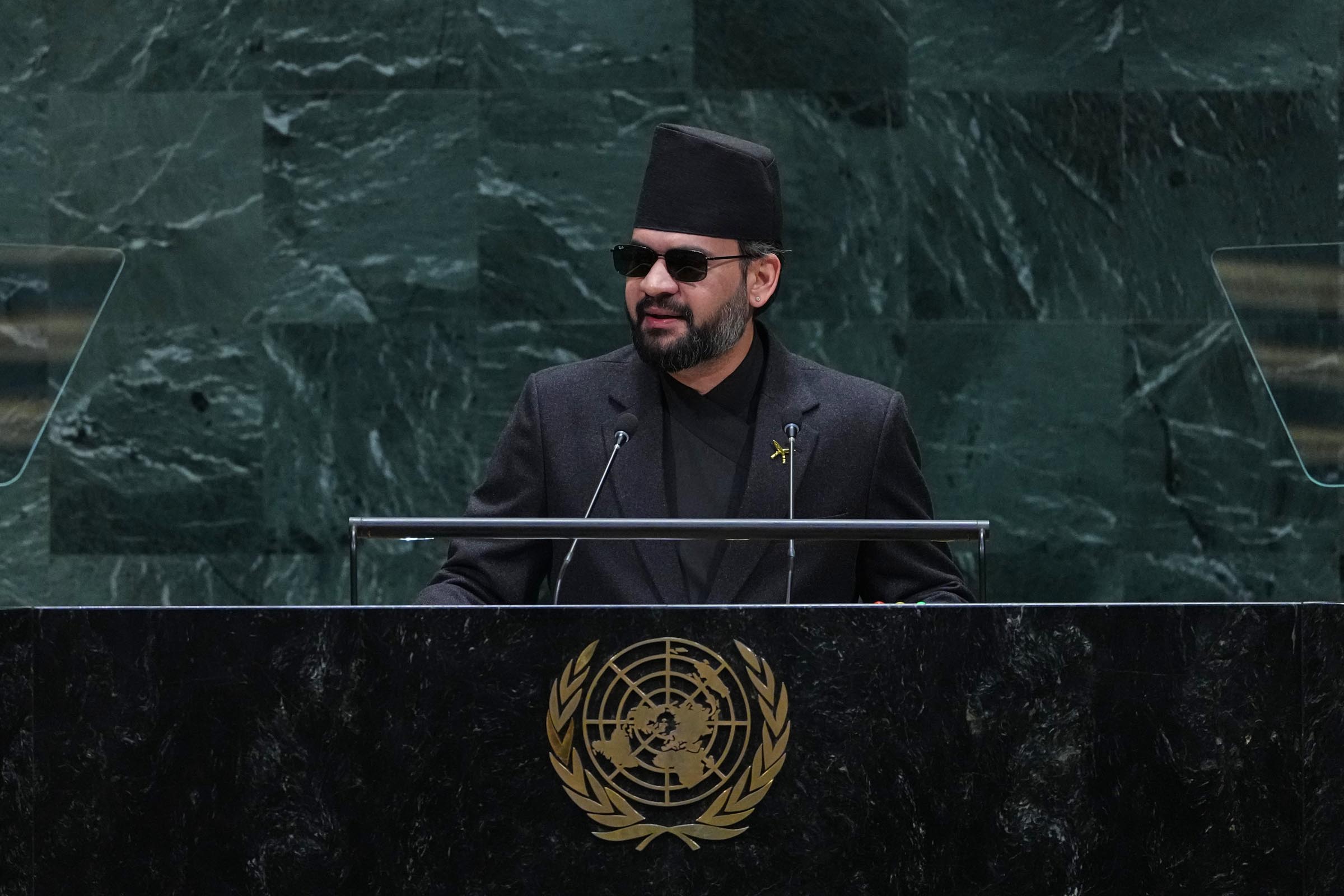
On behalf of the Group of Least Developed Countries (LDC), GCF’s alternative board member Dr. Dipu Moni was present in Port Morisby to participate in the meeting. Sindhu Prasad Dhungana confirmed that a grant of USD 36.2 million (about Rs 5 billion) would be received from the Green Climate Fund for the project.
“The board, which has 12 members from developed countries and 12 from developing countries, has a total of 24 members and some proposals were approved only after extensive discussion among the board members. However, Nepal’s proposal was unanimously approved,” he said, adding, “This clearly shows that the fund and the board have membership towards Nepal.” Dozens of more such projects are needed at the risk of glacial lake explosions, which have been seriously placed in Nepal’s National Adaptation Plan. ‘
Dhungana said that the implementation of the project, which has been prepared in about seven years, can be expected to prove to be a model for ways to protect Nepal from the risk of glacial lake explosions. According to him, a total of 19 proposals were presented in the 42nd meeting of the Fund, out of which 17 proposals including Nepal have been approved.
Similarly, the Government of Nepal, The United Nations Development Programme (UNDP) and the Independent Energy Producers Association have pledged to co-invest $13.8 million in the project. The project has been submitted by UNDP as an affiliated body of the Fund on behalf of the Government of Nepal.
UNDP spokesman Kyako Yokosuka said the seven-year project would be implemented in partnership with the United Nations Development Programme led by the Department of Hydrology and Meteorology. “This will directly benefit about 2.2 million people living in the Koshi and Gandaki river systems,” he said, adding, “Under this project, there is a plan to reduce the level of four high-risk glacial lakes, expand the early warning system, conserve more than 150 hectares of the river banks through natural resources including forest plantation, and increase disaster preparedness and climate tolerance.” Earlier, Nepal had successfully averted a possible disaster by reducing the water level in The Imja Lake of Solukhumbu by controlling it by 3.4 meters.
A study report titled ‘Inventory of Glacier Lakes in the Koshi, Gandaki and Karnali River Basins of Nepal and Tibet, China’ by the International Centre for Integrated Mountain Development (ICIMOD) and UNDP has said that 47 glacial lakes located in Nepal, India and China may burst. According to the study conducted jointly by UNDP and ICIMOD, 47 glacial lakes in Nepal, India and China have reached the danger level. The report states that these glacial lakes can burst at any time and Nepal will have to suffer huge loss of life and property.
Of these, 25 are in China, 21 in Nepal and one in India. Some of the three are considered to be very sensitive, which is likely to cause large-scale loss of life and property, the study said. According to the report, Nepal could suffer financial losses of more than billions of dollars and cause huge human losses if the glacial lake bursts at risk. The report has also suggested to formulate necessary preparatory programs to minimize the damage.
In such a situation, it is believed that this project will prove to be a major milestone in Nepal’s climate adaptation efforts. Director General of the Department of Hydrology and Meteorology, KamalRam Joshi, said that gcf’s grant would help in risk management at a time when 21 glacial lakes at risk in Nepal could burst at any time and pose a great risk.











प्रतिक्रिया दिनुहोस्