

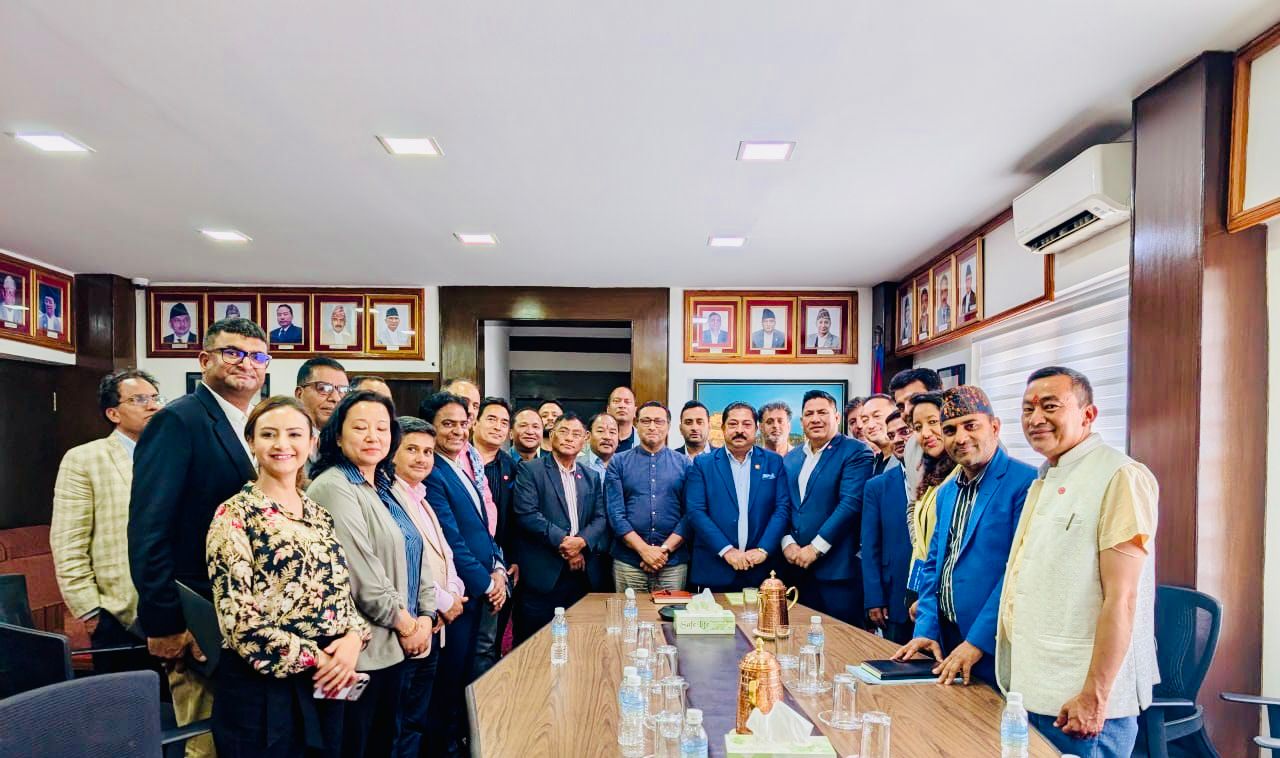
Kathmandu. KATHMANDU: The Federation of Nepalese Chambers of Commerce and Industry (FNCCI) has suggested the Finance Minister to bring the budget for the fiscal year 2083/84 aimed at economic transformation.
Finance Minister Dr. Presenting the suggestions of the budget to Swarnim Wagle, the FNCCI said that the upcoming budget is not just an annual document but is coming at a special juncture in the economic history of Nepal. The federation has suggested policy reforms in the budget to lift the deteriorating business morale, create demand in the market, attract stalled investment and create employment opportunities.
Presenting the suggestion before the Finance Minister, FNCCI President Anjan Shrestha said that the common national framework along with six pillars, 60 initiatives recently unveiled by the FNCCI would support the government’s policy and programmes. “The tendency to change tax policy every year has eroded investor confidence. The private sector needs to end the unsustainable practice of the Salbasali Finance Act, implement the ‘Single Revenue Code’ with interpretation and the formation of an empowered Board of Revenue. At the same time, there needs to be a clear guarantee that tax law will not be retrospective,” he said.
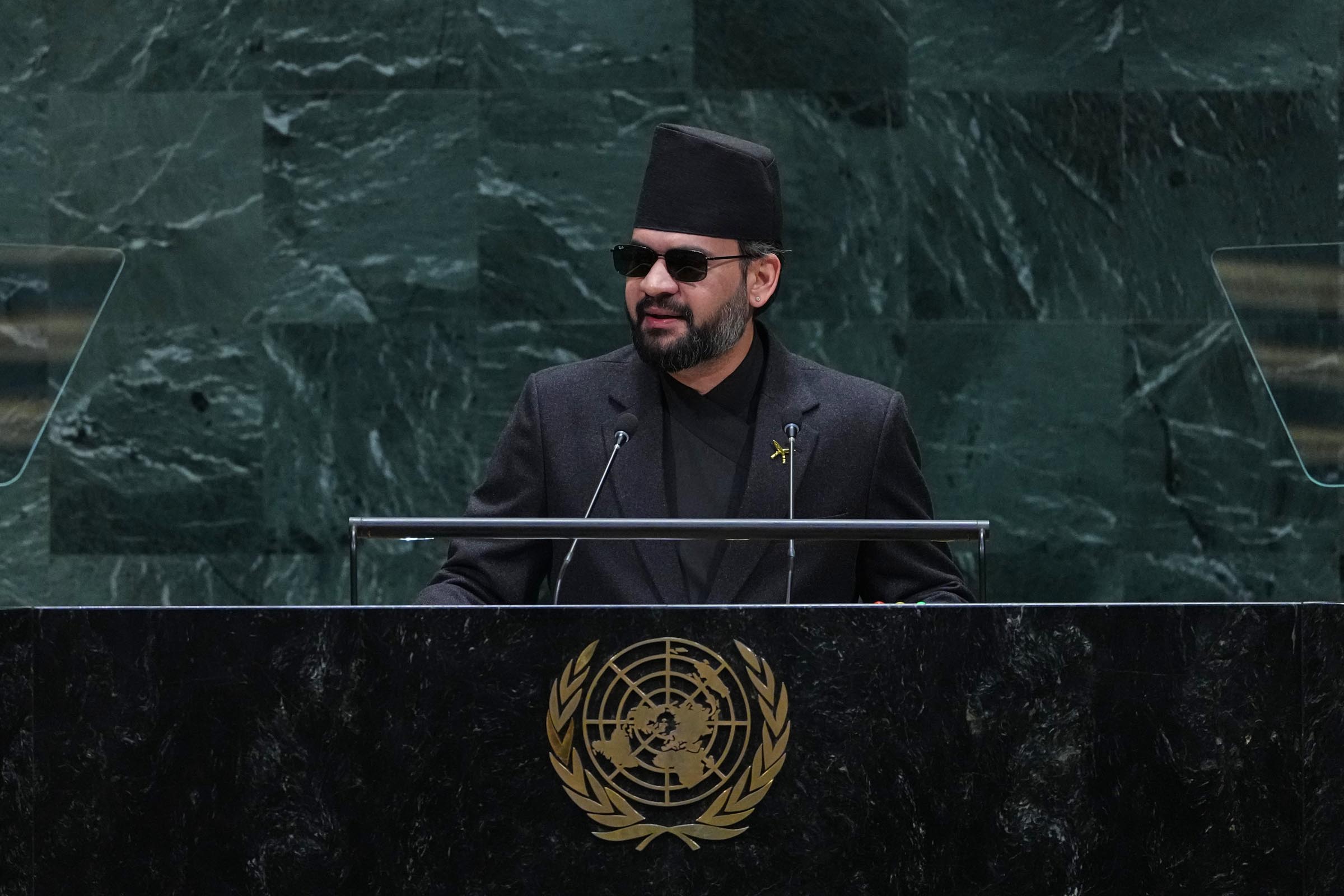
Finance Minister Dr. Swarnim Wagle said that the year of transformation will come with structural reforms in the economy. He also made it clear that the government was committed to moving ahead considering the private sector as the major partner, urging the FNCCI delegation to remain optimistic.
“We have brought about a change in politics. Now we have to change the economy. Since this is the first full budget of the government with a new mandate, it will have to break the old traditional structure. “The government is sensitive towards the low morale of the private sector and the fall in demand in the market. The upcoming budget will lay the foundation for transformation in the model of the economy. Not everything will be done in this fiscal year, but we will be able to gradually improve the economy within five years. I urge the private sector to remain optimistic. ”
Shrestha said that the budget should revive the country’s economy at a time when the industrial production capacity of the country has been limited to 40 per cent, the construction industry has reached a difficult turning point in its history and the contribution of the private sector to the GDP has fallen from 28 per cent to 16 per cent in the last four years. The FNCCI also drew the attention of the government towards the fact that in the past two decades, Nepal’s average economic growth rate was only 4 per cent but the tax growth rate has reached 11 per cent and revenue as a proportion of GDP has crossed 19 per cent.
According to the FNCCI, high tax has increased informal transactions, illegal trade and migration of enterprises. Likewise, the FNCCI has estimated that the crisis in the Middle East will have a negative impact of around 1.8 percent on Nepal’s foreign employment, remittance and foreign exchange reserves.
Stating that there was no alternative to moving from remittance-driven economy to production-based economy as the demographic advantage that Nepal was getting after 2045 BS would gradually be exhausted, Shrestha urged the Finance Minister to give policy priority to the ‘Swadeshi mind, Swadeshi and Swadeshi one’.
Stating that there was a risk that Nepal’s priority market access would be lost after upgrading Nepal from least developed country to developing country and there was a risk of weakening the production further due to transportation and financing cost, the FNCCI has demanded the government to bring a special and long-term integrated policy for export-oriented industries (textile, carpet, garment, pashmina and felt).
In the context of the priorities of the post-LDC government, Finance Minister Wagle said that the government has taken it seriously but should be prepared after the proposal to postpone it.
The FNCCI has also recommended the government to make legal provisions allowing Nepali companies to invest a certain part of the income earned from exports abroad for regional and international expansion. Similarly, entrepreneurs have complained that it is more challenging to save the business than to run the business. They have also called for controlling smuggling and smuggling taking place through open border and stopping the anomalies in which ready-made goods are imported cheaper than raw materials under SAFTA.
The FNCCI has also suggested implementing special schemes for restarting sick industries, energy, transmission lines, pump storage, tunnel and PPP models effective in the industrial areas as well as encouraging private investment through the Viability Gap Fund. Shrestha said that the private sector has expected concrete steps from the government through the budget to make Nepal a nation to export products and services from consumer market, giving high priority to agriculture, tourism, medicinal herbs, tea, coffee, information technology and service exports.
President Shrestha also drew the attention of the Finance Minister on the issues of security of business environment and criminalization of entrepreneurship. Likewise, the FNCCI has suggested the government to improve in various thematic areas including import subsidy, agriculture, tourism, start-ups, promotion of small and medium enterprises, among others.
Stating that the government and private sector would work together, Finance Minister Wagle pledged to bring the budget in a way to maintain good governance, support the development of private sector and help create employment by increasing investment.













प्रतिक्रिया दिनुहोस्