

Rajan Bikram Thapa. A strong economy is one that can withstand internal and external shocks, recover quickly in times of crisis, create jobs, and sustain long-term development.TAG_CLOSE_em_95 Its main pillars include economic diversification, financial stability, human capital development and effective institutional structures. Today’s global economy is gripped by trade conflicts, climate change, technological transformation, and geopolitical tensions. In such a situation, building a strong economy is not only a desire but also a necessity for a developing country like Nepal. Good governance and inclusive and sustainable prosperity are the cornerstones of a strong economy.
Nepal’s economy has its own unique characteristics. Excessive pressure on the informal sector, low industrialization, low capital expenditure, increasing administrative expenses, sluggishness in domestic production and employment, subsistence-oriented agricultural system, disorganized distribution system, import-oriented lifestyle, increasing foreign migration, high dependence on remittances, political instability and adverse business environment, weak ground of good governance, over-dependence on domestic and foreign loans have become the hallmark of the economy ।
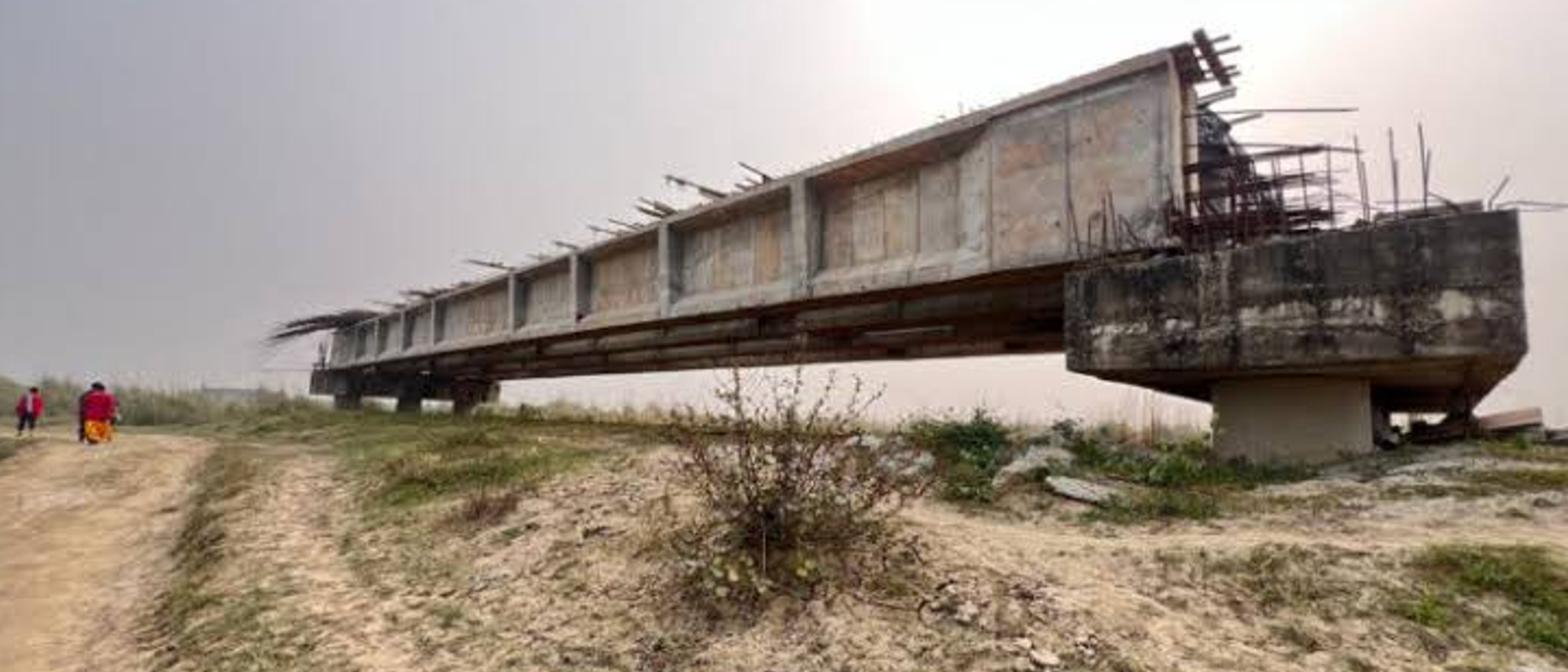
There has been a delay in the completion of the projects that are very important that affect the long-term development of the country by prioritizing the areas required for the economic development of the country. It is clear that the formulation and implementation of the plan has not been effective as the political changes that take place in a short span of time have not been able to give priority to the economic issues of the country. Despite many political changes and restructuring of the state in Nepal, the form and working style of the bureaucracy have not changed drastically.
There has been no significant improvement in revenue collection, which is a sustainable source for the country’s development. The capital expenditure provided in the annual budget is far below the target. The progress of most of the national pride projects is pathetic. Although the state’s expenditure is an investment and income for the overall economy, the government’s capital expenditure has not been sufficient as per the goals and objectives, and the negligible return of the expenditure incurred and the prolonged disease of productivity has not made the overall economy dynamic. In this context, he has presented his ideological perspective on various aspects of good governance and prosperity to strengthen Nepal’s economy.
Next Scenario of the Economy
If Nepal’s economy is analysed only on the basis of economic indicators, then it does not seem to be too bad. However, the sluggishness in the economy, the increasing adversity in employment and production, the loss of lives and property during the recent Genji agitation and the panic and confusion in the private sector have made it very challenging to provide stability and stability to the economy.
Although there is ample potential in agriculture, tourism, hydropower and other sectors, there has not been any significant improvement in the country’s GDP. An average of 3 in five years. A growth rate of 9 per cent cannot significantly contribute to the overall economic development of the country. Economy is seen putting further pressure due to adverse impact on production and employment due to declining GDP in the agriculture and industry sector, lack of improvement in tax collection and GDP ratio. The following table presents some of the key indicators that reflect the overall state of Nepal’s economy:
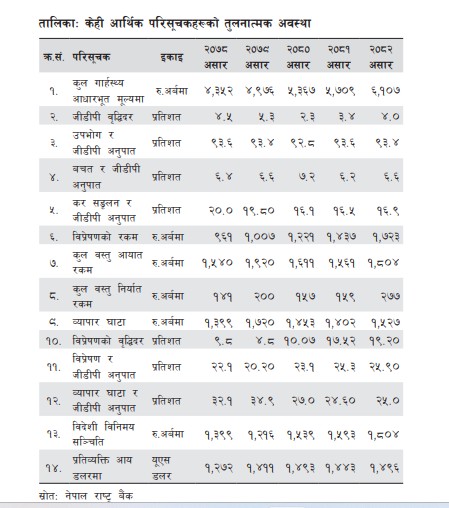
The economy seems to be under further pressure as production and employment are adversely affected due to the lack of improvement in the ratio. The high trade deficit situation has not improved due to the high imbalance between exports and imports, which has put pressure on the balance of payments. Although the foreign exchange reserve has increased due to the large number of remittances received from the foreigners, the country is not in a position to benefit as it has not been utilized in the productive and long-term rewarding sectors. The exodus of youth and skilled manpower seems to have a negative impact on the country’s economy and overall situation.
Mixed views are being expressed regarding the inflow of remittances. Some scholars have expressed the view that foreign employment and remittance as an alternative will have a positive impact on the country’s economy due to lack of domestic production and employment opportunities. On the theoretical side, the famous economist Hexer-Ohlin’s ‘Factor Endowment Theory’ also advocates the use of the available means of production for comparative advantage. But for developing countries, there is always a shortage of capital, skills and technology, which makes it difficult to produce goods or services and enter the world market competitively. In such a situation, a situation arises to sell the available manpower or labor in the country.
Therefore, in today’s era of globalization, any country can identify the areas of comparative advantage and mobilize the means of production, which has made it easier to buy and sell labor in the world market. In this way, remittances are the money earned by selling labor in other countries. In this sense, although the current inflow of remittances has had a positive impact on the country’s foreign reserves and people’s living standards, it seems to have helped increase the import-oriented system and trade deficit rather than domestic production and employment. However, it has not been able to make much impact in building an independent economy by effectively mobilizing the available resources in the country.
Inability to attract investors by identifying new and potential projects due to unstable government and administration, adverse impact on the overall development of the country due to low foreign investment, difficulty in meeting current expenditure due to low revenue collection due to lack of scope and scope of revenue collection and failure of government to settle claims of private sector, contractors, medical insurance among others are some of the problems plaguing the economy.
As a result of the adverse impact on the real sector, the demand for credit in Nepal’s banking sector has not increased for a long time and there is a situation of high liquidity and low interest rates. The banking sector, which was in a state of disrepair and liquidity crunch with far fewer non-performing assets than was once expected, is in an adverse situation today. The unimaginable vandalism and arson of private sector investments during the ‘Genji Movement’ has added to the potential for new investment.
Due to the slowdown in real estate transactions, stock market and business as a whole, the non-performing loans in the banking sector are skyrocketing, while those doing business by taking loans from banks and financial institutions are in a wait-and-see situation. The financial problems seen in the savings and credit cooperatives, which constitute a major part of the economy, have not yet been able to provide a way out in policy and legal terms, and the negative impact on the borrowers and savers due to the incidents of chaos and impunity in the microfinance sector are likely to have a long-term impact on the Nepalese economy.
Prosperity and Good Governance
‘Good governance’ and ‘prosperity’ are not new terms in Nepal’s political and administrative circles. The ideas of good governance and prosperity presented by every political party and people at the highest level in Nepal seem to be as pleasing as they sound, equally pathetic and unpopular in practice and practice.
In every political change, the issues like rule of law, providing services to the citizens in an easy, simple and transparent manner, preventing corruption, alleviating the existing poverty by optimally utilizing the country’s resources and means are strongly raised. But all of them are limited to speeches and words, due to which the stakeholders have not been able to understand directly, different types of agitations and unimaginable losses have been suffered.
In general, good governance means a system of governance based on transparency, accountability, rule of law and effectiveness of services. The lack of good governance in Nepal is increasing the challenges of corruption, delays, inequality and political interference. Not only at the people’s level, but also in the evaluation done by various agencies that measure the world community and good governance, the good governance situation in Nepal is very pathetic.
According to the Corruption Measurement Index published by Transparency International, Nepal’s rank is above 107, while the report published by the World Justice Project shows that Nepal is ranked 69th out of 142 countries listed in the Rule of Law Index. According to the 2020 Doing Business Report, Nepal has been ranked 94th out of 190 countries. All these facts and figures show that the state of good governance in South Asia and Nepal as a whole is weak.
The views expressed in the parliament by the superpower countries that have provided financial assistance to Nepal recently about Nepal’s corruption are also reflective of the real state of good governance. The driving license, which is considered very basic for the citizens, the legal process of division of family shares, the problems to be faced by the government bodies in the purchase and sale of property, the level of service provided by the government hospitals and health centers in health service, the irregularities in the Tribhuvan University which is the central university of the country, the negligence in conducting examinations and publishing examinations, the business and politics in the electricity service, indiscipline and irregularities in public transport, Due to the syndicate system seen in different areas, the common people always feel that the state does not exist or has lost control.
If the government does not give priority to regular monitoring and control of irregularities, the quality of goods and services in the market will not be ascertained and the general public will be cheated. In recent period, Nepal’s interrelations with developed countries like America, Britain, Japan, Australia, Canada, etc., have increased and people have started comparing their country and situation with such developed countries.
There is no doubt that the basis for the latest agitation has been created due to innumerable problems such as migration of youths from the country for a long time, sluggishness in economic activities, corruption, poor administrative conduct, lack of transparency and lack of accountability. Good governance can be the basis of good governance only if the performance is done in a way that is free from the selfishness and influence of a limited number of individuals or groups in any decision-making process, but it is difficult to imagine such a situation in the government and private sector of Nepal.
As a result, instead of following the decisions made by the stakeholders and the established rules and regulations, the practice of disobeying them and interpreting and implementing them in a different way is convenient and convenient. It is natural to be dissatisfied and frustrated among the stakeholders as the basic aspects of good governance such as rule of law, transparency, accountability, participatory decision-making, inclusion, equality, effectiveness, efficiency, consensus in decision making and long-term vision have not been given priority in the course of state governance. The country seems to be heading towards a more weak and complicated situation as good governance is talked about from the lower to the upper level of the state but the results have not been achieved.
Steps to take to strengthen the economy
It is natural that the negative effects of high trade deficit, low economic growth, low per capita income, inequality in the distribution of wealth due to the high gap between the rich and the poor have not been able to accelerate the country’s economy.
Moreover, the massive earthquake that the country has suffered in the last decade, the Corona pandemic, and the losses suffered by the unimaginable Genji movement have created additional challenges to the business environment and prospects of Nepal. In addition, the impact on global supply chains due to the Russia-Ukraine and Israel-in-Palestine wars, the emergency decisions of the Trump administration in the United States, the growing misunderstanding between India and Pakistan, the reduction of concessional loans and aid to countries like Nepal, and other international events are adding more complexity to the economy of Nepal and its economies.
In such a situation, policy reforms centered on good governance are necessary to build a strong economy.TAG_OPEN_strong_78 For this, some policy and action suggestions are presented in the form of
» Due to the changing government and administrative leadership in a short period of time, the difficulties in formulating and implementing the necessary policies for a dynamic economy seem to be exacerbating the web of problems instead of breaking them. Therefore, it is imperative to develop and promote a permanent mechanism to maintain effective coordination between the private sector and the government to address these issues.
» The agriculture, tourism and hydropower sectors, which have been identified as sectors that can contribute to the strengthening of the economy, need to be more systematized and commercialized. It is necessary to emphasize the use of technology in the agriculture sector, to provide certain subsidies to the real farmers for their produce, to formulate necessary policies and infrastructures for distribution and marketing.
» There is a need to address the various difficulties seen in the hydropower sector on time, resolve all possible obstacles in the construction of projects on time, take necessary steps to reduce the cost of the project, use the electricity generated judiciously and thereby help increase the productivity of the country.
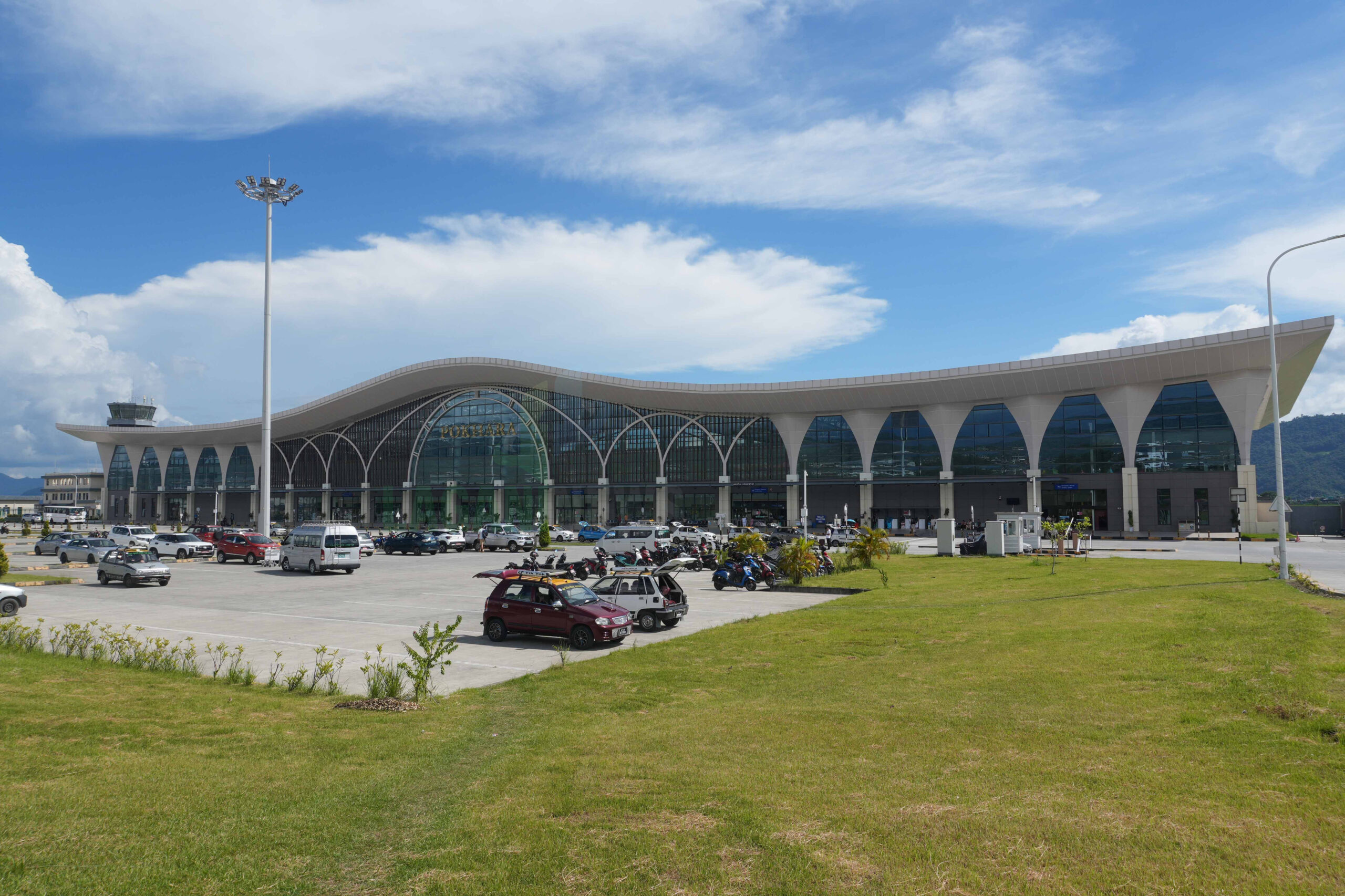
» In order to realize the tourism potential, it is necessary to emphasize on the commercial operation of the existing international airports and the upgradation of standard hotels, religious and cultural places as well as publicity. Apart from this, there is a need to give special emphasis to its expansion and promotion keeping in mind the growing interest and potential of youths in the field of information and technology in recent times.
» In order to give priority to youth self-employment, it is necessary to promote small and medium enterprises, banks and financial institutions should encourage such loans, identify areas with new possibilities and implement startup projects in a special way.
» In the context of import and very small proportion of exports in Nepal’s trade structure, emphasis should be given on import substitution and increasing domestic production by promoting local production. For this, it is necessary to start a campaign from the people’s level to use a large number of Nepalis living abroad and the general public as much as possible.
» Steps need to be taken to make local bodies responsible for the development and promotion of domestic products. In particular, the government should present schemes of subsidies and facilities targeting the farmers and small businessmen who produce agricultural and consumer goods that have potential in Nepal for import substitution.
» The economic activities of the country cannot be sustainable and stable unless the morale of the private sector and the banking sector is improved. Therefore, the number of employees can be reduced by strictly adhering to the provisions of the existing laws and controlling the growing anarchy in the financial sector by making the government’s service delivery completely digitized and made fast, quick and transparent. Digitization is a way to save time and provide faster services. It should be used for revenue collection, expenditure payment and service delivery.
» There is a need to increase revenue and cut expenses to bridge the widening revenue and expenditure gap. The burden of debt will increase if capital expenditure is not made on the projects of the highest importance and immediate returns, and if the government expenditure is not done in a transparent and prudent manner. In the event of a major crisis, if we are not able to mobilize additional debt, we will have to face another big accident.
» In the aftermath of the Jenji movement, the country should be engaged in building the rule of law from the top level of the state to the people’s level so that it can be trusted by any generation. The administrative leadership and employees also need to learn from the mistakes of the past and make a commitment to serve the citizens by improving their conduct and working style.
}» It is imperative for the youth to not only depend on government jobs but also to increase their skills in the fields of information technology, sports and other subjects that can be done in individuals and groups. It would be in the interest of all to utilize this opportunity to take the country ahead on the journey of good governance and prosperity by giving priority and continuity to whichever government comes to power.
» Basically, without the guarantee of good governance, the confidence and enthusiasm of the investors and citizens to be financially active will not increase, so it is imperative for the government and all the bodies concerned to maintain cleanliness, transparency and accountability towards their activities.
(Article courtesy of Nepal Rastra Bank’s Executive Director Thapa)









प्रतिक्रिया दिनुहोस्