



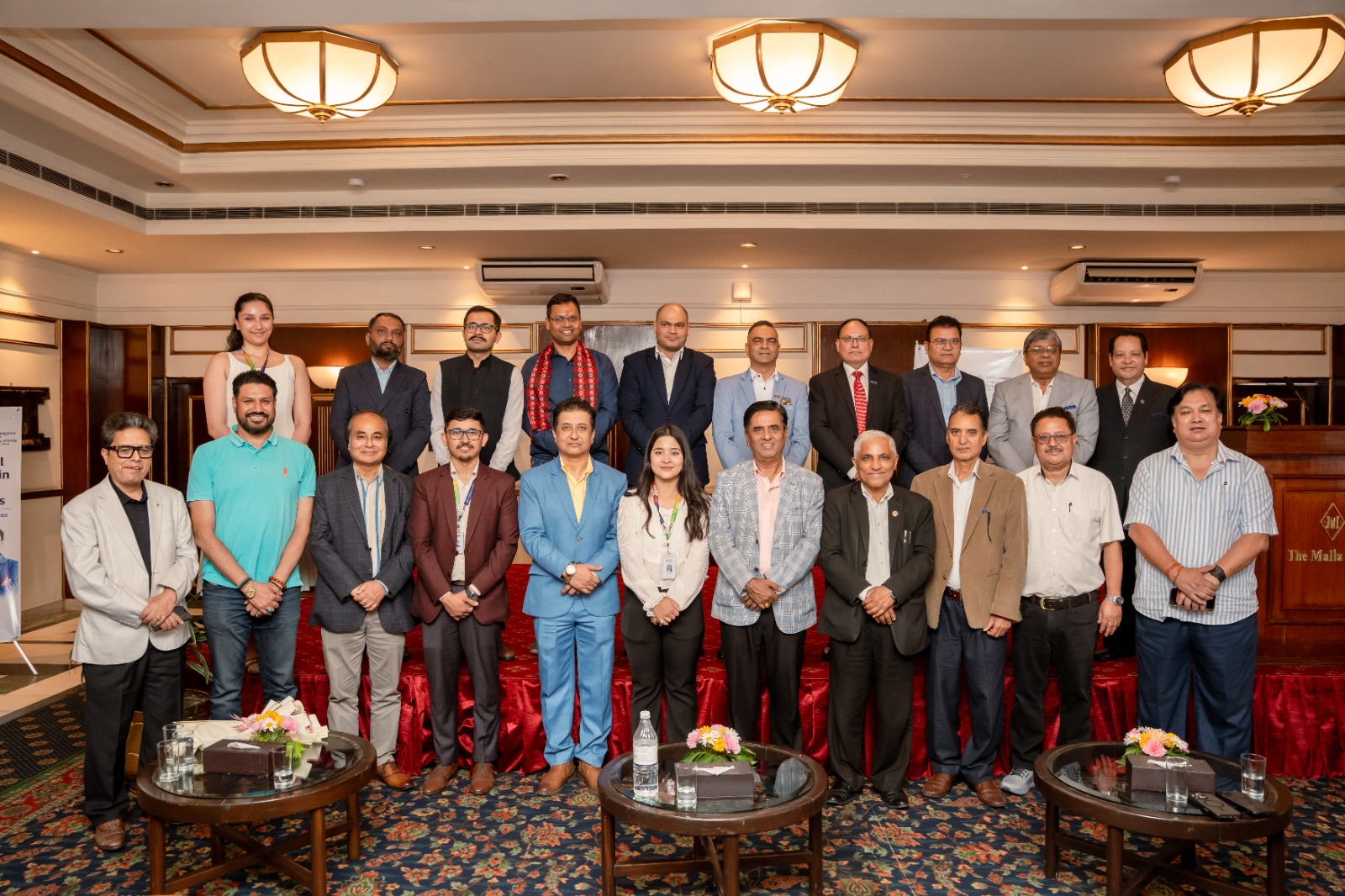
Kathmandu. Nepal-India Chamber of Commerce and Industry (Nikkei) in collaboration with the Embassy of India in Nepal organized a session on “Exploring Bilateral Opportunities for India-Nepal Partnership AI Collaboration in Emerging Technologies” in Kathmandu.
The event brought together leaders from business, government, academia and technology to discuss the possibilities of collaboration between the two countries in the field of Artificial Intelligence.
In this session, Dr. Vivek Gupta, Co-Founder and CEO of Sarvam AI, a leading manufacturer of full-stack generative AI and vernacular AI systems in South Asia, was also present. Pratyush Kumar was the keynote speaker. Before the program, Dr. Kumar discussed opportunities in digital infrastructure, AI, and emerging technologies with representatives of Nepal’s technology and investment ecosystem Dataworld, Bichuten, Golchha Industries, Spark Group and Sparrow SMA. Mr. Sunil KC, Chairman of Nikkei welcomed all the participants with his speech.
In his welcome address, Sunil KC, President of Nikkei, emphasized on strengthening technology-based economic cooperation between Nepal and India. He encouraged Sarvam AI to expand its presence in Nepal and take forward partnerships with both public and private sectors. Such collaborations will catalyze more investments from leading technology companies and help bridge the foreign direct investment gap in Nepal through innovation-based investments, knowledge transfer, and strategic technology partnerships.
First Secretary (Commercial) at the Embassy of India in Nepal, Suman Shekhar, highlighted the shared interest in digital capacity building, startup collaboration, and knowledge exchange on emerging technologies, linking the broader context of India-Nepal economic cooperation. He also pledged continued support for collaboration between Indian and Nepali stakeholders in AI and innovation.
Dr. In his address, Pratyush Kumar discussed the rise of full-stack generative AI and its impact on countries that are consumers rather than creators of AI technologies. He highlighted the vision of Sarvam AI to develop systems that fit the linguistic and cultural realities of South Asia, placing a special emphasis on vernacular technologies as a means to expand digital access and inclusion.
He added that emerging economies have the opportunity to build sovereign capabilities that adapt to their own populations, languages, and usage needs, rather than just adopting AI tools developed elsewhere.
Outlining India’s AI ecosystem with talent development, research infrastructure, and policy support, Dr. Kumar suggested the importance of vernacular language models, responsible usage practices to maintain public trust, and developing in-house talent for reaching marginalized populations for countries in the early stages of AI adoption.
Noting that Nepal’s startup community and academic institutions are well-positioned to take early steps in this direction, he pointed to India’s experience, especially the partnerships between the government, academia, and the private sector as relevant models. He identified joint research initiatives, training programs, and exchange of startup ecosystems as areas where India-Nepal cooperation can be taken forward.
Vice-chancellor of Nepal University, Dr. Dr. Bindunath Lohani spoke about the role of higher education institutions in preparing future talents, advancing research and supporting Nepal’s long-term innovation agenda. He emphasized on collaboration between academia and industry to equip students and researchers for an AI-driven world.
This was followed by an interactive Q&A session by participants who raised topics such as the use of AI by businesses, talent development, responsible AI governance, local language technologies, and opportunities for regional collaboration. The discussion reflected stakeholders’ keen interest on how Nepal can leverage AI to support productivity, competitiveness, and economic growth.
Dilip Bhattarai, co-coordinator of Nikki’s startup and private equity committee, said that Dr. Dr. Pratyush Kumar delivered the vote of thanks, pointing out the importance of direct dialogue between Nepali stakeholders and regional AI practitioners.
Marshall Rathore, Director of Nikkei, concluded by reiterating Nikkei’s commitment to platforms that connect businesses, government, and technology communities in both countries. Nikki visited the Embassy of India in Nepal, Dr. We would like to thank Pratyush Kumar and Sarvam AI for their participation and to all the partners and attendees who contributed to the event including the Asian Institute of Diplomacy and International Affairs (AIDIA).
The association plans to further expand the collaboration through future programs on knowledge exchange, capacity building, and partnership development between Nepal’s startup ecosystem and India’s tech sector.
The Nepal-India Chamber of Commerce and Industry (NIKKEI), through its committees and programs, has been working towards strengthening economic, trade and investment relations between Nepal and India by promoting cooperation in various areas including trade, technology and innovation.













प्रतिक्रिया दिनुहोस्