NRB has urged banks to expand loans as per their capacity from the very beginning: Executive Director Poudel
लगानी न्यूज
. Executive Director of Nepal Rastra Bank, Guru Prasad Poudel, said that the central bank has been urging the banks to expand loans as per their capacity from the very beginning.
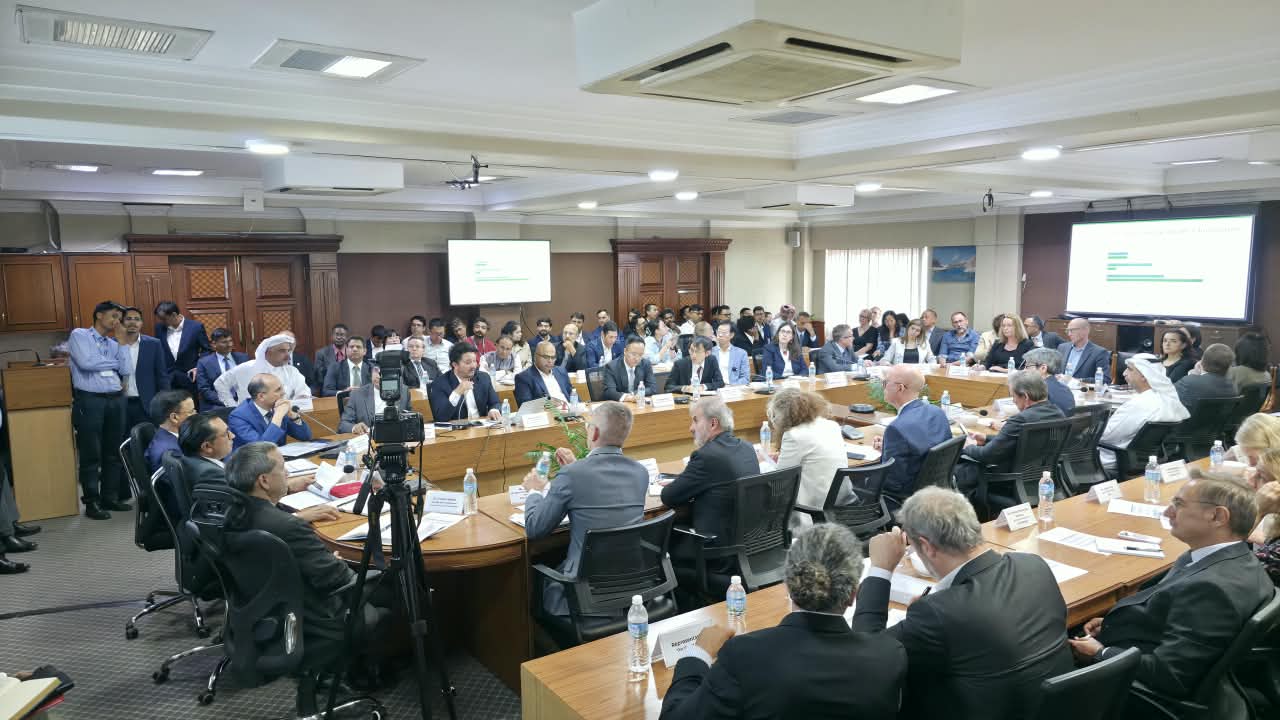
Society of Economic Journalists (SEJON) said this in an interaction and panel discussion program on ‘Monetary Policy to Accelerate Economic Growth’.TAG_OPEN_div_121 He was of the view that the institutions that want to extend loans should also add the necessary capital as per the principle of ‘swallow the bone by looking at the throat’.
Stating that Nepal has been implementing Basel-2 and Basel-3 standards, he said that a huge amount of equity has been infused into the banking sector while increasing the minimum paid-up capital from Rs 2 billion to Rs 8 billion in the past, which has prepared enough base for the expansion of loans.TAG_OPEN_div_119
President of the Confederation of Bank and Financial Institutions, Nepal (CBFIN), Prachanda Bahadur Shrestha said that the banking sector of the country is under severe pressure.TAG_OPEN_div_117 He stressed on the need to maintain balance between financial stability and economic revival by addressing real problems facing the banking sector in the upcoming monetary policy.
According to Shrestha, although there is sufficient liquidity in the banking system on paper, the demand for credit in the real economy has decreased and business confidence has weakened.TAG_OPEN_div_115 He said that the ability of even strong and capable businesses to pay off debt has been affected due to drying up cash flow in many economic sectors.
He said that this situation has a direct impact on the wealth management of the banks and the banks have been forced to accumulate non-banking assets worth more than Rs 60 billion.TAG_OPEN_div_113 He said that banks had to accept collateral assets as many borrowers could not repay their loans and a large amount of banks’ capital was stuck in non-performing assets. This has limited the ability of banks to invest more in the economy, he said.
Chairman Shrestha urged Nepal Rastra Bank to adopt pragmatic and risk-based flexibility in loan classification, provisioning rules and management of non-banking assets.TAG_OPEN_div_111 Citing the example of other South Asian countries adopting similar flexible policies to provide relief to the financial system during the economic crisis, he said such measures were necessary in Nepal as well.
He made it clear that the flexibility they were asking for would not undermine financial transparency. Instead, he said, it would give businesses the time they need to recover, help banks redirect their capital to productive sectors, and help stimulate the overall economy.
Shrestha also reminded that the banking sector has been continuously supporting the reform policies of Nepal Rastra Bank since the past.TAG_OPEN_div_107 Stating that the banks had made huge sacrifices while implementing the provision of increasing paid-up capital from Rs 2 billion to Rs 8 billion and participating in the merger process, he said the banks were committed to strengthen the system even though the return on equity has decreased.
He expressed the belief that the upcoming TAG_OPEN_div_105 monetary policy would create an environment conducive for the banks to play a more effective role in business expansion, investment promotion and employment generation to address the existing challenges in the banking sector. “We are confident that the Nepal Rastra Bank (NRB) will maintain the necessary balance between financial stability and economic recovery under the leadership of the NRB,” he said.
Banking expert Alan Raj Bhattarai said that the biggest challenge of the current economy is the lack of demand for loans from the private sector despite adequate liquidity, low interest rate and capacity to lend in the banking system.TAG_OPEN_div_103 He was of the view that the monetary policy should focus on resolving the structural problems in the banking sector rather than increasing or reducing the interest rate.
Bhattarai said that the problem in the current banking system is not liquidity but capital and demand creation.TAG_OPEN_div_101
According to him, while the country’s economic growth rate is around 3.85 percent, the non-performing loan (NPL) of the banking sector has reached 4.36 percent, which is above the normal level in the past.TAG_OPEN_div_99 Although foreign currency reserve and remittance remained satisfactory, the credit expansion to private sector was limited to 5.7 per cent, which indicates weak demand in economy, he said.
Bhattarai said that the banks have liquidity worth Rs 80 trillion, disbursed loans of Rs 60 trillion and CD ratio of 79 percent.TAG_OPEN_div_97 According to him, the excess liquidity in the banking system has created challenges as the demand for investment from the private sector has not increased despite low interest rate, stable deposit and the capacity to provide adequate loans.
Another challenge in the banking sector is the increasing asset-liability mismatch and repricing risk, he said.TAG_OPEN_div_95 According to him, structural reform was necessary as long-term loans were being issued on the basis of short-term deposits.
TAG_OPEN_div_93 Bhattarai suggested that the provision related to loan loss management should be reviewed through the monetary policy. He argued that the pressure on the capital of the banks would be reduced if the existing provision of making hundred percent provisioning in a single year could be modified. He claimed that if the provisioning rate could be adjusted as per India’s practice, about Rs 105 billion worth of capital flow could be made.
He said that personal credit scores, mandatory ratings and an effective ‘due diligence’ system should be developed to increase the transparency of the borrower.TAG_OPEN_div_91 He also stressed on the need to make arrangements to raise resources from the capital market through debt instruments such as debentures and debt instruments instead of relying only on the banking system.
According to Bhattarai, the main problem in the banking sector is not liquidity but capital.TAG_OPEN_div_89 He said that although the core capital ratio of the banks is 9.61 percent and the total capital ratio is 13.53 percent, not all banks have the capacity to extend loans equally.
Although the Nepal Rastra Bank (NRB) has introduced new provisions including Perpetual Debt Instrument and Additional Tier-1 Capital for managing additional capital, there is not enough market liquidity in these instruments, he said.TAG_OPEN_div_87 He suggested that some of the provisions of BAFIA could affect the expansion of the private sector, so alternative measures should be found.
He said that although the concept of an asset management company proposed in the budget was welcome, it could face problems in implementation if necessary regulatory reforms were not made before that.TAG_OPEN_div_85 According to him, there was a need to make clear provisions regarding the valuation of bad loans and determination of purchase value.
Bhattarai said that the monetary policy should be more ‘accommodative’ and although the bank rate has been reduced, its effectiveness needs to be reviewed.TAG_OPEN_div_83 He also suggested the development of secondary market and bond market, management of foreign exchange, monetization of non-banking assets, prohibition of opening account with zero reserve and making the interest rate corridor more effective.
He also stressed the need to make sustainable development, environmental and social risk management an integral part of the banking system.TAG_OPEN_div_81 He also stressed the need of policy discussion on the establishment of sovereign wealth fund for the long-term use of foreign currency reserves.
Bhattarai said that the ‘Domestic Systemically Important Bank’ (D-CIB) has not yet been announced in Nepal and its criteria should be reviewed.TAG_OPEN_div_79 He suggested that attention should also be paid to the counter-cyclical buffer that will be implemented in the coming days as it may create more capital pressure on the banks.
Stating that deeper structural reforms were needed rather than general reforms in the banking system, he said the real challenge now was capital management and demand creation.TAG_OPEN_div_77 “Everyone knows what the problem is, what the solution is and how much improvement needs to be made, but there is a strong will to implement it,” he said. He also expressed the hope that necessary economic and banking reforms would move ahead with the five-year commitment taken by the new government.
Mr. Munkarmi, Vice President of Cibfin, said that although there is sufficient liquidity in the banking system, many banks have not been able to expand despite the demand for loans due to the limit of Tier 1 capital.TAG_OPEN_div_75 According to him, the effectiveness and cost of alternative instruments needs to be seriously reviewed as banks are not in a position to meet their capital requirements only by continuously bringing in new equity.
“Tier-1 capital requires a minimum of 4.5 per cent equity capital and an additional 2.5 per cent buffer will require a minimum of TAG_OPEN_div_73 4.5 per cent equity share,” he said. He, however, expressed the view that the long-term impact of the existing preference shares should be evaluated as they are high cost and create long-term liabilities.
Moonkarmi said that the retained earnings of many banks and financial institutions are weak and investors are not getting the expected returns.TAG_OPEN_div_71 In such a situation, it is a challenge to attract more equity investment, he said. He said that if systemic solutions are not found for the management of Tier 1 capital, the expansion of loans and economic activities will also be affected.
Anand Bagaria, executive director of Nimbus, said that the participation of the private sector in the debate of economic growth is weak.TAG_OPEN_div_69 According to him, the main problem now is the lack of policy stability and business confidence rather than interest rates.
Stating that he has the experience of investing in entrepreneurs at 13-14 percent interest rate, he said that the uncertainty of policy change is more important than the 6 or 7 percent interest rate.TAG_OPEN_div_67 He said that the confidence of the entrepreneurs has weakened as the policy change in the middle of the project will increase investment risk.
“The banking sector is currently stuck in the EPS trap,” Bagaria said, adding that the long-term strategy has weakened as management teams are focused on quarterly results.TAG_OPEN_div_65 He said that due to excessive regulatory oversight, the creative capacity of the banks has been curtailed and the banks have become more like the implementing agencies of the regulator than the commercial institution.
Stating that statistics alone are not enough, he stressed the need to strike a balance between statistics and behavioural psychology in economic policymaking.TAG_OPEN_div_63 He concluded that it would be difficult to accelerate economic growth without increasing consumer demand, policy confidence and creating a friendly environment for the private sector.
Speakers at the discussion stressed that monetary policy should not only limit liquidity management but also address the capital capacity of banks, private sector investment confidence and long-term economic expansion in a balanced manner.TAG_OPEN_div_61

















प्रतिक्रिया दिनुहोस्