

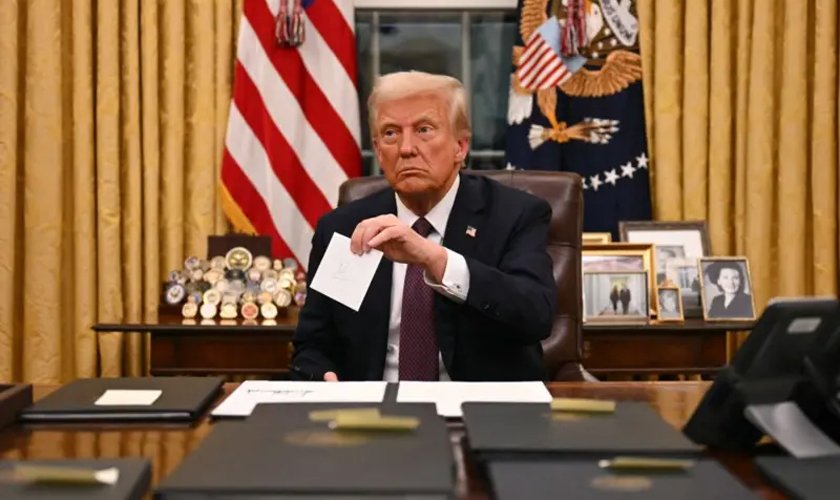
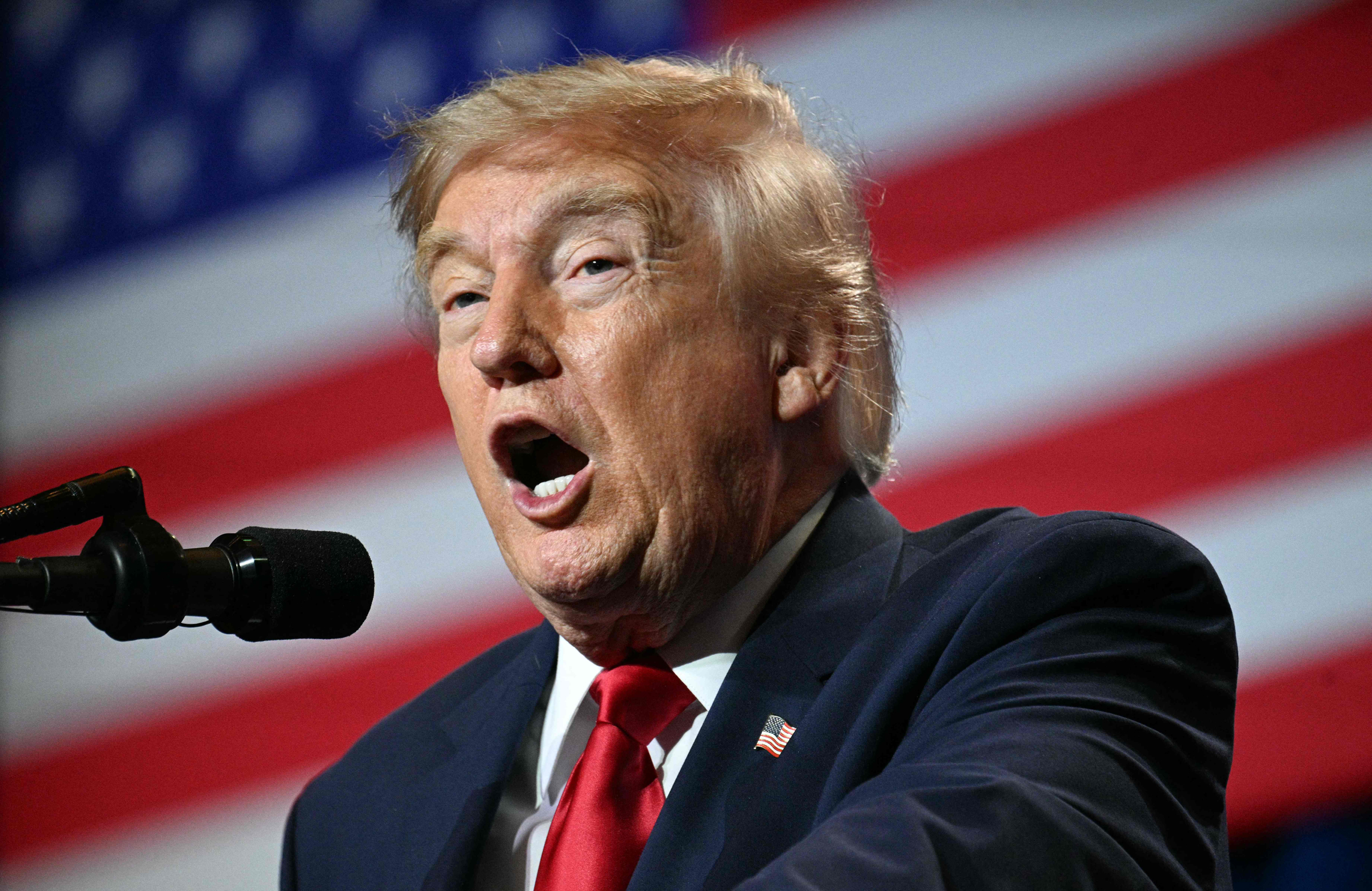
Kathmandu. US President Donald Trump on Friday restructured his trade policy and imposed new tariffs on 60 trading partners, including China, India and the European Union. The new rule, which comes after the Supreme Court in February limited the president’s sweeping executive powers, is considered legally stronger.
The new tariff has been fixed at 10 to 12.5 percent. According to the US administration, the policy replaces the 10 percent global import duty that was temporarily imposed earlier this year after nearly a month-long investigation. The temporary arrangement expired on Friday after 150 days.
U.S. Trade Representative Jamison Grier said the U.S. has banned imports of labor-produced goods for nearly a century, and now is the time for trading partners to show the same level of commitment. He said the new tariffs cover major economies, which account for a large share of U.S. trade.
According to the declaration, economies that have imposed or made commitments to impose forced labour restrictions will face a 10 percent tariff. This includes Canada, the European Union (EU), India and the United Kingdom. China, Japan, South Korea and dozens of other countries have imposed tariffs as high as 12.5 percent.
However, the European Union (EU), Taiwan, Japan, South Korea and Switzerland will get some concessions under previous trade agreements with the United States, the administration said. Items already covered under the U.S.-Mexico-Canada Free Trade Agreement, some energy products, fertilizers and sectoral tariffs such as steel and aluminum are exempt from the new system.
Japan expressed dissatisfaction with the new tariffs, while Australia’s trade minister called it an “unfair” move.
Meanwhile, Washington is also conducting separate research into 16 economies that may have excess industrial production capacity. Based on this, analysts say that additional tariffs may be applicable in the future and different rates may be determined for different countries.
Trade law expert Greta Pisch said the US strategy of keeping the basic tariffs intact while keeping the option of imposing additional tariffs if necessary would increase Washington’s influence in trade negotiations. It will also put pressure on partner countries to abide by the terms of the trade agreement, he said.
Josh Lipsky of the Atlantic Council also said the new tariffs were a sign that the Trump administration’s protectionist trade policy would be sustainable for the long term. According to him, this is also expected to increase government revenue.
Ryan Majes, a former U.S. trade official, said the Trump administration is continuing to look at ways to make aggressive tariffs legally sustainable. According to him, the latest tariff imposed under Article 301 of the Trade Act of 1974 can be modified in the future as per the requirements.
The U.S. has already imposed a 25 percent tariff on Brazilian products, and this week announced a 50 percent tariff on many Canadian products. Washington accuses Canada of discriminatory treatment against U.S. liquor, automobiles and dairy products.
Analysts say the latest moves are a clear signal that trade deals with the United States are not yet stable and the Trump administration may use additional tariff measures if necessary. However, the European Union (EU) has expressed confidence that the United States will implement its commitments in a joint statement.












प्रतिक्रिया दिनुहोस्