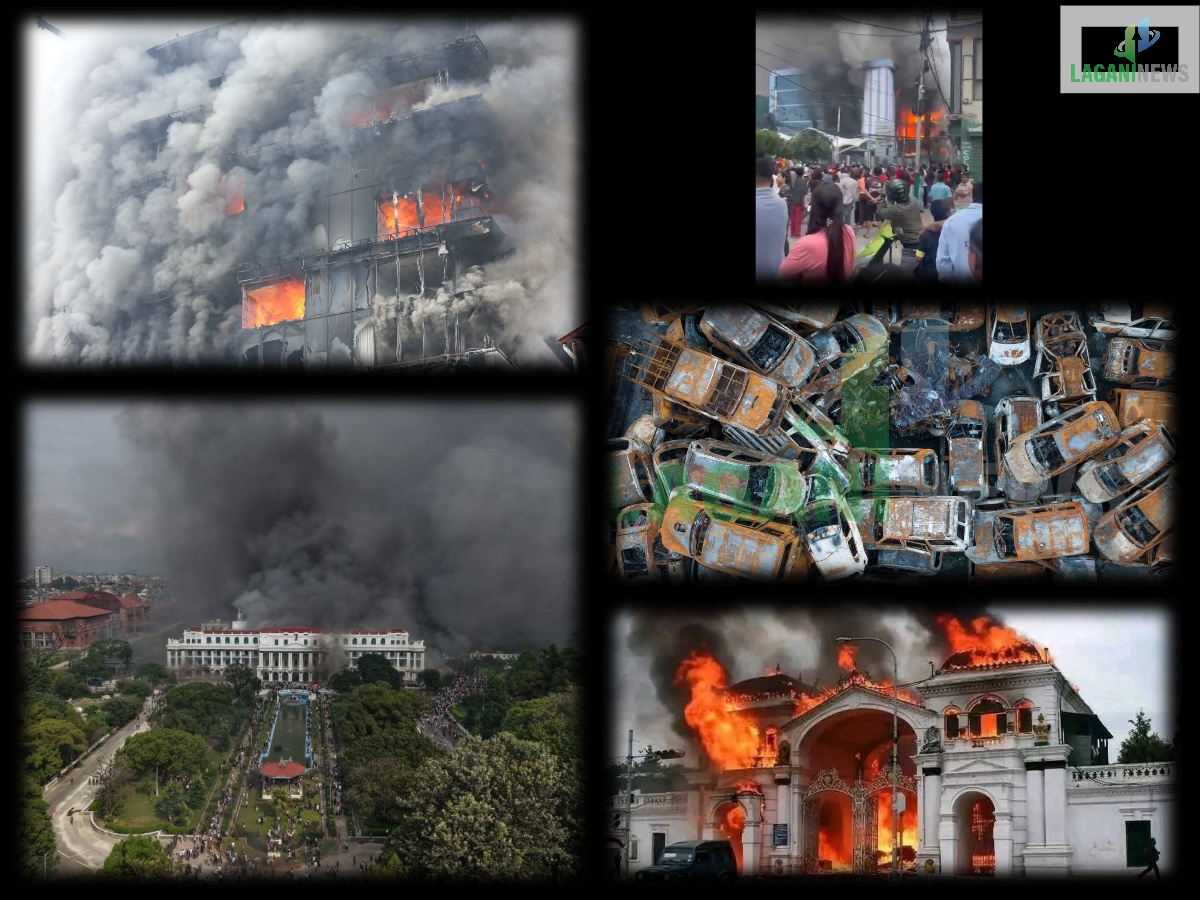
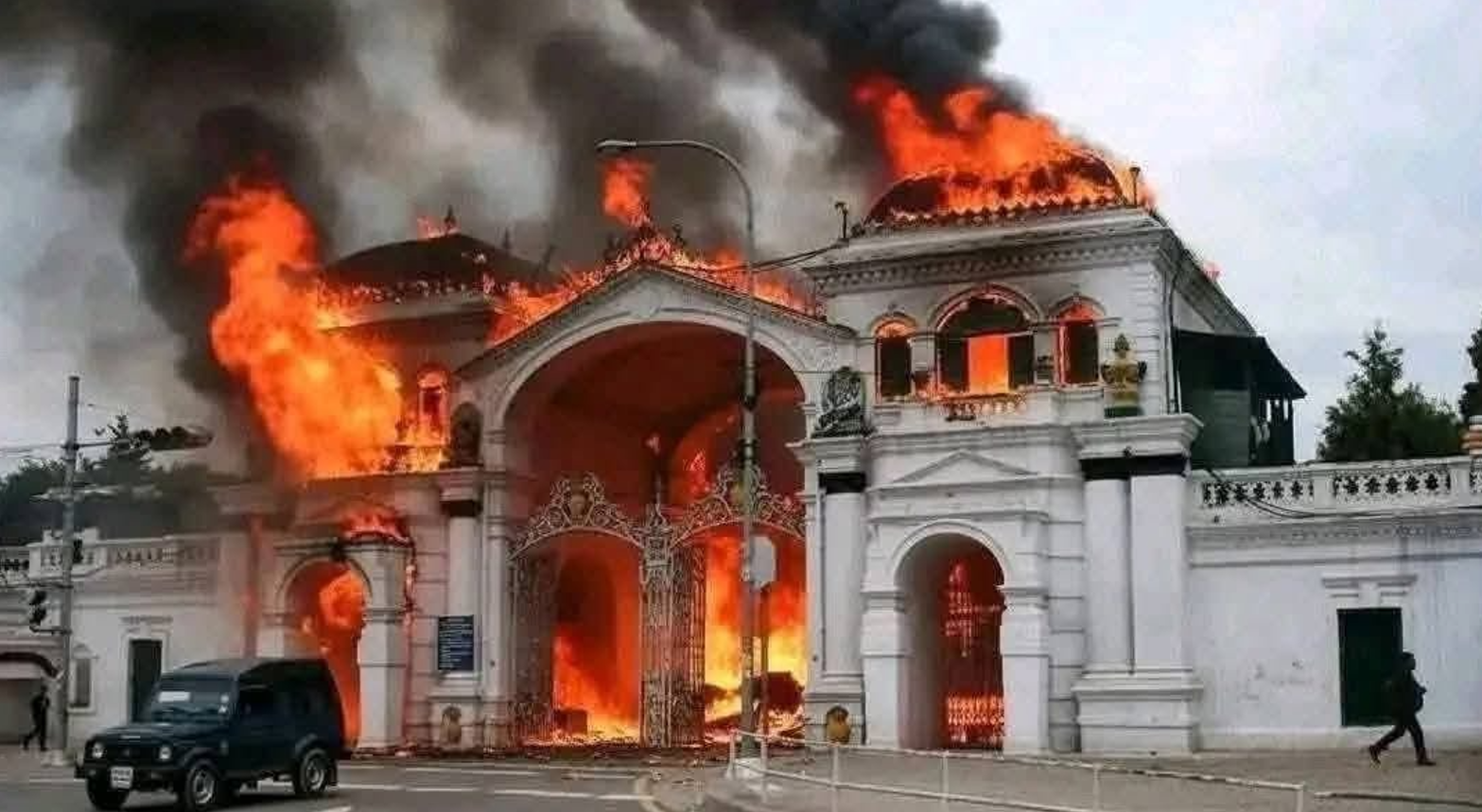
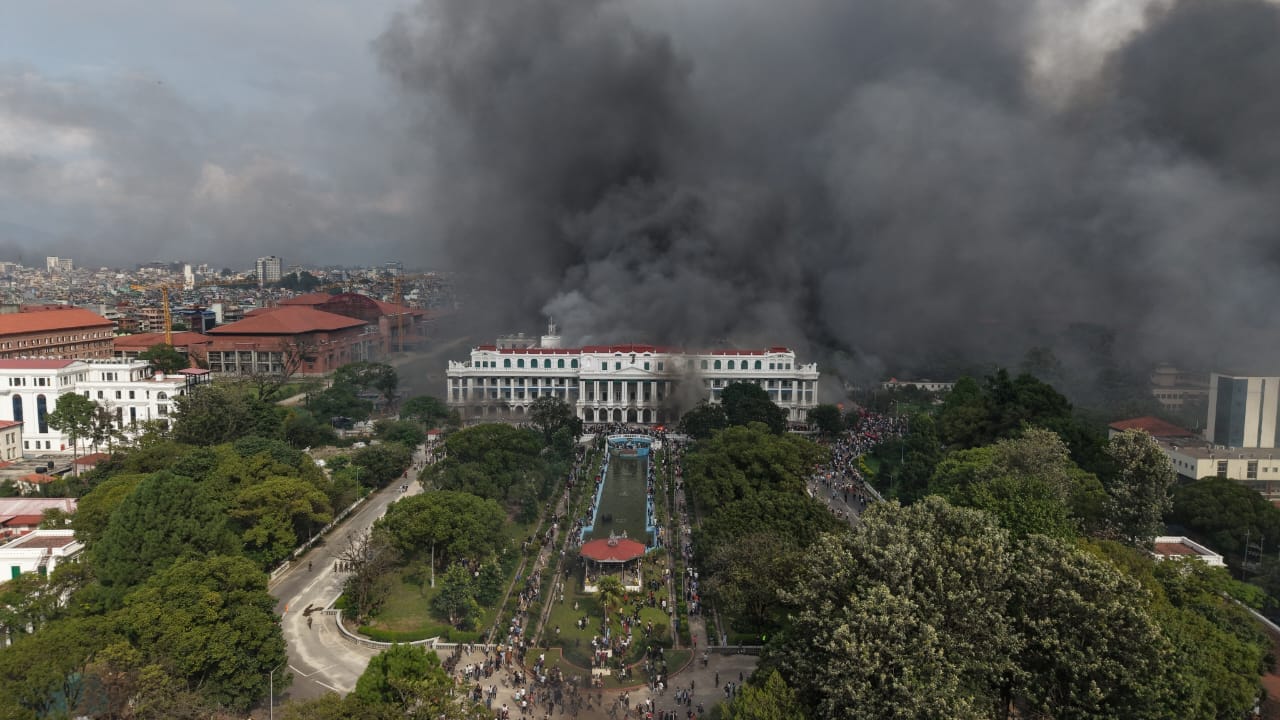
{{TAG_OPEN_div_147} Kathmandu. A year ago, the Jenji movement of September 23 and 24, 2002, caused great damage to the private and public sector structures of the country. During the movement, private institutions and government offices were set on fire and vandalized. There was physical damage. However, even after more than a year of the movement, the damaged government structures have not been reconstructed.
Those who led the Jenji movement are in power. In the election of the House of Representatives held on March 4, 2008, the National Swatantra Party (RSP), which was favored by Jenji, got about 2-thirds of the votes. A single government was formed. As soon as the government was formed, the slogans of good governance were raised. However, even after 1 year of the movement, Singha Durbar, the main administrative center of the country, has not been able to feel good governance. The structures destroyed by fire due to lack of momentum in the reconstruction are still burning ashes and mocking the strong government from inside the net.
Not only Singha Durbar, the condition of the government structures outside Singha Durbar is the same, throwing ashes, mocking the government.
The general public understood that the reconstruction work would gain momentum when the people liked by the people and the party came to power. The government structures that were reduced to ashes wanted to be rebuilt on time. But when the government could not see the buildings burnt down in the Jenji movement with the naked eye, the government buildings are standing still with the burning wounds of the Jenji movement.
Immediately after the agitation, a temporary government was formed under the leadership of Sushila Karki as per the demand of the Jenjis. Rameshwar Khanal was the finance minister of that government. They did not take the initiative to construct the demolished building.
The government, which was formed on the strength of the Jenji movement, had set up a fund for the reconstruction of structures damaged during the movement. The government had raised funds from donors from the country and abroad.TAG_OPEN_div_138
The government has made public the data of Rs 13.35 crore deposited in the fund till January last year. After that, the government has not made public any further details about how much money has been deposited in the fund. Even after talking to the government agencies, no agency has been able to give clear information about how much money has been deposited in the fund so far.
TAG_OPEN_span_75 In the last financial year, the government’s capital expenditure was much less than the target. The government had set a capital expenditure target of Rs 407.88 billion in the last financial year. However, only 46.79 per cent of the target i.e. Rs 190.84 billion was spent.
TAG_OPEN_p_77 Even the powerful government formed under the guise of the Jenji movement could not increase the capital expenditure to 50 percent. The infrastructure works were affected as the government could not spend as expected. The weak capital expenditure has had a direct impact on development projects including building construction.
Many private sector businessmen are carrying out the reconstruction work of damaged structures with their own resources, insurance and other management. Various hotels from Bhatbhateni supermarket, which has been badly damaged, are continuing to reconstruct their damages. Some of the private sector structures are yet to be repaired due to the delay in payment of insurance claims.TAG_OPEN_div_132
However, the situation of government structures is different. The system of insuring government structures in Nepal has not been fully implemented. In the absence of insurance, the government has to manage the budget to reconstruct the buildings damaged by the agitation. Although there are provisions to insure government property, there is no insurance for the damage caused by the Jenji movement.
Due to this, the reconstruction work of the government buildings that were completely damaged in the agitation is still zero, according to the government agencies in charge of the construction. According to the report of the National Planning Commission, a total of Rs 84.45 billion was damaged during the Jenji agitation. Of the total damages, 53 per cent of the damage was caused to the government and public sectors, 40 per cent to the private sector and 7 per cent to the community and other sectors.TAG_OPEN_div_128
The public sector alone has suffered a loss of Rs 44.93 billion. According to the report, 77 people died during the protests.
55 police stations were burnt down across the country. These buildings have also been erected with the help of the local community and the private sector, while the remaining buildings have not been fully rebuilt by the government.
The election held after the Jenji movement was also facilitated by the help of donors. Inspector General of Police Dan Bahadur Karki had said in the parliamentary committee meeting that the election was held on the basis of the vehicle provided by the donor. During the agitation, along with the police building, the vehicles used by them were also burnt.
According to the agencies responsible for the reconstruction, the work of government buildings has not gained momentum due to lack of necessary budget. During the agitation, 2,671 buildings were damaged across the country. Of these, 79.8 percent were public buildings.
The building alone suffered damages worth Rs 39.31 billion. Similarly, Rs 12.93 billion was damaged in vehicles, Rs 20.36 billion in physical property, Rs 2.81 billion in cash and valuables, and Rs 9.02 billion in other temporary and private properties.TAG_OPEN_div_118
The highest number of damage was done in Bagmati Province. 66.5 percent of the total physical damage was in Bagmati. This province also suffered 74 percent of the total damage to buildings and 58 percent of the damage to vehicles.TAG_OPEN_div_116
However, even after a year of the damage, not all the structures have returned to their original condition. Deputy Director General of the Department of Urban Development and Building Construction, Prakash Aryal, said that the reconstruction and operation of some private structures have already started, but the work of the government structures has been stuck at different stages due to budget, design, contract and technical process.TAG_OPEN_div_114
It is estimated that Rs 36 TAG_OPEN_div_112.30 billion will be required for the reconstruction and maintenance of government and public infrastructures. Of this, Rs 19.98 billion will be required for the reconstruction of buildings, Rs 6.16 billion for the purchase and maintenance of vehicles and Rs 10.14 billion for the purchase and maintenance of other physical items, according to the report of the Auditor General.
However, the expenditure so far is very less than the amount required. According to the Department of Urban Development and Building Construction, only Rs 320 million has been spent so far on the repair and reconstruction of the federal office buildings. Only 117 buildings with ‘green stickers’ with minor damage have been repaired.
About Rs 12 crore has been spent on the repair of 117 buildings, according to a source in the department. Similarly, only Rs 32 crore has been spent on the construction of 75 more buildings of which Rs 20 crore has been spent, according to sources.
The department has so far completed the study of more than 150 buildings that have been damaged. Out of the buildings with red and yellow stickers, 35 have been completely damaged. These buildings are not able to work only by repairing. An official of the Urban Development and Building Construction Department said that since there is a need to construct a new building, the work of removing the old burnt structure, preparing a new design, estimating the cost and ensuring the budget has not been done yet.TAG_OPEN_div_105
}’There is no progress in the reconstruction of these 35 buildings so far. The work of removing the burnt structures has not even started. The official says, “The study has been completed for a year. According to him, it is better to build new ones than to repair such buildings. However, there is no necessary budget for this. The detailed cost of rebuilding the completely damaged buildings has not yet been prepared.
Contract was awarded, money didn’t come in{
Another problem of reconstruction is related to the contracting process. Avinash Srivastava, an engineer with the Urban Development and Building Construction Department, said that the tender process for 70 to 75 buildings has been completed till mid-July after the Jenji agitation. He said that the number of buildings in the yellow and green zones is high.TAG_OPEN_div_100
However, even if the contract is awarded, the necessary budget for the construction is yet to be released. He says that if the budget is released, the work of these buildings can be completed in about six months. In the current fiscal year, contracts for 25 to 30 more buildings have to be awarded. However, due to lack of financial resources, the tender process for these buildings could not proceed, he said.TAG_OPEN_div_98
Due to lack of budget, the work has not been started even after the completion of the contract process in some buildings, while the process of contracting for some buildings has not started. The Ministry of Finance has said that it will allocate Rs 6 billion for the reconstruction of government buildings damaged by the Jenji agitation. However, this amount has not been explicitly mentioned in the budget speech in a separate heading.
TAG_OPEN_div_94 The government has said in the budget that it will give priority to the retrofitting and reconstruction of government buildings damaged during the agitation. However, the required amount has not been clearly allocated.
This has caused problems in the budget allocation process, according to the sources. The Department of Urban Development and Building Construction has demanded a budget of Rs 3.5 billion for the current fiscal year. The Federal Secretariat Construction and Management Office has also demanded Rs 2.5 billion for the construction of the building.
According to an official of the department, about TAG_OPEN_div_90 Rs 8.5 billion will be spent in the current fiscal year alone. However, the budget has not been arranged accordingly.
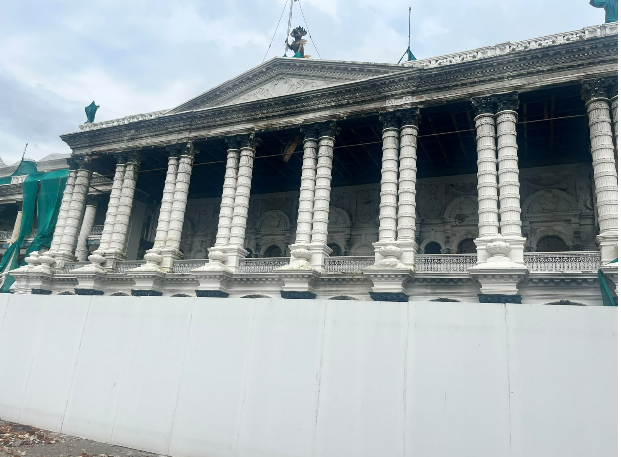
The design of the building of Sheetal Niwas, which currently houses the office of the President, has been prepared for repair. The design has been sent to the Department of Archaeology for approval. The burnt Parliament House building has not yet been raised. The building has become like a junkyard to store the government vehicles that were burnt during the movement.
Contracts for the reconstruction of buildings of the Ministry of Home Affairs and Ministry of Health are yet to be called. The reconstruction of some buildings including the Ministry of Education with minor damage has been completed. Retrofitting work is going on in the old building of the Supreme Court.
Engineer Srivastava says that the reconstruction of the minister’s residence in Bhaisepati is also in the final stage. He believes that the construction of the structures including the minister’s quarters will take more than 6 months.TAG_OPEN_div_84
According to Aryal, deputy director general of the Department of Urban Development and Building Construction, the department and secretariat are not the only ones who are reconstructing the damaged structures. The provincial government and local level offices have also taken the responsibility of reconstruction of structures in their area.TAG_OPEN_div_81
Engineer Srivastava said that they are preparing to call for tenders after the budget is secured for the reconstruction of the Godavari convention centre and the buildings of the Department of Roads at Babarmahal.TAG_OPEN_div_79












प्रतिक्रिया दिनुहोस्