

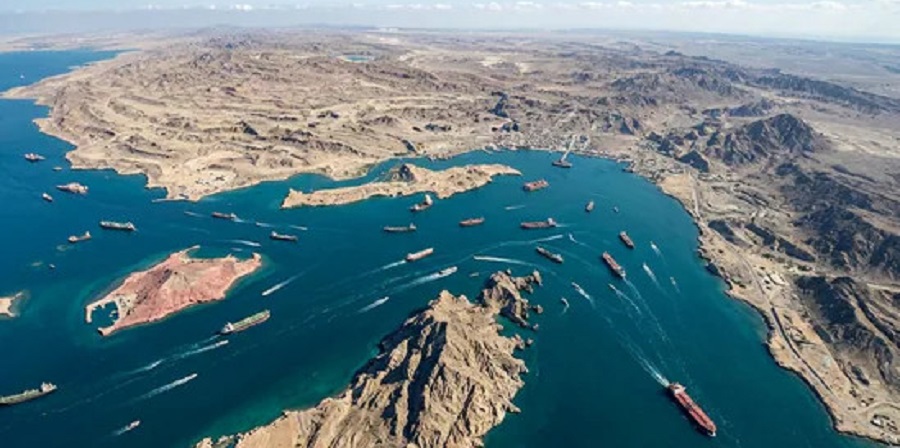
Kathmandu. As Tehran awaits a formal response from Washington on its new plan to reopen the Strait of Hormuz, its stance has become even tougher. Iran on Tuesday threatened to attack US infrastructure in the Middle East.
U.S. President Donald Trump has already rejected Tehran’s offer, but officials, including Iran’s foreign minister, said on Monday they hoped for a formal response from U.S. officials within a day.
Fighting has eased in recent weeks. But Tehran has been targeting ships in the waterway, while Washington has focused on a campaign of economic pressure rather than more military action.
Iran’s chief negotiator, Mohammad Bagher Ghalibaf, warned of a new attack on Tuesday. “If the security of our country is not ensured, no American infrastructure in the region will be safe,” he said. ”
“In an area where we cannot sell oil, no one else will be able to sell oil or if our security is not ensured, then no infrastructure will be safe,” Ghalibaf said in a video broadcast by Iranian television.
Iran has been blocking commercial shipments through Hormuz since the war began in late February with the US-Israel attack on the Islamic Republic.
Before the conflict began, this shipping route accounted for one-fifth of the world’s oil and liquefied natural gas.
The U.S. military is trying to prevent Tehran from exporting oil by maintaining a blockade on Iran’s ports.
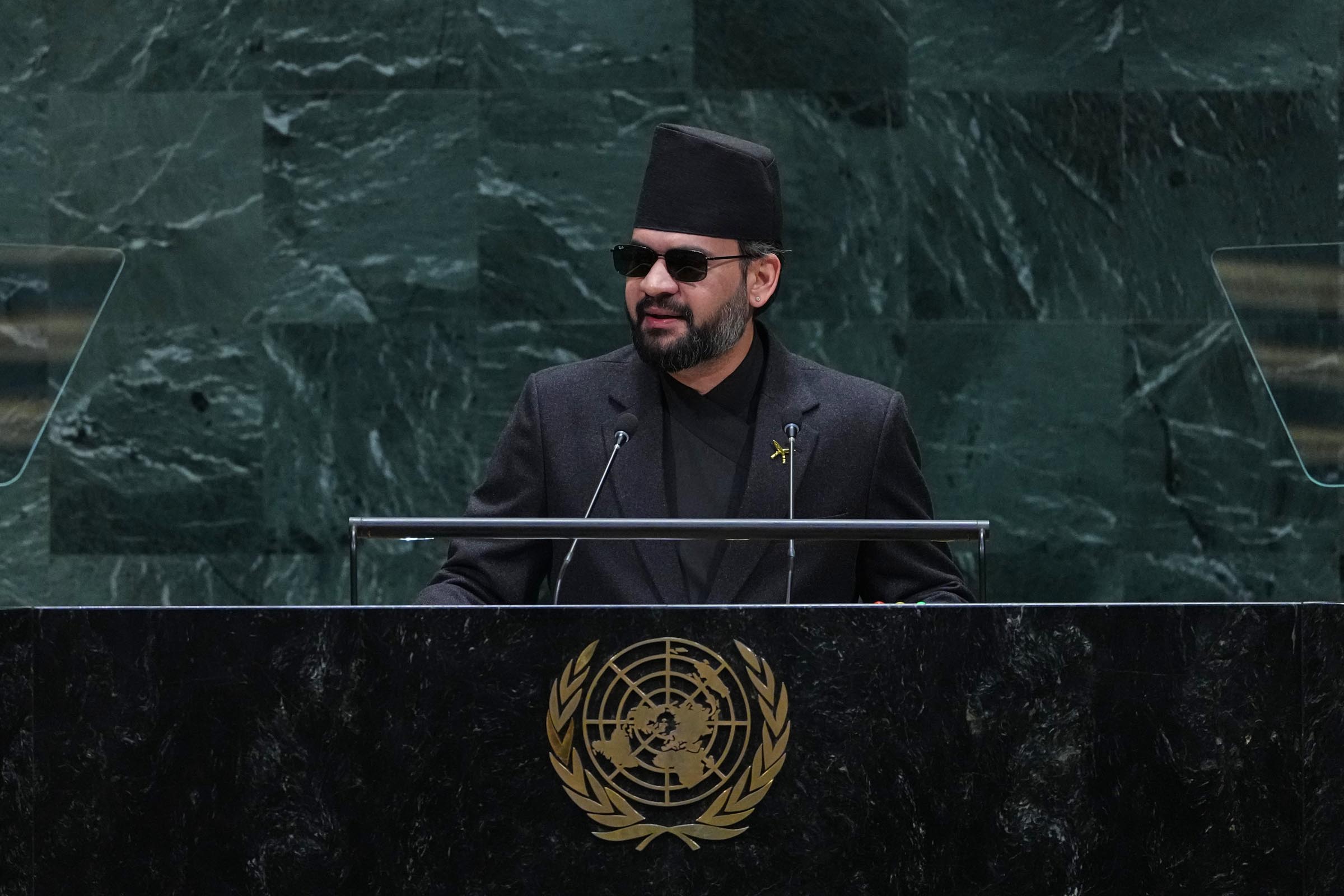
On the possibility of reopening Hormuz, Foreign Minister Abbas Araghchi said on Monday night: “The Qatari mediators “presented ideas and we discussed. They will again raise the issue with the U.S. side, after which the final U.S. response will be given to us.” ”
The senior diplomat, who is in New York for the U.N. General Assembly, said the Qatari authorities expect it to happen by tomorrow. “The current focus is only on the Strait of Hormuz, and the reopening of the waterway is dependent on the fulfillment of some of the conditions that we have communicated to the other side,” he added.
Araghchi and U.S. envoys Steve Wittkopf and Jared Kushner held talks in New York last week. “There have been a number of meetings and messages exchanged, including in New York and some in the past,” Majed al-Ansari, a spokesman for Qatar’s foreign ministry, said Tuesday. ”
“Current efforts are focused on building common ground between the warring parties.” As a precondition for ending the blockade, Iran has demanded a seven-day ceasefire across the Middle East, especially in Lebanon (where Israel regularly bombs its ally Hezbollah).
Iran has also demanded the release of its assets abroad, the lifting of sanctions on the oil sector and the end of the U.S. naval blockade on its ports. Both sides have claimed control of Hormuz. The U.S. says oil is flowing, while Tehran insists the waterway is closed.
On Tuesday, Iran’s Revolutionary Guard (the ideological arm of the country’s military) said that the US claim that it is open is false. “Shutting down the transponder in the dark and quietly transporting a few hundred barrels of oil at a great expense does not mean that the waterway is open,” spokesman Hossein Mohebi said.
“A true open waterway means that at least 125 ships pass through every day, as in the past, and at least 20 million barrels of oil and petroleum products are transported,” he said. “Any ship that tries to cross causes damage — either we attack, or it hits the gunpowder,” he added.
Tehran’s capture of Hormuz has dealt a serious blow to Gulf countries, which have also faced Iranian attacks.
Al-Ansari said the Iranian authorities needed to “decide to distance our countries from this war and take a clear stance of non-aggression towards our neighbors”. ”













प्रतिक्रिया दिनुहोस्