



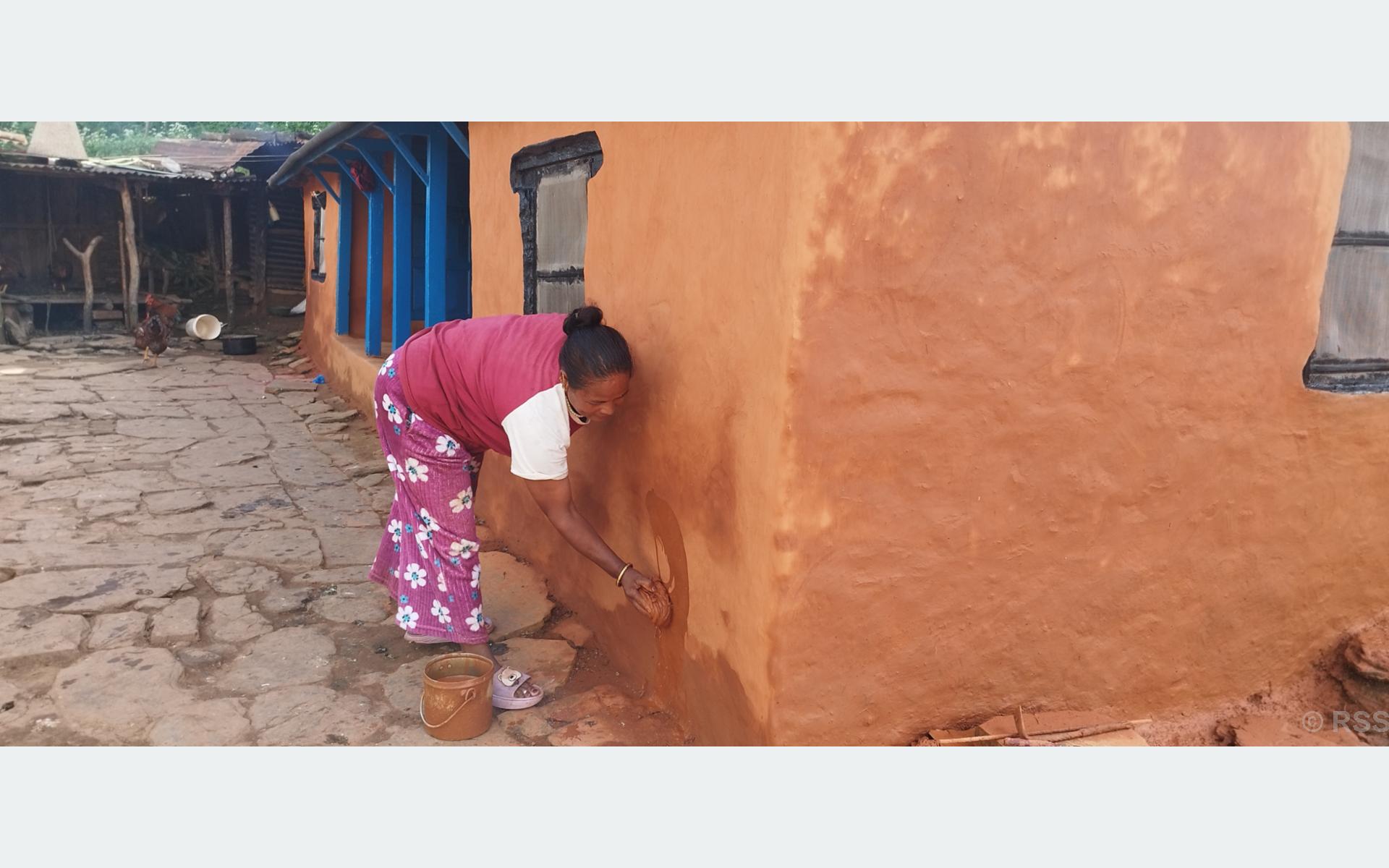
Lamjung. Nowadays, the walls of the village have stopped being painted with red soil and orange. Many houses are found to be painted with red clay.
In the past, as Dashain approached, the village used to look colorful and lively when the houses were painted with red clay and kamero, the practice of painting houses in the traditional style has almost disappeared now. With the increase in the houses plastered with cement and with modern paint, the old charm of the village associated with the arrival of Dashain is also disappearing.
In the past, as Dashain approached, there was a rush to find red clay and blankets in the villages, paint the walls of the houses, paint the doors and windows, and clean the streets. The tradition of the villagers bringing clay together and helping each other to paint their houses was associated with the preparation of Dashain. This tradition has been gradually disappearing in the villages of Lamjung for the past few years.
Locals say that due to the construction of modern houses, the use of cement, the increasing trend of colors available in the market, and the tradition of painting houses with red clay and kamero is weakening. This practice of giving a new look to the houses of the village for Dashain and increasing cooperation among the neighbors is now rarely seen.
Hari Krishna Tiwari, 72, of Besisahar Municipality-11, Chiti, still remembers the old hustle and bustle in the village before Dashain. According to him, in the past, the villagers used to walk for half an hour to an hour to reach the place near the forest and dig red soil to paint the house. After that, the walls of the houses were painted with red clay and camel, the doors and windows were painted black, and the roads were cleaned.
It was not only the responsibility of the landlord to paint the house. The villagers used to bring soil together and help each other to paint each other’s houses. It was customary for the neighbors to bring soil and help in gathering the necessary materials for the families who were only elderly in the house or could not paint the house on their own. Tiwari feels that mutual cooperation and cooperation is weakening as before.
According to him, the trend of family members going out of the village in search of employment and other opportunities has increased while some houses are vacant and only elderly people live in some houses, which has reduced the old hustle and bustle of the village.
This change has also been seen in Tiwari’s own house. According to him, before the earthquake of 2072, his house was in a traditional style and red clay and orange were painted. He said that after the earthquake, the old structure was not maintained while constructing a new house, so now the house is not in a situation to be painted as before.
According to Laxman Gurung of Nauthasera Rural Municipality-4, this tradition is disappearing due to the decrease in the number of old houses and the increase in the use of cement and sand in new houses. He said that in the past, most of the houses in the village used to be smeared with red clay and blanket, but now the practice of plastering cement has increased even in old houses.
The tradition of painting some houses in Besisahar Municipality-3 with red clay and kamero still continues. Some locals of the village near the Lamjung Palace have been continuing the practice of keeping the village clean and attractive by painting the house in the traditional style.
According to Suresh Shrestha, a local, some houses in the village and city are still painted with red clay and orange. He said that this tradition is also at risk of disappearing gradually due to the increasing construction of modern houses and the process of demolishing old houses and building new structures.
The practice of painting the house with red clay and camero was not just a way of decorating the house. It involved the use of local resources, traditional skills and cooperation between the neighbors. Before Dashain, the work of the villagers together also strengthened the collectivity and mutual cooperation. With the changing rural lifestyle, this practice has weakened, and the old tradition of working together during the festivals along with the color of red clay and orange from the walls of the village has also disappeared.















प्रतिक्रिया दिनुहोस्