



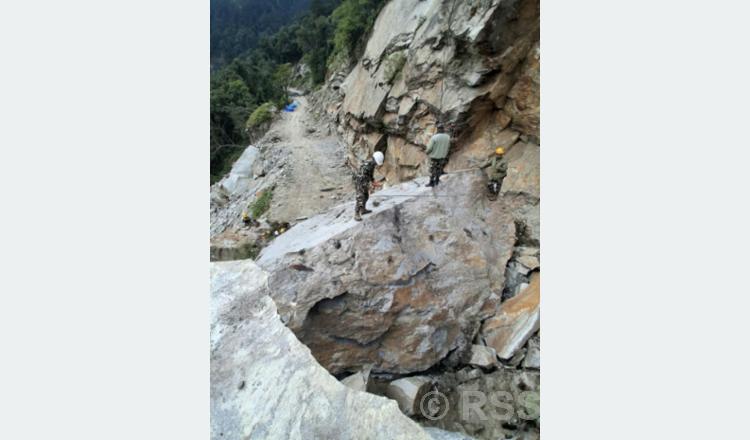
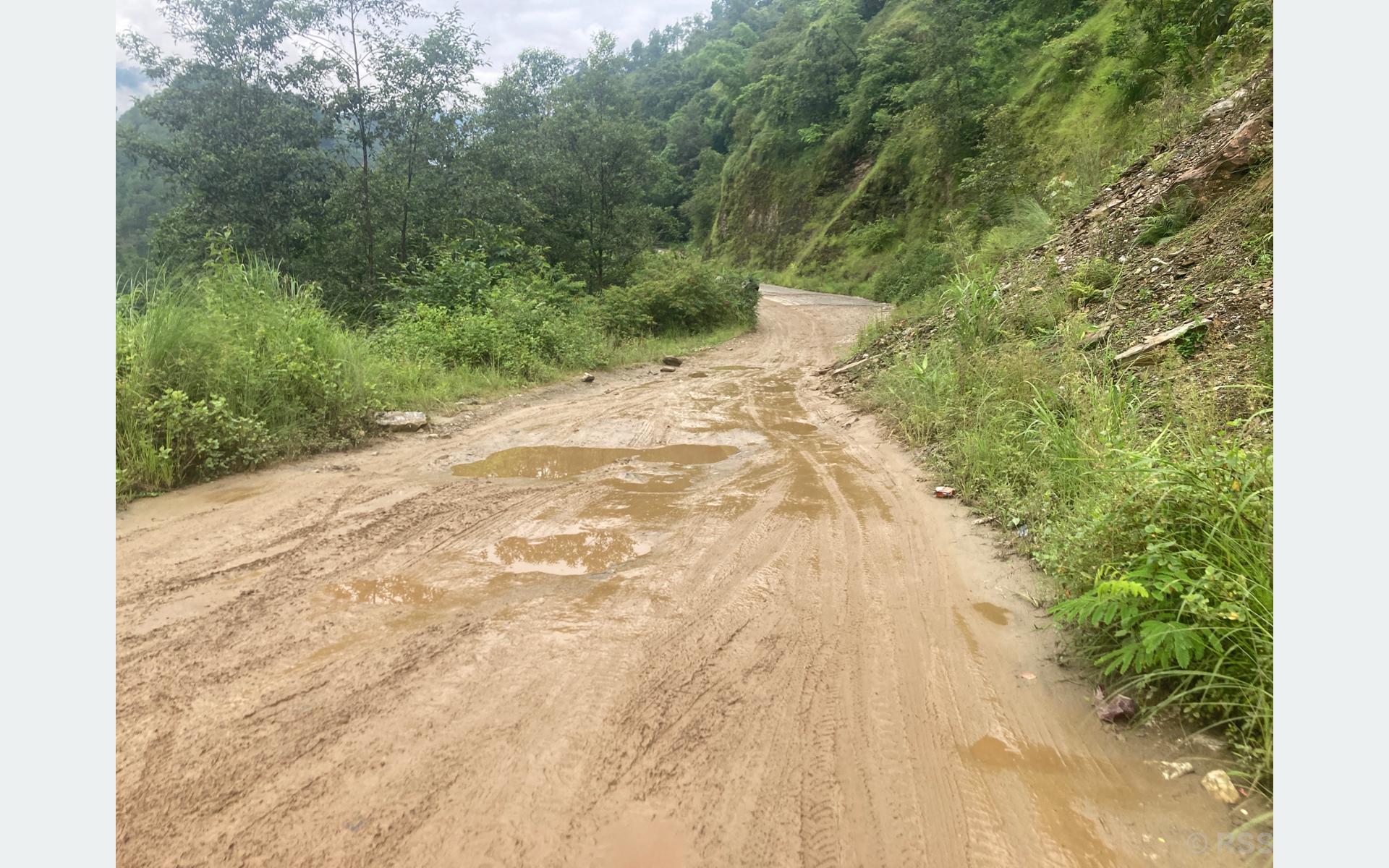
Sankhuwasabha. The Khandbari-Kimathanka road section, which was blocked, has been reopened since Monday evening. The ‘lifeline’ road section connecting Nepal and China was obstructed for the past three months. In August, a landslide at Chhumsur in Bhotkhola Rural Municipality-2 had completely disrupted vehicular movement on the road.
The North-South (Koshi) Highway Project had requested the Nepal Army to clear the landslide at the area, which is located about 21 kilometers from Kimathanka and about 141 kilometers from Khandbari. According to the request, the Nepal Army No. 1 was joined by a military team from Chhumsur Post under the Development Construction Battalion. According to the project chief Ram Bahadur Gurung, the army team deployed at the place had split the big rocks into small pieces through blasting and the project removed the rocks and brought the road back into full operation.
According to him, explosives had to be used as normal equipment was not possible to remove the big rocks that fell in the landslide. Rasuwagadhi of Rasuwa, Tatopani of Sindhupalchowk and Korala border point of Mustang have been affected due to natural disasters and road blockades. In such a situation, it is expected that the resumption of transport services on the Kimathanka road section will be easier. It has further highlighted the importance of access to the northern border.
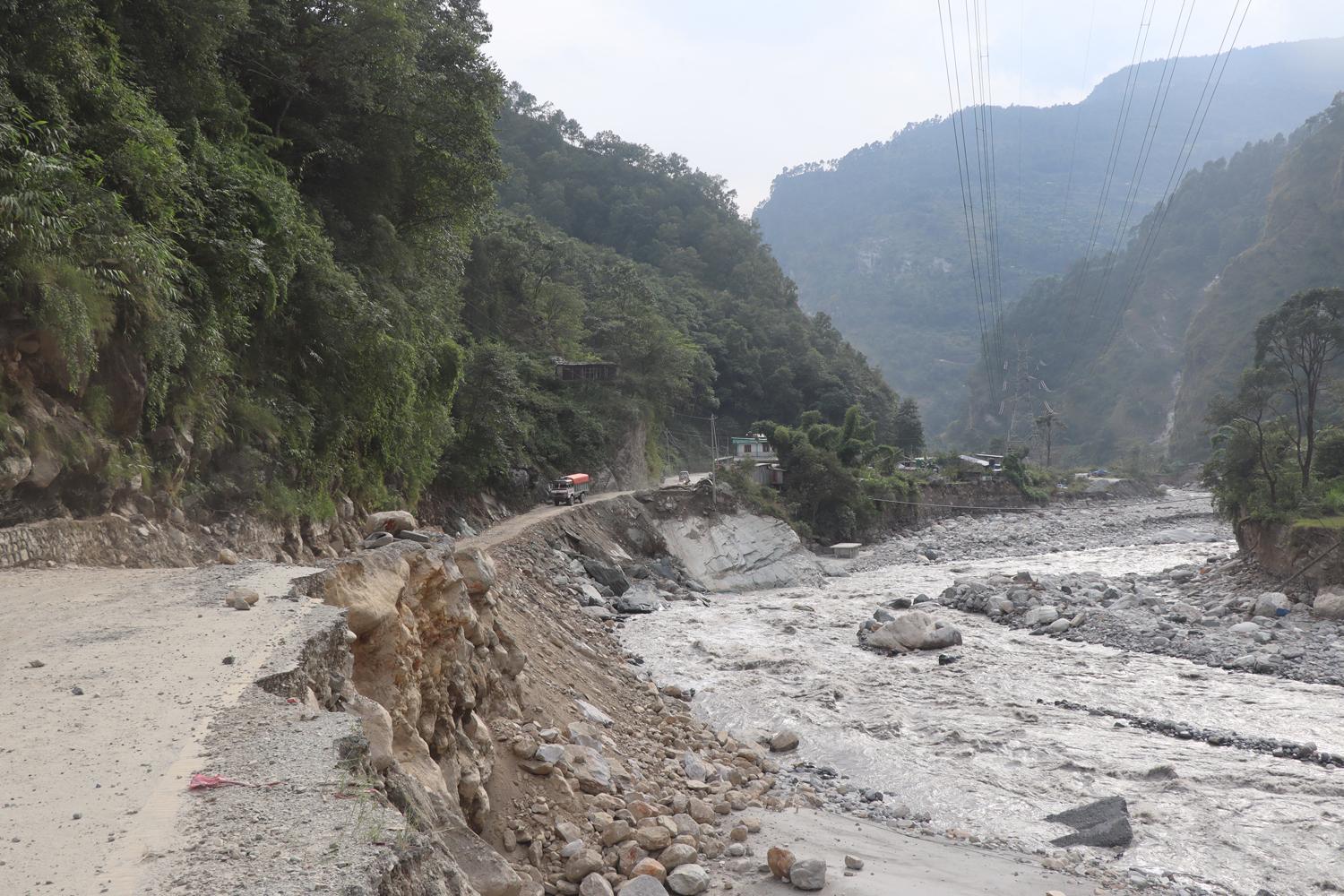
Project Chief Gurung said, “It was very difficult to remove the landslide with big rocks at Chhumsur in Bhotkhola-2 due to the geographical situation. The Nepal Army had relentlessly contributed and supported to remove the rock obstruction in the challenging situation.” The obstruction of the road had also created problems in daily movement, transportation of goods and local life. The Road Project Office has said that the traffic is being operated by carrying out regular maintenance on other road sections. The road is strategically important to connect the road network of the Koshi region to the northern border area, which has been facing challenges due to the risk of landslides and landslides during the rainy season.
The government had given the responsibility of constructing 10.8 km of the 162 km Khandbari-Kimathanka road section to the Army due to the geographically very difficult rocks. Due to the hard rocks and geographical remoteness, the army had completed the construction of the road by transporting construction materials by helicopter and handed it over to the army last April. The Kimathanka border point in the northern part is considered to be geographically difficult. The Kimathanka-Jogbani section is considered to be the shortest road connecting the neighboring country China and India. The people of Sankhuwasabha, Dhankuta, Tehrathum, Sunsuri, Morang, Jhapa and Bhojpur of Koshi Province will be benefited after the Kimathanka-Jogbani road section is operational.
The active mobility of the road project has not only maintained the operation of the national infrastructure but has also helped the smooth movement of the people in the remote areas and the livelihood of the people.













प्रतिक्रिया दिनुहोस्