



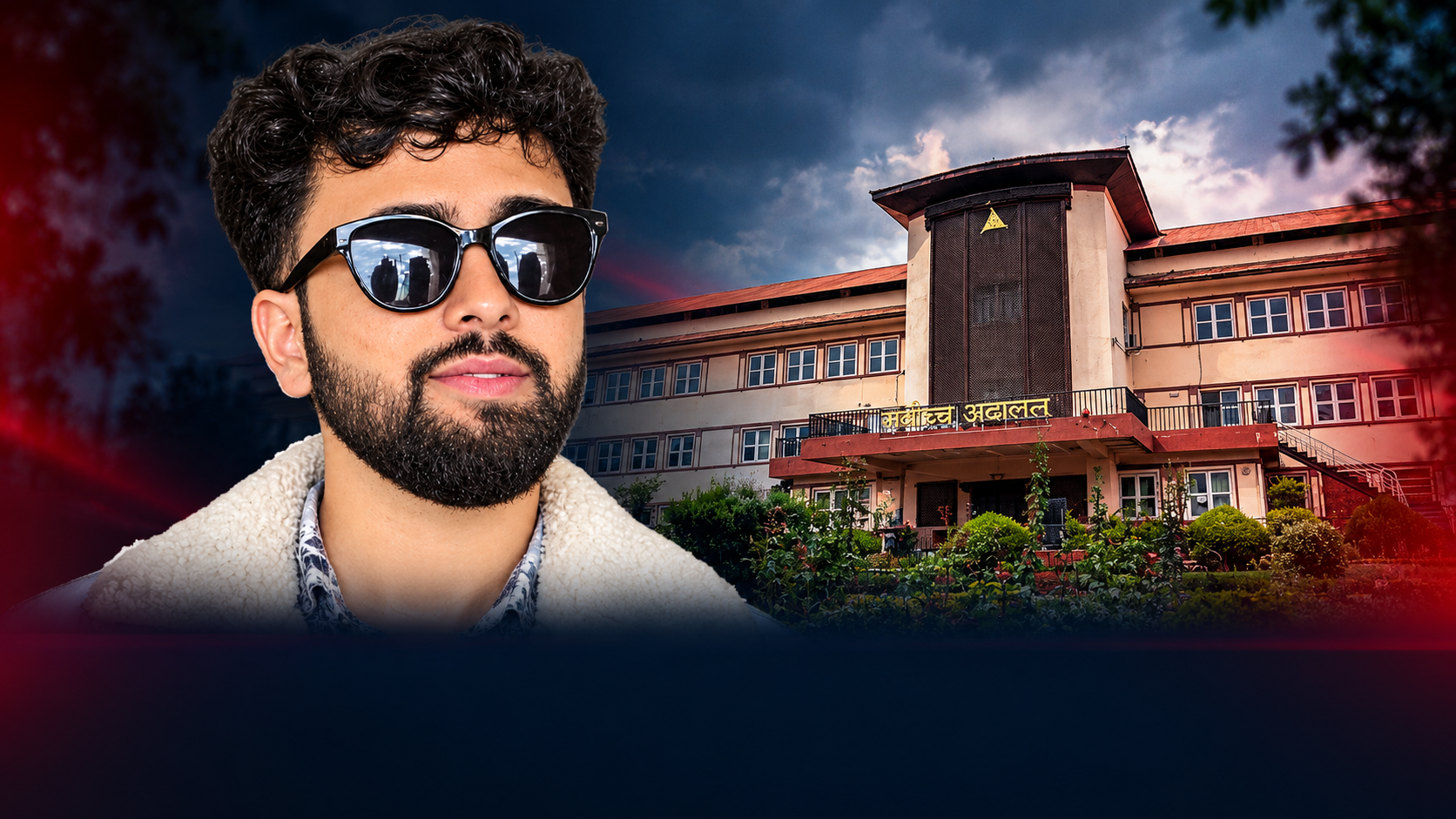
Kathmandu. The judiciary is considered to be the last trust of democracy. The court is the last door to the citizens when they do not get justice from other organs of the state. Therefore, the biggest strength of the judiciary is not only its judgment but also its impartiality and public trust. But when the judges who are responsible for dispensing justice are questioned for their contacts, meetings with the controversial persons, and dialogue about the pending cases, then not only the conduct of one person is questioned, but the reputation of the entire judicial institution is hurt.
In recent times, the Iman Sapkota case has brought Nepal’s judiciary to this uncomfortable point. Sapkota, who came under the scanner for his contacts and conversations during the mobile phone examination of former Chief Justice of the Supreme Court, Cholendra Shumsher Rana, is now in the news due to his possible connections with the judiciary, police administration and political circles.
Sapkota, 30, who hails from Jhapa and is also known as a doctor, is now being established as a judicial intermediary. He is being investigated on suspicion of trying to influence the state agencies by using his connections with influential politicians, judges, police officials and businessmen.TAG_OPEN_p_83
What makes the matter more serious is his contact with Supreme Court Justice Hari Prasad Phuyal. The WhatsApp conversations and the meeting at Hotel Himalaya have raised serious questions about the conduct of judges, judicial independence and institutional accountability within the court.
Message expressing the Prime Minister’s concern in the sub-judice case
According to a news report published by Naya Patrika Daily on Thursday, the WhatsApp conversation between Sapkota and Justice Phuyal mentions the habeas corpus petition filed by businessman Rohit Gupta.TAG_OPEN_p_80
} Sapkota sent a screenshot of the petition to Phuyal and asked him to dismiss the petition citing the concern of Prime Minister Balendra Shah.
“You have to stop it, sir,” Sapkota wrote, “The Prime Minister is also interested in this, please cancel it.” ‘
TAG_OPEN_p_77 Phuyal, however, replied that there were grounds to release Gupta. The court had ordered him to be released on bail of Rs 2 crore. Phuyal also sent a link to the order.
} After this, it seems that the two will meet the next evening at Hotel Himalaya.
} The main question here is not just about the name of whom Sapkota tried to influence the judge. Talking to the judge about the pending case and then meeting him in a hotel is itself a serious matter from the point of view of judicial conduct and institutional decorum.
Whether the judges gave a decision under any pressure or not is one aspect. But it is also a serious challenge for the judiciary to create a situation where the impartiality of the judges is publicly doubted.
Judge Phuyal’s Accepted Meeting
}
Justice Phuyal admitted that he had a conversation with Sapkota on WhatsApp and met him at Hotel Himalaya. According to him, Sapkota had claimed that he was a representative of the Prime Minister.
Phuyal said that Sapkota was trying to reassure him at a time when there were rumors that some justices could be impeached following the appointment of Manoj Kumar Sharma to the post of Chief Justice.TAG_OPEN_p_71
} He said that not only he but other judges were also present in the meeting.
But this clarification does not address all aspects of the dispute. Why was there a need to communicate with an outsider about the pending case? What was the reason for meeting in a hotel about two kilometers from the Supreme Court?
{{TAG_OPEN_p_68} These questions need to be answered.
The impartiality of the judge should not be seen only in the writing of the judgment. The judge’s conduct, contacts and public conduct should also establish his credibility.
A network of possible connections opened by a mobile phone
Sapkota was arrested by the police from Tribhuvan International Airport on September 26 when he was going to India. The police had started investigating Sapkota after it was found that they had frequent contact with him during the mobile examination of former Chief Justice Jung Rana.
His cell phone and other electronic devices were subsequently examined and his communications with sitting and former judges, top police officers, politicians, lawmakers and lawyers were found to be in the works.TAG_OPEN_p_64
Police suspect that he may have acted as a liaison for anyone from government officials seeking promotions to those seeking a favourable verdict from the court.TAG_OPEN_p_63
The investigation has been further widened by the alleged links with former Chief Justice Rana and businessman Deepak Bhatta and other influential people. It is said that investigations are also being carried out regarding possible money laundering.
Some of the documents made public in this case show that the bank accounts of Chief Justice Manoj Kumar Sharma, Rastriya Swatantra Party lawmaker and former Additional Inspector General of Police Bishwaraj Pokharel and senior police officer Banshidhar Dahal were asked to deposit their bank accounts.TAG_OPEN_p_61
The records state that the sum of Rs 1,98,333 was deposited on different dates during the three months and an additional US$ 7,500 was requested. It is claimed that the money was sent to the accounts of Sapkota’s relatives in Nepal and the United States.
But the fact that these details are made public does not prove the involvement of the persons concerned. Chief Justice Sharma said that he did not know Sapkota and had no direct or indirect contact with him. Therefore, there is a need for an impartial investigation into the authenticity of the leaked documents, the source and destination of the funds and the role of the persons concerned.
Dahal was removed from the post after an investigation into his conversation with Sapkota and his visit to former Chief Justice Rana at night after he was arrested by the police.TAG_OPEN_p_58
Demand for investigation raised within the judiciary
}
This case has also created discomfort in the Supreme Court. In the plenary meeting of the Supreme Court, the judges said that a committee should be formed under the leadership of the sitting judge to investigate the meeting and relationship with Sapkota.
{{TAG_OPEN_p_55} The meeting also voiced the need to address the dispute over the formation of the Constitutional Bench, the alleged transactions in the name of the Chief Justice and the violation of the Judges Code of Conduct.
The judges have concluded that if the questions raised on the judiciary are not resolved in time, it will further damage the people’s faith and the reputation of the institution.TAG_OPEN_p_54
This incident has also exposed an important weakness within the judiciary. The responsibility of protecting the dignity of the judiciary is not left to the personal honesty of the judges alone. A strong system of institutional oversight, transparency and accountability is also needed.
Honesty of a judge is the basis of justice
}
Former U.S. Supreme Court Justice Benjamin N. Cardozo discusses the impact that personal biases, emotions, and social attitudes can have on a judge’s decision-making process. Similarly, Martin Shapiro describes the court as the third and fairest side between the two sides of a dispute. The parties to the dispute expect an impartial decision from the court. But if there is a suspicion that a third party is influenced by one party, then the basis of the judicial structure will be weakened.
The current developments in Nepal can be seen from this theoretical perspective.
Every citizen who goes to the court should trust that justice will be done without personal access, political affiliation, or financial influence to the judge. When the honesty and impartiality of the judge is questioned, that trust is weakened.
The final conclusion whether Sapkota is guilty or not will be decided by the investigation and the judicial process. Similarly, it should be clear from an impartial investigation whether Judge Phuyal’s meeting and interaction violated the code of conduct or not. But one thing is clear that the prestige of the judiciary is greater than the position, power or personal explanation of any one judge.TAG_OPEN_p_48
If a judge starts exchanging his position and prestige with honesty, the public trust in the court’s decision, even if it is legally correct, may be weakened. The real power of the court is not in the order, but in the trust of the citizens in that order.
Therefore, the need of the hour is not allegations and counter-allegations, but fair investigation and accountability. The judiciary should not put itself above the question, but should prove its impartiality by facing the question. Because the biggest basis for saving the dignity of the judiciary is the honesty of the judge.














प्रतिक्रिया दिनुहोस्