



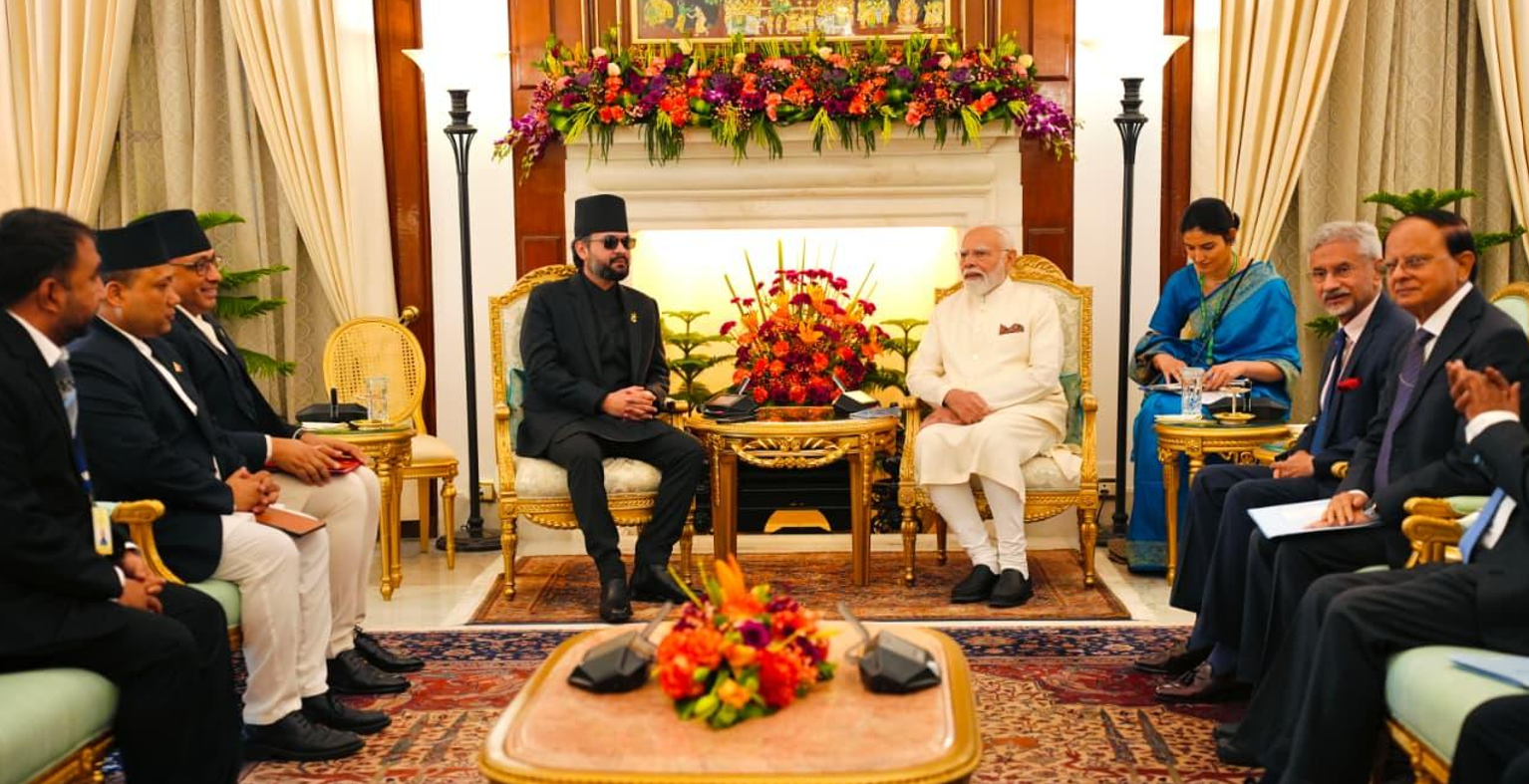
Kathmandu. Prime Minister Balendra Shah, who is visiting India, has completed his visit. He is scheduled to return home today.
A high-level meeting took place during the visit. A joint statement was issued after the visit.
The statement mentioned that India will provide a total of 15,000 crore Indian rupees (24,000 crore Nepali rupees) in development aid for Nepal’s post-disaster reconstruction in the infrastructure and energy sectors.
This includes grants of 3,500 crore Indian rupees (5,600 crore Nepali rupees) for reconstruction and infrastructure, and 11,500 crore Indian rupees (18,400 crore Nepali rupees) concessional loans (line of credit) for energy sector projects.
The announcement to establish an agro-industrial park in Chitwan with grant support has been welcomed. To expand air connectivity, they have agreed to make the Kathmandu–Bhairahawa–Lucknow (B345) air route, which is currently one-way, two-way. Technical consultations will be conducted to finalize the technical aspects and other civil aviation proposals.
Prime Minister Modi has announced new access for Nepal’s transit trade from Deendayal Port in Kandla, Gujarat.
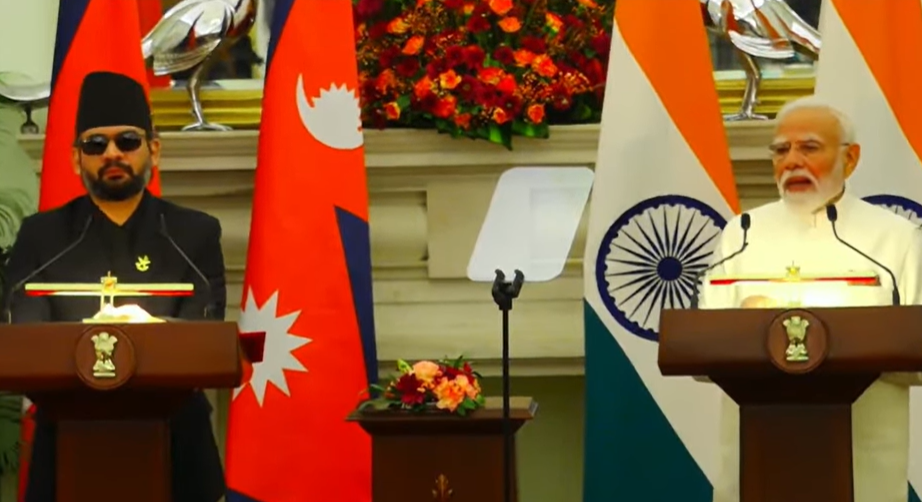
Here is the joint statement issued regarding Prime Minister Shah’s visit to India (22–23 November 2026)
1. At the invitation of the Prime Minister of India, Shri Narendra Modi, Nepal’s Prime Minister His Excellency Shri Balendra Shah completed a state visit to India from November 22 to 23, 2026. He was accompanied by a high-level official delegation. This was Prime Minister Balendra Shah’s first visit to India after assuming office.
2. Prime Minister Shah was formally welcomed at Rashtrapati Bhavan. He visited Rajghat to pay tribute to Mahatma Gandhi. Prime Minister Shah paid a courtesy call on the Honorable President of India, Mrs. Droupadi Murmu. India’s Foreign Minister Dr. S. Jaishankar also paid a courtesy call on Prime Minister Shah.
3. Prime Minister Modi held bilateral talks with Prime Minister Shah and hosted a luncheon in his honor. The discussions between the two leaders focused on key areas of bilateral cooperation, regional issues of mutual interest, and global developments.
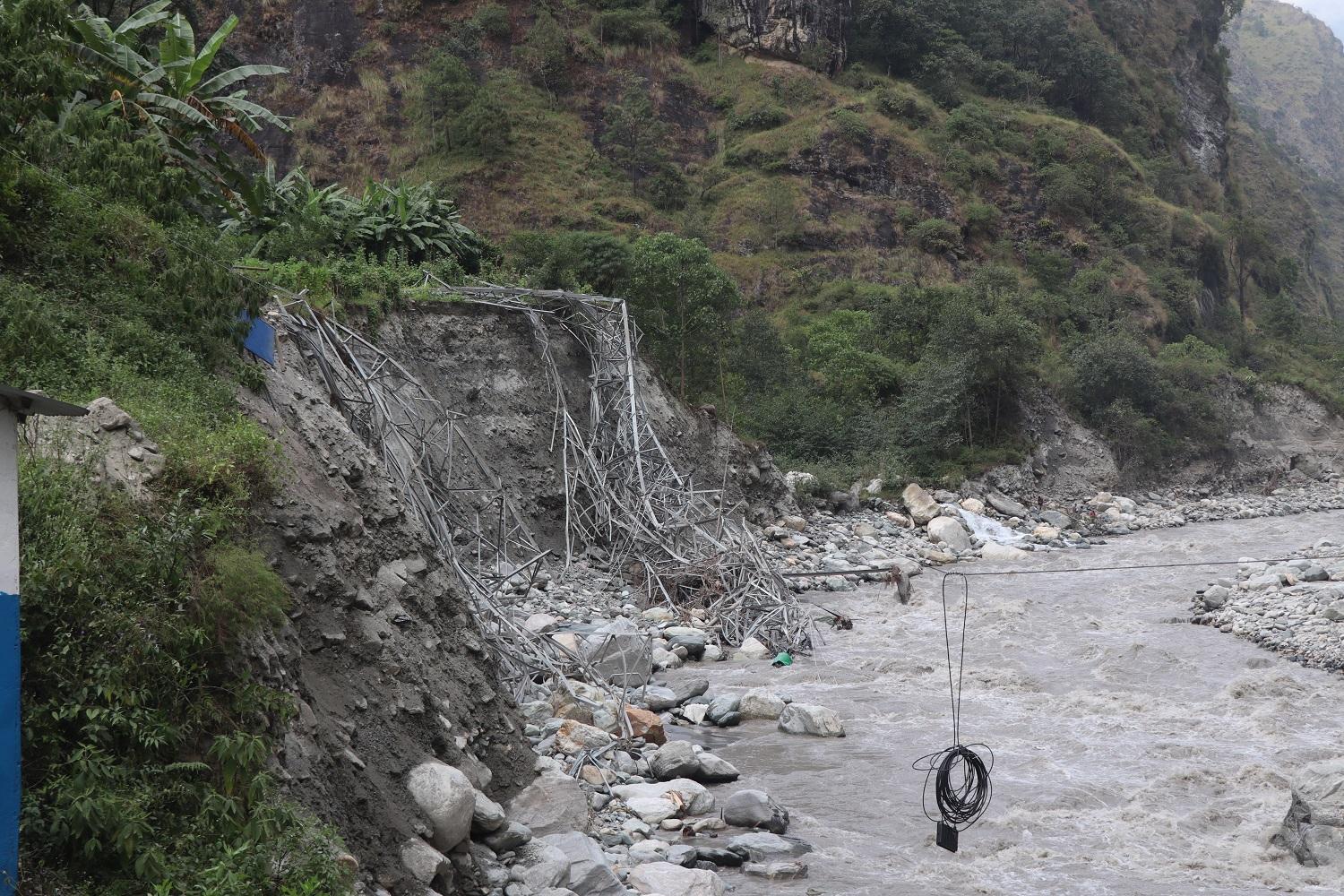
4. Prime Minister Shah expressed gratitude for the humanitarian and technical assistance provided by India and the solidarity shown following the devastating Rasuwa-Bhotekoshi floods that caused significant loss of life and property in Nepal.
5. Prime Minister Modi reiterated India’s unwavering commitment to Nepal’s development journey as a close friend and neighbor. India will provide development assistance totaling 15,000 crore Indian rupees (24,000 crore Nepali rupees) through grant assistance of 3,500 crore Indian Rupees (5,600 crore Nepali rupees) for post-disaster reconstruction and new infrastructure projects in Nepal, and a concessional line of credit based on 11,500 crore Indian rupees (18,400 crore Nepali rupees) for energy sector projects. The procedures for providing specific projects and development assistance will be decided through mutual consultation.
6. Both leaders expressed satisfaction with the progress being made in the implementation of development projects in Nepal, including High Impact Community Development Projects (HICDP). They reviewed the progress made in the construction of the National Police Establishment being constructed in Nepal with the assistance of the Government of India. Both leaders welcomed the announcement to establish an Agro-Industrial Park in Chitwan with Indian grant assistance.
7. Both leaders adopted a Joint Vision for a “Developed India and a Prosperous Nepal.” This joint vision paper provides a roadmap for an aspirational and forward-looking partnership between India and Nepal. It includes initiatives to strengthen traditionally strong bilateral cooperation areas such as economic and development partnerships, connectivity, energy and water resources, and people-to-people relations, as well as new collaborations in climate resilience, disaster mitigation and management, sports, start-ups, digital services, space, and innovation.
8. The leaders reviewed ongoing discussions on civil aviation matters to enhance connectivity and promote bilateral economic engagement. Both sides agreed to make the B345 Kathmandu–Bhairahawa–Lucknow air route, currently unidirectional, bidirectional. Technical consultations will be conducted to finalize the related procedures and address other civil aviation proposals currently under discussion from both sides.
9. Prime Minister Modi announced a new connectivity route for Nepal’s transit trade through Deendayal Port (Kandla, Gujarat). Additionally, once the necessary infrastructure is ready, access to Paradip Port (Odisha) will also be provided.
10. Both leaders emphasized the importance of improving cross-border connectivity and enhancing border infrastructure through the installation of new railways, bridges, integrated checkpoints (ICPs), and petroleum pipelines.
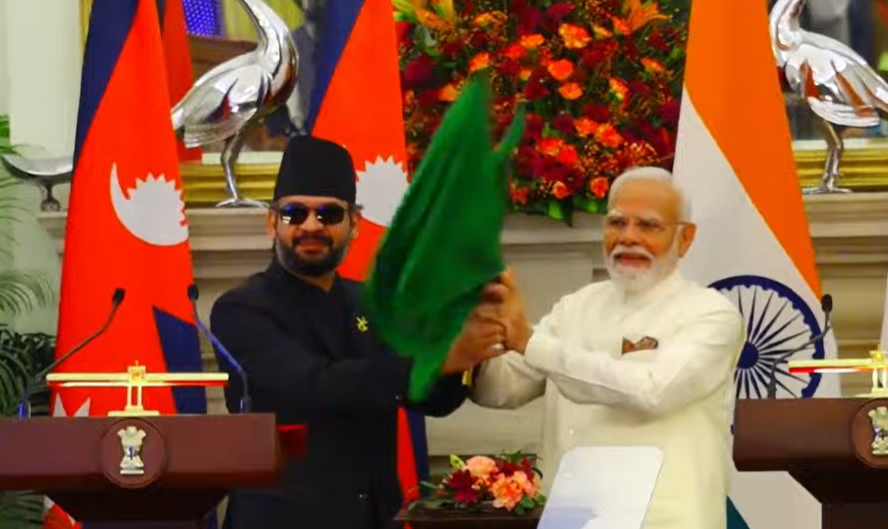
11. The two prime ministers jointly inaugurated (with a green flag) the new railway service ‘Saryu–Kamala Express’ between Ayodhya and Janakpur. This rail service will not only improve connectivity but also further support religious and cultural tourism under the Ramayana Circuit and deepen the civilizational ties between India and Nepal. The leaders agreed to expand similar networks to develop Buddhist and Shiva-Shakti religious tourism circuits.
12. Both leaders announced the completion of the Field Location Survey for the proposed Raxaul–Kathmandu electrified broad-gauge railway and declared that both sides would cooperate in the development of the East–West Railway in Nepal.
13. Both leaders virtually laid the foundation stone for a new Integrated Check Post (ICP) in Banavasa and welcomed the progress made in building ICPs in Bhairahawa, Sunauli, and Dodhara–Chandni. Three ICPs have already been operational between India and Nepal.
14. The leaders inaugurated a new cross-border motorable bridge between Dharchula (India) and Darchula (Nepal). This will help improve direct connectivity between western Nepal and India.
15. The leaders expressed satisfaction with the progress made in joint on-the-ground work on the maintenance of border pillars and instructed the foreign and foreign secretaries of both countries to work on the remaining border-related issues.
16. During the expansion of cross-border petroleum infrastructure between India and Nepal, the leaders dedicated the second phase of the Motihari–Amlekhganj pipeline to the people of Nepal. The two leaders also laid the virtual foundation stone for the construction of a petroleum terminal in Jhapa, Nepal, emphasizing the need to start work on the Siliguri–Jhapa Petroleum Pipeline as soon as possible. Both sides agreed to cooperate in the construction of gas pipelines between India and Nepal.
17. Both sides expressed satisfaction with the bilateral progress made in the hydropower sector in accordance with the ‘India-Nepal Joint Vision Paper on Energy Sector Cooperation’ and the long-term electricity trade agreement. Both sides welcomed the active involvement of Indian companies in Nepal’s hydropower sector and agreed to ensure the rapid completion of various hydropower projects being developed by Indian companies in Nepal. On this occasion, the two leaders virtually laid the foundation stone for the 669-megawatt Lower Arun Hydroelectric Project.
18. Both leaders instructed the Pancheshwar Development Authority and the Joint Committee on Water Resources to finalize the detailed project report (DPR) for the Pancheshwar Multipurpose Project as soon as possible and to begin project implementation work. Both leaders also agreed on the need to accelerate work on the DPR of the Saptakoshi and Sunkoshi Multipurpose Projects to utilize water resources for mutual benefit and mitigate the impact of floods.
19. Both parties expressed satisfaction with the progress in establishing joint undertakings (JVs) for two high-capacity cross-border transmission lines between Inaruwa (Nepal)–New Purnia (India) and Dododhara (Nepal)–Bareilly (India).
20. Expanding the development and capacity-building support India has been providing to Nepal, both leaders agreed to establish an ‘off-shore’ IIT campus in Nepal. This will greatly strengthen Nepal’s education sector and also support job creation. Both leaders welcomed the expanding cooperation between India and Nepal in technology areas such as start-ups and digital and financial connectivity.
21. Both sides recognized the need for mutual facilitation to extend easy access to services including banking and telecommunications for citizens residing in each other’s countries.
22. During the visit, the following memorandums of understanding (MoUs) were exchanged between the two parties:
i. Memorandum of Understanding on Academic and Investigative Cooperation between the National University of Forensic Sciences, Gandhinagar, Gujarat, India, and the Criminal Investigation Department, Nepal Police.
ii. Memorandum of Understanding between the National Defence University (RRU), India, and the National Police Establishment (NPA), Nepal.
iii. Memorandum of Understanding between the National Centre for Good Governance (NCGG) under the Department of Administrative Reforms and Public Grievances, Government of India, and the Nepal Administrative Training Academy (Staff College) under the Ministry of Federal Affairs and General Administration, Government of Nepal, concerning a capacity-building training program for civil servants of Nepal.
iv. Memorandum of Understanding between the Government of India and the Government of Nepal on cooperation in the field of Ayurveda and other traditional medical systems.
v. Memorandum of Understanding between the Indian Space Research Organisation (ISRO), Government of India, and the Ministry of Information and Communications (MOIC), Government of Nepal, regarding the establishment of a satellite communications (SATCOM) network for the use of South Asian satellites.
vi. Memorandum of Understanding between the Government of India and the Government of Nepal on technical cooperation in the field of sustainable urban development.
vii. Memorandum of Understanding between the Ministry of Health and Family Welfare, Government of India, and the Ministry of Health and Food Safety, Government of Nepal, on cooperation in the field of health and pharmaceuticals.
viii. Memorandum of Understanding between the Government of India and the Government of Nepal on cooperation in the field of livestock and fisheries development.
23. The Prime Minister of Nepal expressed gratitude to the Prime Minister of India for the warm hospitality extended to him and his delegation; and formally invited him to visit Nepal. The Indian Prime Minister accepted the invitation, with the official date of the visit to be determined through diplomatic channels.
24. The India–Nepal partnership is based on deep trust, friendship, mutual respect, and understanding at all levels, further strengthened by strong people-to-people ties and close economic and development cooperation. This visit reaffirmed the tradition of regular high-level visits exchanged between the two countries and the commitment of both sides to further advance it.
23 November 2026
New Delhi







प्रतिक्रिया दिनुहोस्