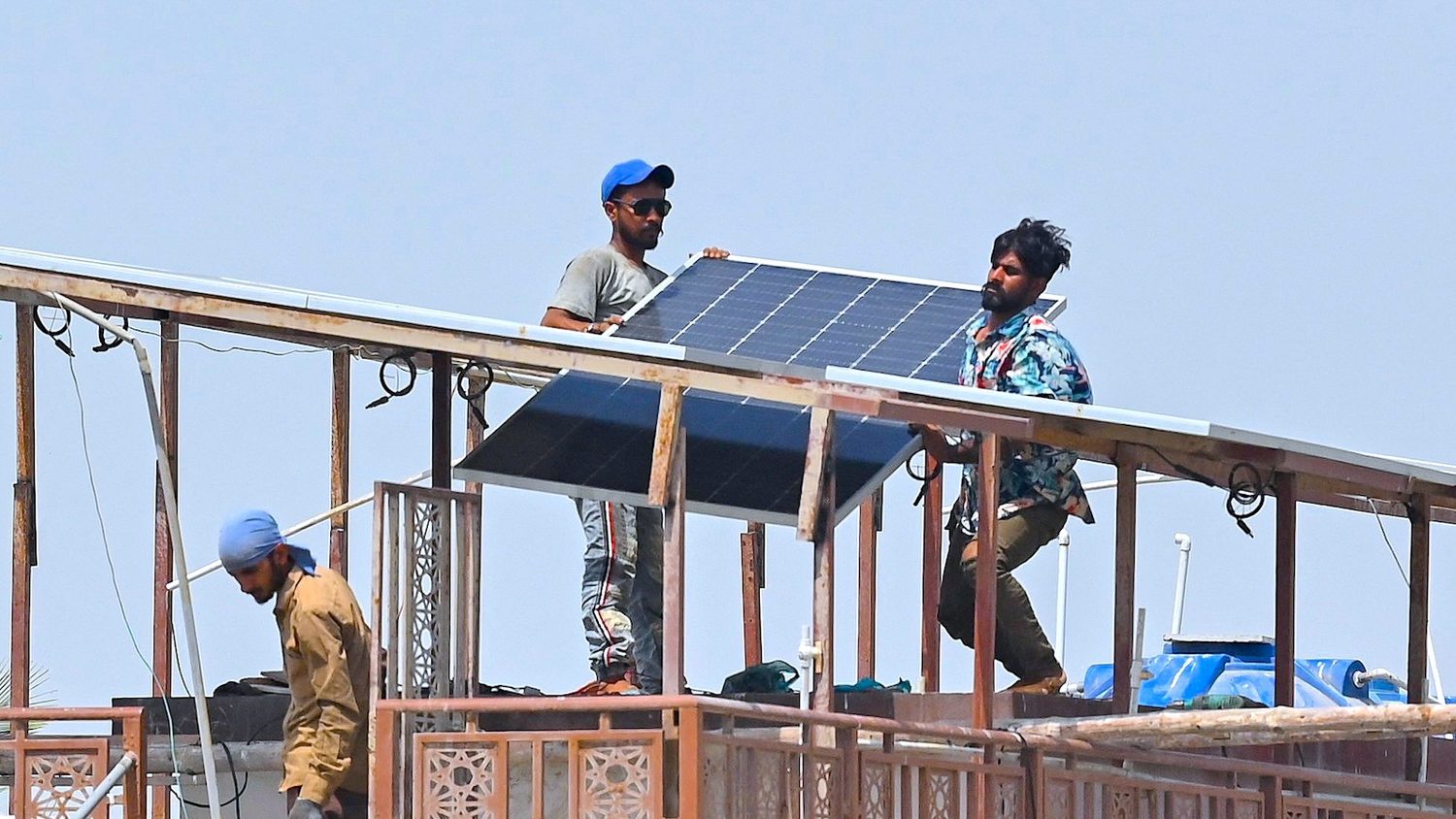
Kathmandu. With no improvement in the quality of electricity supplied to industrial areas, industrialists have started increasing the use of solar energy as a reliable alternative.
After unannounced load shedding, frequent tripping, and voltage fluctuations (low voltage) have increased production costs and caused damage to expensive machinery, industrialists have started installing solar energy in industrial complexes.
Industries operating in major industrial corridors such as Birgunj–Pathaliya, Bhairahawa–Butwal, and Biratnagar–Itahari have begun to view solar energy as a reliable alternative to electricity. Irregularities in electricity supply in industries like cement, steel, plastic, textiles, and food processing have increased production costs and added challenges to their operations.
When electricity in the industry is interrupted for a short time, the production process is affected. Industrialists face problems such as it takes time to restart after the machine shuts down, wastes raw materials used during production, and prevents them from producing goods within the stipulated time. Using diesel generators as an alternative to power shortages has further increased production costs.
According to Netra Prasad Acharya, president of the Siddhartha Industry and Chamber of Commerce Association, although the government has maintained sufficient electricity in the country, industries have not been able to get electricity as needed during the dry season. He said that from Chaitra to Asar, electricity supply in the industrial area is uncertain.
‘The government keeps saying that electricity is out of stock. But from Chaitra to Asar, industries do not get enough electricity. During this time, you don’t know when power cuts will happen or when they will come,’ says Acharya.
According to him, during power shortages, the government prioritizes domestic consumers and directs industries to use electricity at specific times. This is directly affecting the regular production of industries. To avoid this problem, even large industries in industrial areas like Bhairahawa-Butwal and Lumbini have started installing solar energy systems, he said.
According to Acharya, the floods in the Bhotekoshi area in the current fiscal year have damaged hydroelectric projects, raising concerns that the electricity supply problem may become more complicated in the upcoming dry season. ‘There is concern that this dry season will see load shedding again in Nepal,’ he says.
Since river-flowing hydropower projects make up a large share of Nepal’s electricity generation system, electricity production also decreases during dry seasons as river flow decreases. In such cases, electricity must be imported from India to meet demand. Industrialists say that dependence on imports makes electricity supply in industrial areas even more uncertain.
{{TAG_OPEN_div_74}On top of that, due to the lack of a permanent arrangement to provide a fixed amount of electricity to industries on a regular basis, they have found themselves forced to invest in alternative energy systems. Acharya says that to reduce the impact of irregular electricity on production and to lower long-term operating costs, industrialists have started prioritizing solar energy.

‘Industrialists are installing solar because it costs less than electricity and can also reduce the cost of the products produced,’ says Acharya.
The appeal of solar energy is not limited to the uncertainty of electricity supply. Compared to diesel generators, it is environmentally friendly and has lower operating costs as a key reason for its increased use.
Vikas Goenka, the operator of Gharana Foods, has also installed solar energy systems in his industry. According to him, when electricity supply is disrupted, there is a compulsion to run generators. However, due to the cost and consumption of diesel, electricity produced from generators becomes expensive. This increases the overall production cost of the industry.
‘Diesel is used more in generators. It also causes pollution in the environment. Therefore, we have also invested in solar energy to prioritize the government’s clean energy promotion policy,’ says Goenka. According to him, generating electricity from solar energy itself can be less costly compared to conventional electricity. Also, since the use of diesel generators can be reduced, it is environmentally appropriate.
‘You can generate electricity yourself from solar at a lower rate than electricity. It also reduced costs. It was better for the environment than generators,’ he says, ‘Solar seemed suitable for clean energy in the industry. ’
The use and investment of solar energy are also increasing in industries in the Birgunj area. According to Hariprasad Gautam, president of the Birgunj Industry and Commerce Association, industrialists are attracted to it because electricity can be generated from solar energy during sunny days.
‘Solar is more suitable than electricity during sunny days. Therefore, along with increasing interest among industrialists in this sector, investment is also expanding,’ says Gautam. According to him, manufacturing industries in the Birgunj area have started using solar energy more extensively. The installation of solar energy systems has increased in sectors such as pharmaceuticals, feed production, rice industry, rod and paint industries. Investors are expanding solar energy systems according to the nature of the industry and electricity consumption needs.
TAG_OPEN_div_59 According to the president of the Morang Industry and Trade Association, the number of people adding solar energy is also increasing in the industries of the region. Bharat Kumar Malla, president of the Nepal Solar Power Producers Association, also says that the demand for solar energy in the market has been increasing recently. He says that compared to electricity, electricity generated from solar energy costs less and can yield long-term returns on investment, which attracts industrialists.
According to Malla, the return on investment can be achieved within five to six years of installing a solar energy system. Since the system can be operated for a longer time, it has become an economically attractive option for industrialists. ‘Investing in solar energy yields payback returns within five to six years. After installing a solar energy system, it can operate for about 30 years. Therefore, investment in this is increasing,’ says Mall.TAG_OPEN_div_57
TAG_OPEN_div_55 Another feature of solar energy is the ability to store electricity through a battery backup system as needed. A typical solar system generates electricity during sunny days. However, the extra energy produced when batteries are installed can be stored and used when needed, Malla explains.
This can bring some ease to the operation of the industry even when power supply is disrupted. However, installing a battery system will increase the initial investment, says Mall. ‘Solar energy can be stored and stored through a battery backup system. However, investors will have to spend extra for that,’ he says.
TAG_OPEN_div_51Malla said that Nepal Electricity Authority is also advancing a plan to store electricity through a battery backup system. He said the government is preparing to announce a plan related to this soon.
According to him, even industries and companies that currently have to spend between 3 million to 6 million rupees on electricity installation have started prioritizing solar energy. Besides industry, its use is also expanding in hospitals, hotels, and the steel industry.
For the current financial year 2083/84, the government has allocated 2.234 crore rupees for alternative energy and rural electrification. The government has allocated this amount for programs such as solar pumps, mini-grids, and biogas for promoting clean energy and rural electrification.
प्रतिक्रिया दिनुहोस्