

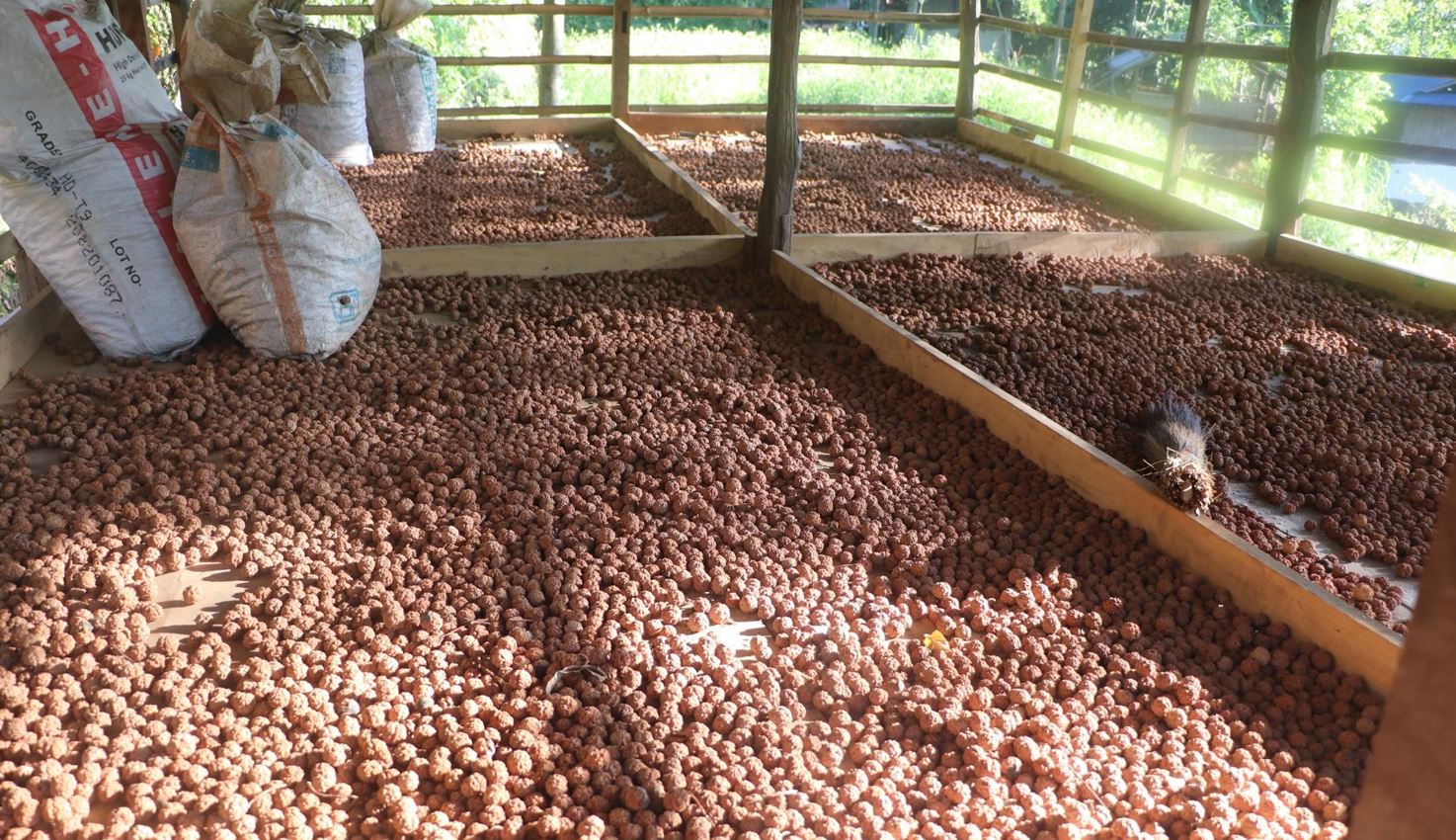
Bhojpur. Rudraksha farming has become a strong source of income for the farmers of Bhojpur. Most of the people, especially in the Dingla region, have adopted Rudraksha as a main source of income. Farmers here have been earning millions from the sale of Rudraksha.
Manoj Chapagain, central president of Rudraksha Entrepreneurs Association, said that around one billion rupees is brought in annually from the Rudraksha business in Bhojpur. He said that farmers can get substantial economic benefits from the good quality, size and rare face of Rudraksha which is highly priced.
According to Chapagain, a single seed of 21-mouthed Rudraksha sells for Rs 55 lakh to Rs 6 million per piece. Its ‘mouth’ is determined on the basis of the natural lines or lines seen in the rudraksha. Generally, the grains from eight to 29 mouths are considered to be mouthed Rudraksha. According to traders, the higher the number of rudraksha mouths, the rarer and more valuable it is, so its market price is accordingly high.
Chapagain said that a 29-faced Rudraksha was also produced in the Dingla area this year. Since 29-mouthed Rudraksha is considered rare, its price is very expensive. Due to its religious and spiritual significance, the demand for such rare Rudraksha is high not only in the country but also abroad. According to him, a farmer of Dingla earns a minimum of Rs 100,000 to maximum of Rs 5 million annually from Rudraksha. Last year alone, around 21 lakh kilograms of Rudraksha was sold from Bhojpur, Chapagain said.
“Around 6 lakh kg of Rudraksha was exported to China. The rest is exported to India,” he said.
The price of Rudraksha is determined on the basis of its mouth, weight, size, quality and rarity. Grains with good size, clear mouth and fewer defects are priced in the market. Around 30,000 to 40,000 farmers are directly or indirectly involved in Rudraksha farming in Bhojpur, according to Rudraksha Entrepreneurs Association.
Traders from China also come to the doorsteps to buy Rudraksha produced by the farmers of Dingla area. Although Rudraksha is produced in large quantities in this area, its main primary market is Khandbari and Tumlingtar of Sankhuwasabha. The Rudraksha produced by the farmers here is sold in the market. Rudraksha is exported from Khandbari to various districts in the Terai, Kathmandu, China and India. Traders say that the demand for Nepali Rudraksha has been increasing in Europe, America and other countries of late.
According to history, the beginning of Rudraksha cultivation in Bhojpur is considered to be very old. Balaguru Shadananda Adhikari, who was brought from Kashi of India before 1932 BS, had planted a Rudraksha sapling in the Dingla area. Since then, it has been gradually expanding here, according to the locals. At present, the Dingla area of Bhojpur is known as the main Rudraksha production center of Nepal.
Rudraksha also holds special religious and spiritual significance. Rudraksha is considered a sacred object associated with Lord Shiva by the Hindu devotees. Therefore, it is used in worship, rosary and various religious ceremonies. Generally, black colored Rudraksha is considered to be the best. The thread can be inserted without making a hole in the rudraksha. Since these naturally occurring grains are rare, their price is high.
Rudraksha farming is rampant in Nepaledanda, Kudakaule, Deurali, Mulpani and Keurenipani among other places in Shadananda Municipality of Bhojpur. Apart from this, its production is also increasing in other places of the district. However, farmers are also facing problems with Rudraksha cultivation. Farmers have complained that the problem of theft of good grains and cutting of Rudraksha trees is increasing. Locals say that Rudraksha farming can be more profitable if its conservation and systematic market management is done. Rudraksha will play an important role in improving the economic condition of the farmers of Bhojpur if proper protection, market management and promotion are made.












प्रतिक्रिया दिनुहोस्