Representation of women in Shah’s cabinet is highest ever
लगानी न्यूज
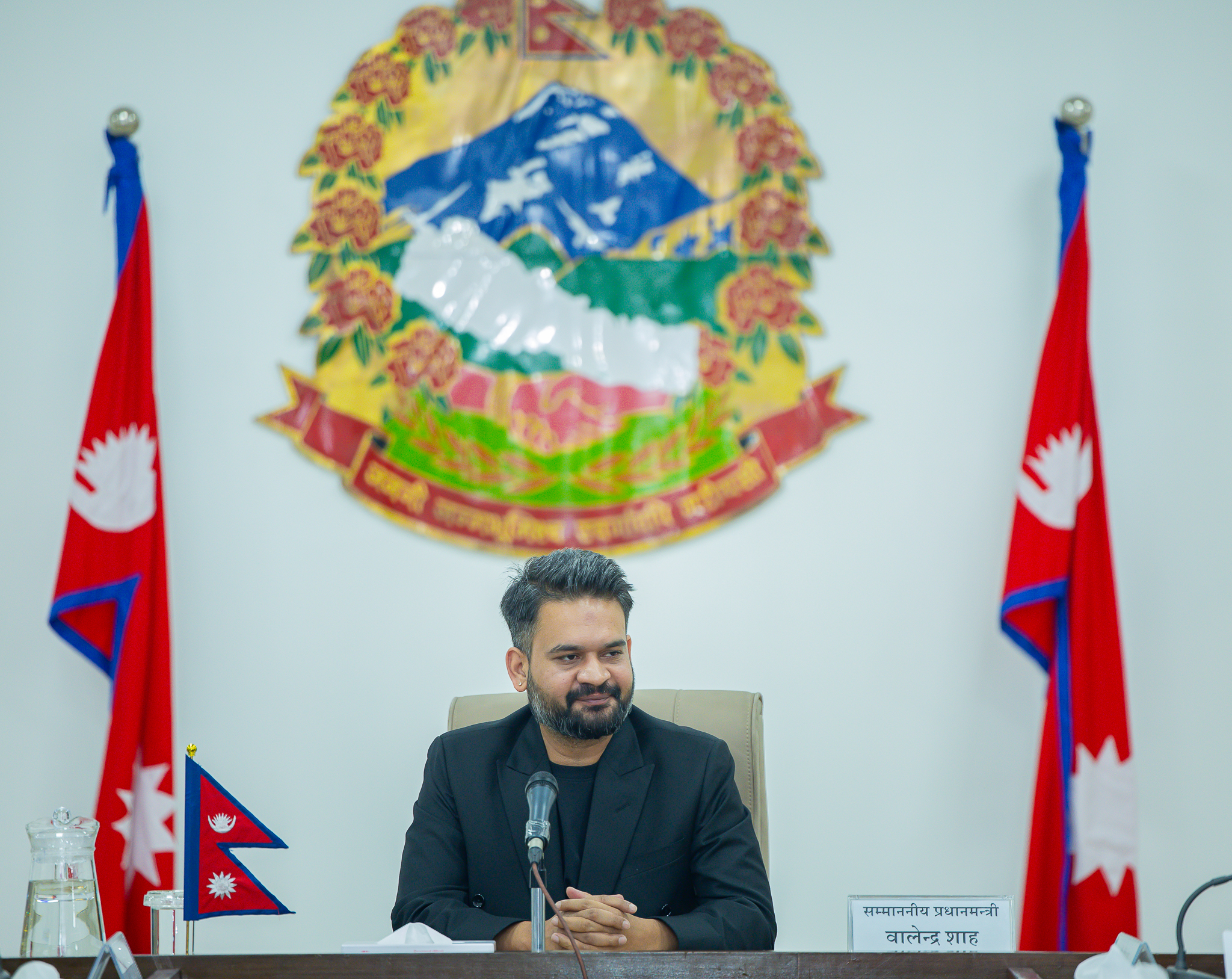
Kathmandu. KATHMANDU — Prime Minister Balendra Shah’s cabinet has achieved historic achievement in women’s participation.
With the appointment of six women ministers in the 16-member cabinet led by Shah, the representation of women in terms of number has increased to 37.5 percent.TAG_OPEN_div_83 This number is higher than the minimum 33 percent set by the constitution. This is higher than the average representation of some countries in the world, said PM Shah’s press advisor and research expert Deepa Dahal.
In the present government, women have not been limited to traditional social ministries but have been given the responsibility of important and technical ministries such as law, health, agriculture, administration and industry.TAG_OPEN_div_81 This is an attempt to empower women leadership not only in numbers but also in decision-making. Analysts have described the government formed under the leadership of Prime Minister Shah as an important turning point towards inclusive governance.
Advocate Bhawana Dahal says that this structure TAG_OPEN_div_79 is not only a matter of representation but also a symbol of recognition and exercise of capacity. In Nepal’s political history, women’s participation in the Council of Ministers has been low and unstable for a long time.
According to the data included in the report of the National Commission for Women, the participation of women in the previous governments was generally limited to between 10 and 18 percent.TAG_OPEN_div_77 In some cabinets, it went down to four percent. Previously, the highest participation was around 24 to 26 percent.
In Nepal’s political history, women’s representation in the Council of Ministers has always been limited and unstable.TAG_OPEN_div_75 In 2081 BS, there was only one woman in the 22-member cabinet led by KP Sharma Oli. That’s 4 percent of the total. Minister of State Rupa BK was also present in the Council of Ministers.
In the 2079 BS government led by Pushpa Kamal Dahal, there were four women in the 22-member cabinet.TAG_OPEN_div_73 That was 18 percent of the total number. At that time, a state minister was a woman.
In 2078 BS, four women ministers were included in the 21-member cabinet led by Sher Bahadur Deuba.TAG_OPEN_div_71 That’s 19 percent of the total.
Where is Nepal in the world?TAG_OPEN_strong_42
The participation of women in the cabinet formed under the leadership of Prime Minister Balendra Shah has been exemplary in the world.TAG_OPEN_div_67 Rights activist Mohna Ansari says that this has given a positive message along with the indication of new political practice.
According to data published by UN Women in 2025, the average representation of women in cabinet is only about 22 to 23 percent.TAG_OPEN_div_65
According to the same data, the situation in South Asia except Nepal seems to be comparatively weak.TAG_OPEN_div_63 About 7 percent of South Asian ministers are women. According to the National Portal of India/Council of Ministers, there are currently seven women in the central government of the neighboring country. This number is 9.9 percent of the total membership.
According to a press release issued by the Inter-Parliamentary Union in 2025, about 30 percent of ministers in Latin America are women.TAG_OPEN_div_61 According to 2025 data published by UN Women, women make up between 45 and 60 percent of the population in some European countries, including Finland, Spain and Canada.
According to the Parliament Australia website, between 50 and 52.2 per cent of women hold cabinet positions in the country.TAG_OPEN_div_59 According to the official website of the US government, there are six women in the 26-member cabinet led by Donald Trump. That’s 23 percent of the total.
According to Saru Joshi, an expert on gender equality and inclusion, the significant participation of women in the incumbent Council of Ministers has made Nepal stand positive in the international index.TAG_OPEN_div_57 The presence of around 40 per cent women in the cabinet is a strong and encouraging achievement, he said. According to him, this achievement is a significant step towards implementing the spirit of proportional and inclusive representation envisioned by the Constitution of Nepal.
According to her, the 40 per cent female participation in the Council of Ministers has set a new benchmark and has laid the groundwork for achieving the Sustainable Development Goals (SDGs) by further strengthening it in the future.TAG_OPEN_div_55
She said that the increase in the representation of women from various communities including Madhes in the Council of Ministers was positive and it gave an important signal towards ending structural discrimination.TAG_OPEN_div_53 According to Joshi, the current achievements are not only in terms of representation, but also an opportunity to move towards result-oriented governance. “The challenge now is to carry on this achievement and take concrete work towards eliminating structural discrimination,” she said, adding that at least 33 percent of other appointments and structures should be ensured while maintaining this standard. ”
She pointed out the need to emphasize on the development of competitive and capable leadership rather than ensuring participation only through quota.TAG_OPEN_div_51
Advocate and political analyst Sarita Tiwari said it is satisfying that Nepal is above the world average and relatively progressive in South Asia.TAG_OPEN_div_49 “The increase in women’s participation in the incumbent Council of Ministers is a positive achievement not only in Nepal’s political history but also in the world context. From a situation where it was limited to 5 to 18 percent in the past, the progress now is significant,” she said.
According to Tiwari, the main question now is how decisive women are.TAG_OPEN_div_47 She also stressed the need to empower women to play a decisive role instead of just representing them.
Political analyst Dr Suchita Pyakurel said that the participation of women in the Council of Ministers is very good and competitive in the world context.TAG_OPEN_div_45 He sees this as a positive sign towards democratic inclusion.
But he says that representation alone is not enough.TAG_OPEN_div_43 He believes that it will be important to see how meaningful these representations play. “Women should not be limited to just quorum fulfillment or ostentatious participation,” she said. ”
















प्रतिक्रिया दिनुहोस्