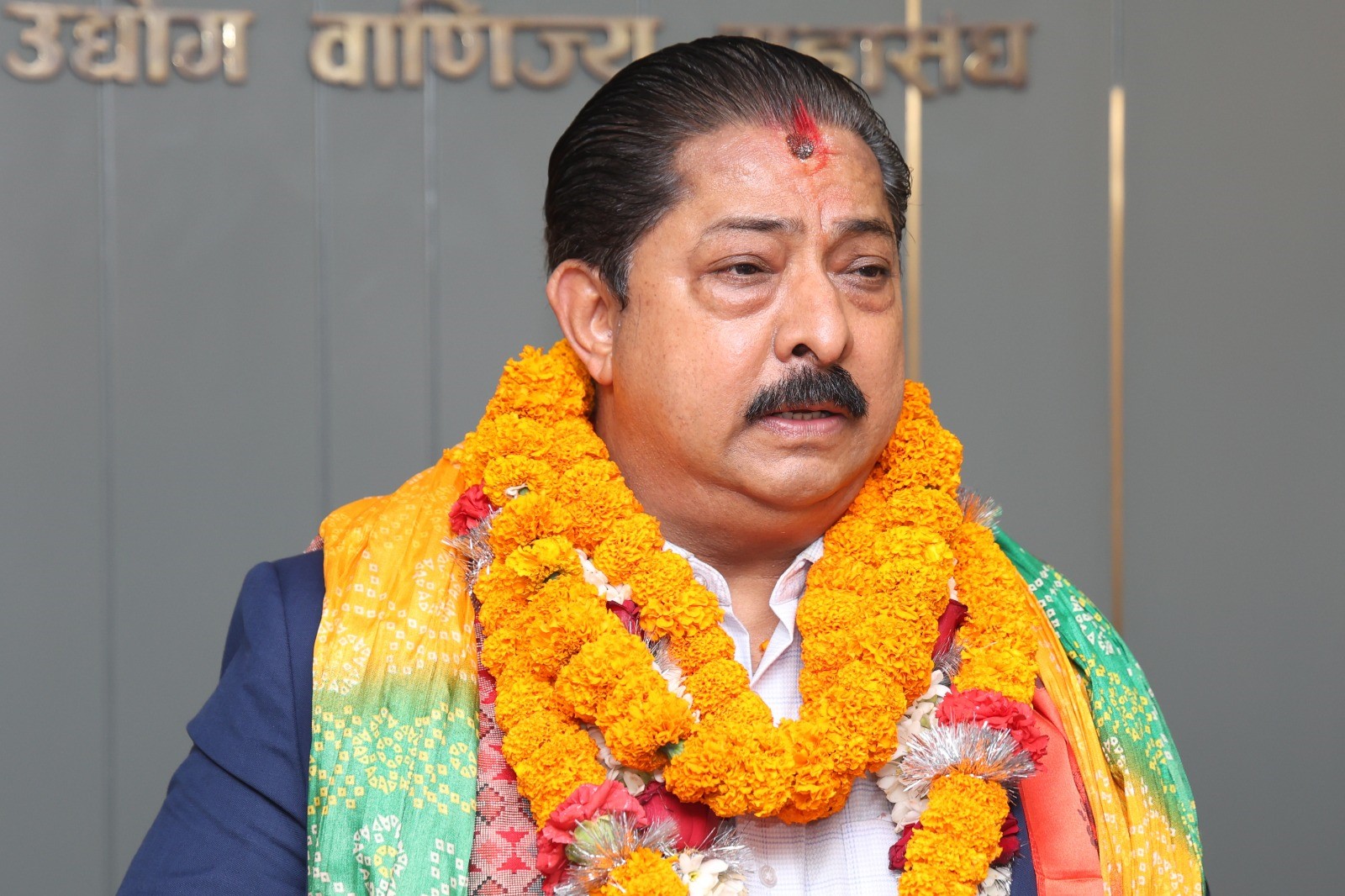
Private sector has panicked over budget, but we are cautiously positive: Chairman Shrestha
लगानी न्यूज
The policy dialogue presented regarding the budget for the fiscal year 2083-84 is not just a statement of income and expenditure for a year, but also a reflection of the priorities and vision of the direction in which the country wants to move its economy.TAG_OPEN_div_48
In this context, the budget should be evaluated not only on the basis of points and statistics, but also on whether it improves the investment climate, increases production and creates jobs.TAG_OPEN_div_46 From that point of view, this budget can be given the benefit of the doubt, because it seems to have adopted some positive guidelines.
For too long, our economy has been entangled in protectionist structures, informalities and administrative complexities.TAG_OPEN_div_44 This budget has indicated that it is trying to break those structural problems, which is a positive aspect. But its actual evaluation will depend on implementation.
The economy has been in an unusual state over the past few years: the banking system is full of liquidity, but credit demand is weak, interest rates are falling, but market demand is contracted. Private investment is slowing, capacity utilisation of industries is declining, and young people are going abroad. In such a situation, the budget is expected to bring back momentum and confidence in economic activities.
Overall, the budget seems to have moved beyond traditional expenditure management and focused on structural and legal reforms, which is a positive aspect.TAG_OPEN_div_40 But merely announcing reforms is not enough, their effective implementation is the main challenge.
There are some important initiatives towards policy and legal reform. The commitment to bring in the Debt Recovery Act, the Intellectual Property Protection Act and the Sunset Act are important, as well as the process of reviewing and repealing outdated, conflicting and unbusiness-friendly laws. In addition, the dismantling, merger and restructuring of some government bodies will lay the groundwork for the smooth functioning of the administration.
There are some positive provisions in terms of investment facilitation. The automatic approval system for foreign investment, provision to ease the capital return process and policies to encourage venture capital, private equity and angel investment are welcome. Such arrangements will depend on effective inter-agency coordination.
Some facilitation has also been made for the industrial sector, the provision of using the structure of the Special Economic Zone as collateral, and efforts to address the financial problems of small and medium enterprises are positive. This is expected to provide some relief to the sector, which accounts for a large share of employment.
The budget seems to present a long-term vision for energy, capital markets and digital economy. Private participation in the energy sector and expansion of electricity trade can lay the foundation for an export-oriented economy. Reforms in the tax system in the capital market, restructuring of market structures, and the introduction of new financial instruments are likely to deepen the market. Initiatives such as IT service exports, startup promotion, and AI infrastructure building are crucial in the digital economy.
But some aspects seem to need reconsideration. The tax burden has not come down as expected, even though the excise duty structure has changed, the actual relief is limited. The relief given on raw materials is not enough, which cannot bring about a substantial reduction in the cost of production. The increase in taxes on some equipment used in agriculture is not in line with the goal of self-sufficient agriculture.
Similarly, the time frame for resolving tax disputes seems to be very short, which needs to be extended. There is a need to further strengthen the clarity, accessibility and implementation aspects of the startup program.
Ultimately, the major challenges of the budget are related to implementation. Imbalances in public expenditure structure, low capital expenditure, delay in project implementation and lack of inter-agency coordination are long-term problems. Unless these problems are addressed, the budget’s positive objectives run the risk of being reduced to paper.
Overall, this budget has shown clear signs of improvement and has tried to address many of the demands of the private sector.TAG_OPEN_div_24 But its success will depend entirely on the effectiveness of the implementation.

















प्रतिक्रिया दिनुहोस्