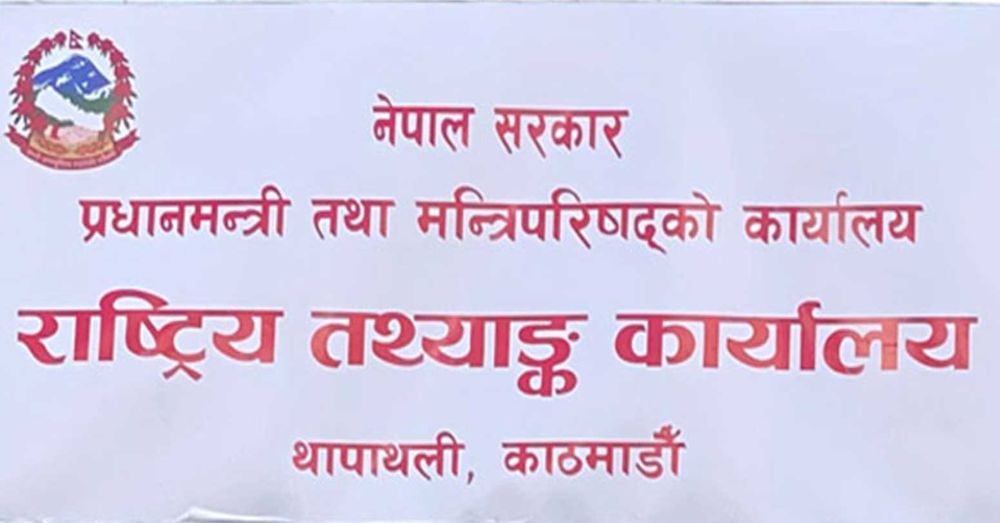
. KATHMANDU: The National Statistics Office has released the Internal Tourism Survey 2081÷82. This is the first of its kind at the national level to assess the status of domestic tourism, expenditure patterns and contribution of this sector to the economy.
This survey is based on the international concept of tourism satellite accounting
Tourism Satellite Accounting covers various aspects of domestic and outbound tourism.
More than half of the households are involved in tourism{
}
According to the survey, out of a total of 6.91 million households in Nepal, 52.4 percent (about 3.6 million 21 thousand) households have participated in tourism activities at least once during the reference period.TAG_OPEN_div_50 The average number of members of tourist households is 3.94, according to the statistics office.

} Shopping was found to be the main objective of domestic travel (32.6 percent), while health treatment and visiting relatives were the same as 20.1 percent. In the case of ‘overnight’ tourists, 65.5 percent of the tourists have made meeting friends and relatives the main goal.
The average duration of domestic overnight visits is 5.33 days and the annual average frequency of visits is 4.81 times.TAG_OPEN_div_46 Province-wise, the Far-Western and Madhes states have the longest stay period (8.18 days) while the Gandaki Province is ahead in terms of visit frequency (6.26 times). Kathmandu, Chitwan and Kaski are the major destinations for domestic tourism. Among them, Kaski is the most popular place for entertainment.
Majority of the young generation
Youths are more attracted to tourism activities. 26.6 percent of tourists belong to Generation Z (13-28 years) group. According to the survey, the number of tourists has gradually decreased with age.
State of outbound tourism{
}
According to the office, shopping and religious tours are mainly the main purpose of foreign visits by Nepali residents.TAG_OPEN_div_38 Shopping accounted for 63.9 percent of the foreign trips returning on the same day and 40.3 percent of the nightly trips. Foreign visits are found to be more especially during the period from September to December.
Economic Expenses and Contributions
}
Nepalese households spend a total of Rs 459 TAG_OPEN_div_34.05 billion annually on tourism-related activities. Out of this, Rs 355.42 billion was spent on domestic tourism and Rs 63.64 billion was spent on external tourism. According to the head of expenditure, the share of expenses per visit is highest (26 percent) while the share of health related trips is higher (31.78 percent).
Domestic tourism is estimated to have contributed 2.65 percent to the country’s economy compared to the GDP of the fiscal year TAG_OPEN_div_32 2079÷80. Likewise, the total production of goods and services generated from domestic tourism stood at Rs 381.84 billion with value added of Rs 144.49 billion, according to the survey.
The Domestic Tourism Survey 2081÷82 has confirmed that domestic tourism has emerged as a strong pillar of Nepal’s economy.TAG_OPEN_div_30 According to the National Bureau of Statistics (NSO), the results of the survey are expected to provide a solid foundation for tourism policy formulation, infrastructure development and regional tourism promotion in the coming days. From Asoj 2081 BS to August 2082, a total of 293,000 Nepalese residents returned on the same day and 620,000 stayed overnight.
प्रतिक्रिया दिनुहोस्