



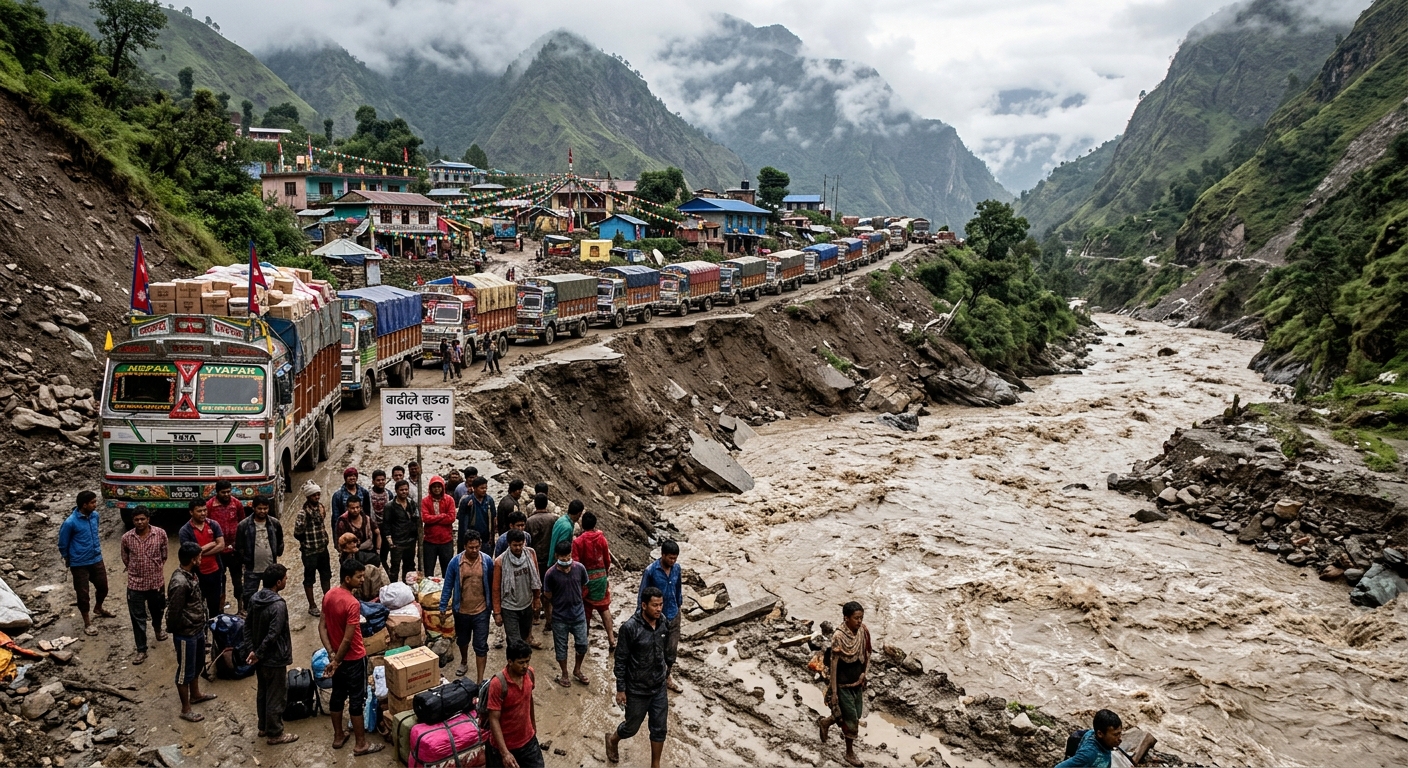
Kathmandu. As the major festivals of Nepalis like Dashain, Tihar, Chhath and others are approaching, the devastating floods in Bhotekoshi of Rasuwa have created problems in the trade and supply system.
The floods have completely damaged Kerung transit point, the main trade point between Nepal and China.
The floods have caused a lot of human and physical damage in some areas of the district, including Nuwakot and Dhadi. The floods have caused a lot of human and physical damage in some areas of the district, including Makwanpur and Chitwan.
Full details of the human and physical damage caused by the floods are yet to come. However, from a business point of view, traders say that its impact will not only be immediate but also long-term.
Traders say that the floods have affected the Kerung border point of Rasuwa, which plays an important role in Nepal-China trade, which will have a direct impact on the supply chain on the Nepali side. A large quantity of clothes, shoes, electronic goods, toys, fruits, dry fruits, and other types of goods are imported from China.
Ram Chandra Parajuli, general secretary of the Nepal Himalayan Cross-Border Chamber of Commerce and Industry, said that the traders have started the demand and import process of such goods in view of the festival. He said that the floods at the same time have also affected the preparations of the traders.
According to Parajuli, the government machinery is now collecting details of the damaged goods and containers in the flood-affected areas. Therefore, it is not possible to say with certainty how much damage has been done so far, he said.
However, the flood has swept away containers containing more than 300 goods, according to Customs Officer Rajendra Dhungana.
“Now the government is collecting the details of all the goods there. It is not possible to say exactly how much damage has been done so far,” says Parajuli. According to initial estimates, more than 500 containers may have been affected due to the floods.
“But this is not an official figure,” he says, “It does not mean that all the containers were carrying goods. Some of the containers were also empty containers going to China to load the goods.” He says that it is difficult to ascertain the exact number because there is no separate record of empty containers compared to the containers carrying the goods.
Traders speculate that the number of damaged containers could be higher as the incident took place in the morning and a large number of containers were parked in the depot area the previous night. However, the picture of the actual damage will be clear only after the official details are released.
In Nepal, major festivals like Dashain, Tihar, Chhath are approaching. During the festival, the demand for new clothes, shoes, electronic goods, toys, household items, etc. naturally increases.
Businessmen had also made preparations to import goods from China keeping in mind the demand of the festival. Some had opened LCs while some had already started the process of ordering and paying for goods. However, Parajuli says that the floods have disrupted this cycle of trade. According to Parajuli, some goods ordered in China have been washed away. Some goods have not been brought to Nepal.
Officials of the National Trade Association say that some goods have been affected on the way while some goods have not been delivered.
Clothes, shoes, electronics, toys, and various non-food items are mainly imported from China. A large part of the seasonal goods demanded for festivals are also imported from China.
Fruits, apples, walnuts and dry fruits are also imported from China. Traders believe that the impact of such goods that have arrived at the border or are in the process of transportation has been damaged and may be seen in the market in the coming days.
Finding an alternative to Rasuwa border point
}
Parajuli said that they have started looking for alternative routes as it seems that it will be difficult to bring goods from Rasuwa border point on a regular basis. He said that discussions are currently underway on the possibility of bringing goods coming from China to Nepal through another checkpoint. Parajuli said that discussions are being held between the government side and the private sector regarding the import of other goods.
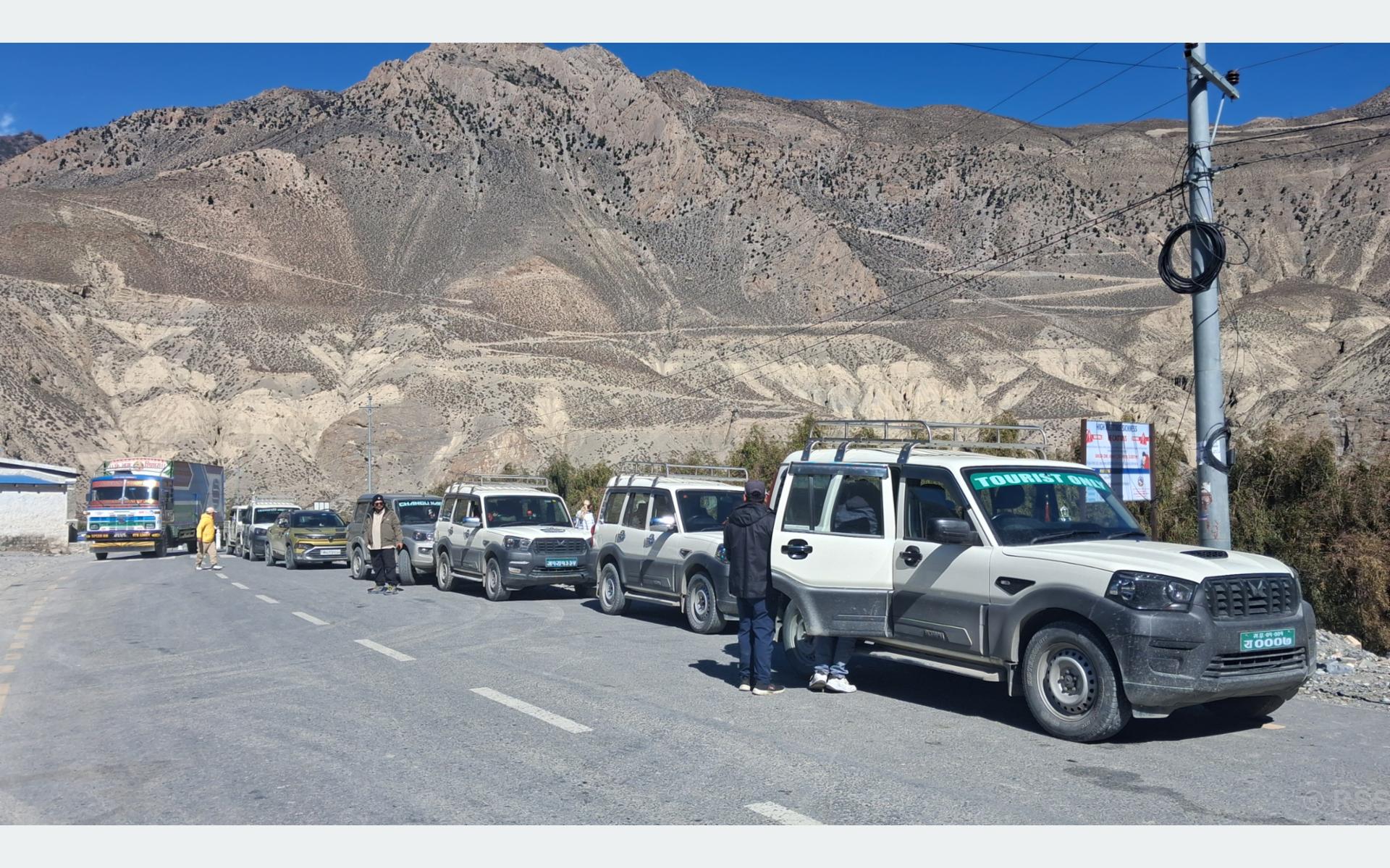
Tatopani is another border point where goods are imported from China as an alternative border. However, he says that there is a risk in importing goods from this border point during the rainy season. In such a situation, the Nepal Himalayan Cross-Border Chamber of Commerce has already submitted a memorandum to the Ministry of Foreign Affairs to take initiative to bring goods through the Corolla border point as an alternative.
“There are some legal procedures for the government to bring the goods stuck due to floods at Kerung border point of Rasuwa through the Corolla border point of Mustang,” Parajuli said, adding, “We have submitted a memorandum to the government to complete that legal process.” Parajuli said that discussions are being held with the concerned authorities as there may be some practical problems due to the policies and regulations of the Chinese side while changing the route.
Route change increases transportation costs
Although the goods can be brought through alternative routes, their cost is sure to increase. “When the goods were brought from Rasuwa, the goods were being transported through short distances,” Parajuli says, “The cost of transporting the goods stuck there by changing the route to Akro border point increases by more than 10 percent.” This automatically increased the price. ’’
For example, the transportation fare that used to cost Rs 2 lakh for a distance of about 150 km will now increase the cost when it has to cover a distance of about 500 km. With the market already under inflationary pressure, supply chain disruptions and increase in transportation and cost may further affect consumers.
Risk of lack of goods in Chadward
}
If the demand increases during the festive season but new goods cannot be brought to Nepal accordingly, then there may be a shortage in the market. According to Parajuli, since there is no large amount of food imports from China, its direct impact on basic food items like rice, lentils and oil may be comparatively less. However, there is a problem in the supply of non-food items, fruits, dry fruits and festival-targeted goods.














प्रतिक्रिया दिनुहोस्