

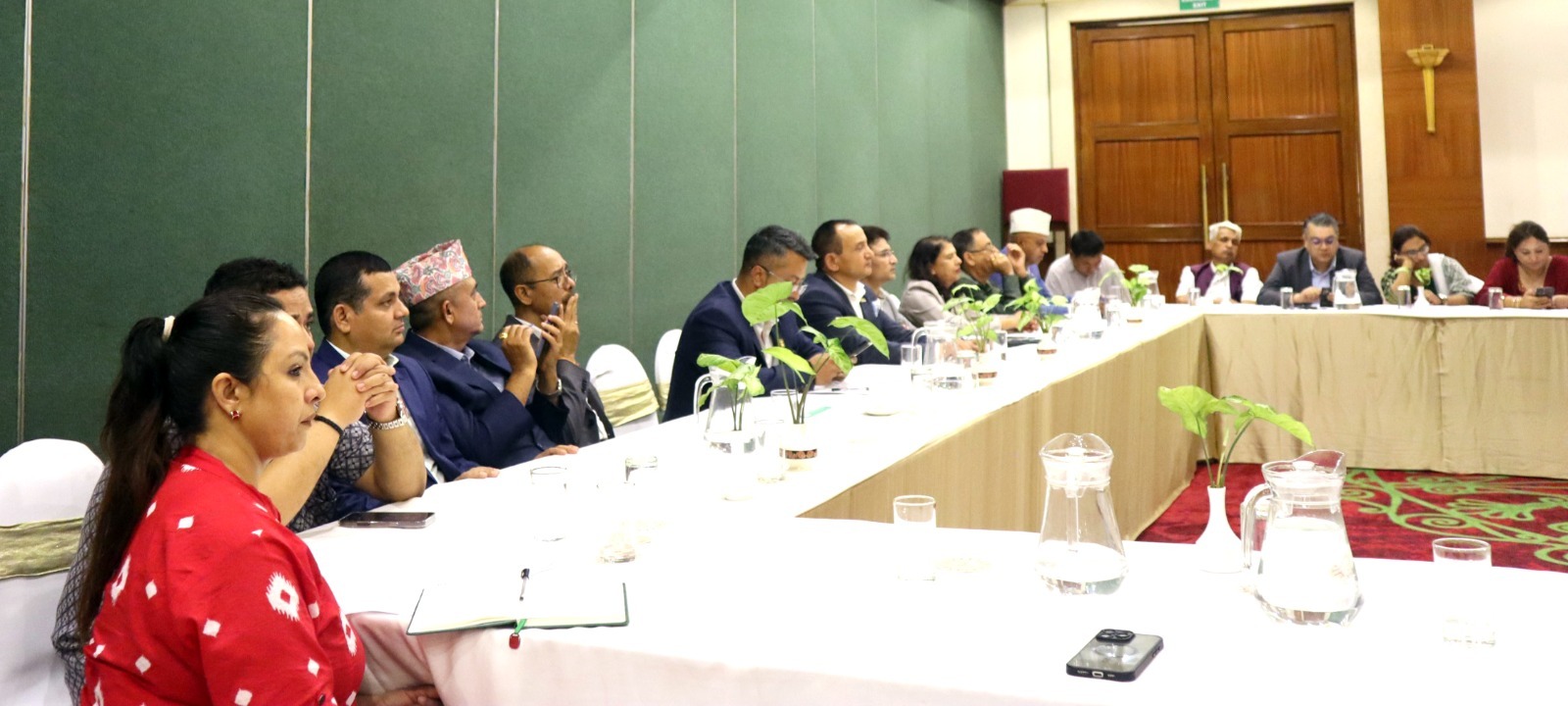
Kathmandu. The Independent Power Producers’ Association, Nepal (IPPAN) has welcomed the National Electricity Transmission Grid’s Determination Criteria for Determination of Wheeling Charge, 2083 and demanded a review of the tariff rates.
IPPAN has argued that the criteria for calculating the transmission fee of the National Electricity Transmission Grid issued by the Electricity Regulatory Commission on September 30 has opened the way for the private sector to buy, sell and trade electricity using the National Transmission Grid. However, the organization disagreed, saying that the fixed tariff would make it difficult to make domestic and inter-country electricity trade competitive.
The 207th meeting of IPPAN held on October 3 concluded that the issuance of the criteria was an important decision in principle for the development of energy in the private sector. The meeting also decided to take initiative to reconsider the rate of transmission fee.
The commission has fixed Rs 57 per kilowatt hour for short-term open access and Rs 412,755 per megawatt per megawatt for mid-term and long-term open access.
According to IPPAN, calculating the Plant Load Factor (PLF) of a hydropower project from 60 to 65 per cent, the cost per unit of transmission comes to around 95 paise. According to the organisation, the actual cost burden is higher if the charges fixed per megawatt per month under medium-term and long-term open access are also linked to the generation and transmission capacity booking.
Demanding that the rate of transmission tariff should be made scientific, transparent and competitive, IPPAN has said that the objective of open access should be to bring the private sector into the electricity trade, expand the market and distribute the electricity produced to the domestic and inter-country market at competitive cost.
Fee Determination based on cost of more than Rs. 11 billion
}
IPPAN has also questioned the basis of cost included in the determination of the broadcast fee by the commission and the calculation process. According to the organization, the fee calculation includes the headings of employee expenses, depreciation deduction, interest on loans, cross-border broadcasting service charges and return on self-capital investment.
According to the details provided by IPPAN, the bank has earned Rs 2.56 billion in employee and operating expenses, Rs 2.37 billion in depreciation, Rs 1.77 billion in long-term loan interest, Rs 49 million in current capital loan interest, Rs 910 million in broadcasting service charges, Rs 3.98 billion in return on self-capital and Rs 633 million in other income.
On the basis of these headings, a total cost structure of Rs 11.01 billion has been presented, and IPPAN has demanded clarification of its calculation basis. The organization said that the justification of the expenditure included in the determination of the broadcast fee, the actual cost and the calculation method should be transparent.
Most of the hydropower projects that have been added to the RCOD are from IPPAN leaders to RSP MPs, who are in which projects?TAG_OPEN_a_36 – Lagani News
According to IPPAN, the addition of cross-border transmission charges to the transmission fee within Nepal will further increase the cost of power producers. The organization believes that this could create challenges especially for the projects exporting electricity to the Indian market.
IPPAN has said that it will be difficult for Nepali electricity to be competitive in the Indian market if the high tariff is maintained in Nepal. The organization has said that due to the transmission fee, the cost of Nepali electricity may be expensive by one and a half to two rupees per unit, which may affect the export potential.
Although the projects that have already signed Power Purchase Agreement (PPA) will not face any immediate problem, IPPAN has concluded that high transmission tariff could be a challenge for the projects to be built targeting electricity export in the future.
Request to make public the basis of fee calculation
}
IPPAN has stressed on four issues for further study and review of the provision related to the determination of broadcast fee. The organization has demanded to make the basis of the transmission fee calculation and the entire cost structure transparent by making it public, and to evaluate the actual financial life, depreciation and financial cost of the transmission line.
Similarly, IPPAN said that the mid-term and long-term open access fees should be reviewed whether they are in line with the economic viability of private investment and electricity trade. The organization has also demanded to maintain a clear regulatory provision for periodic review of wheeling fees.
Issuing a press release today, IPPAN Chairman Mohan Kumar Dangi said although the criteria have prepared an important basis for the implementation of the concept of open access in the national grid in practice, it is necessary to make the tariff competitive.

















प्रतिक्रिया दिनुहोस्