

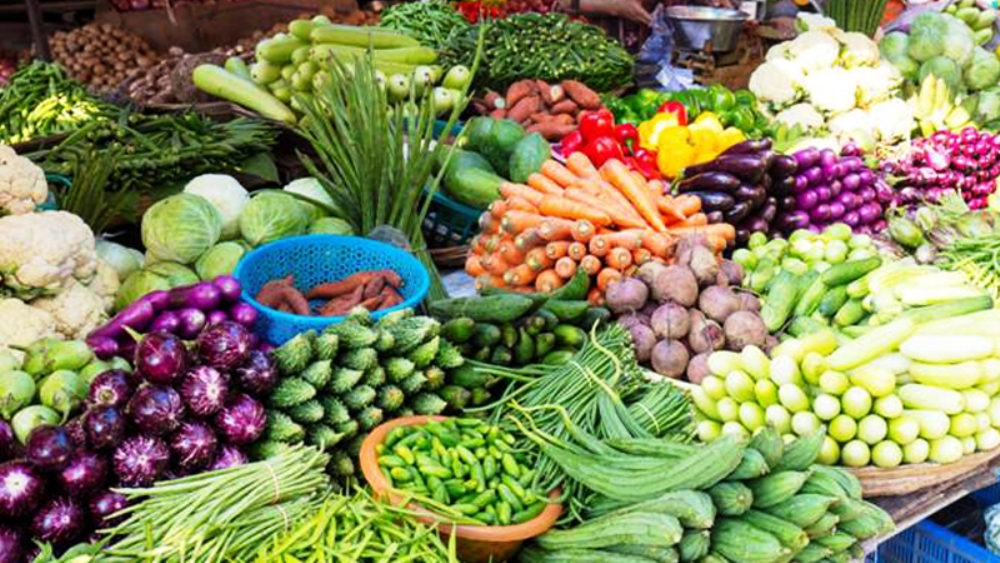
Banke. The amount of pesticides in the vegetables produced by the farmers here is increasing. Gaurav Chaudhary, deputy technical assistant at the laboratory, said that the pesticide residue rapid analysis unit unit at the Central Agriculture Laboratory, Nepalgunj, was found to have high levels of pesticides in 10 types of vegetables in the last fiscal year 2081/82.
According to him, the vegetables are produced in Banke district. According to him, nine out of ten vegetables including mustard, clay and samdhini have been found to contain pesticides in them. Three samples were found in March, five in April, one in May and one in June. Chaudhary said that all ten samples tested were found to be red labeled.
A total of 413 samples were imported from India, 273 samples from Salyan, 962 from Banke, 79 from Chitwan, 12 from Surkhet, one from Jumla, 53 from Bardiya, 11 from Rolpa, two from Dailekh, one from Rupandehi and 76 samples from Dang.
“If the prohibition percentage of vegetables and fruits is less than 35 percent, it is considered ‘green label’, if it is found to be 35 to 45 percent prohibited percent, it can be consumed as ‘yellow label’ (if the prohibition percentage is less than 35 percent when tested again after being quarantined for four to five days) and if the prohibition percentage is above 45 percent, it is called ‘red label’.” Chaudhary said.
Vegetables and fruits imported from India and vegetables and fruits imported from India would be tested for pesticides in the lab. The test results will take one to one-and-a-half hours, he informed.
According to Chaudhary, the number of pesticides found has increased in the last fiscal year as more samples of vegetables and fruits were tested in the last fiscal year as compared to the previous fiscal year.
According to him, samples of 1,883 different vegetable and fruit products were tested at the Pesticide Residue Rapid Analysis Laboratory Unit in Nepalgunj last fiscal year and 10 samples were found to be deficient. Likewise, 1,094 samples were tested in the last fiscal year and seven were found deficient.
According to him, 1,883 samples were tested last fiscal year and 10 out of 1,094 samples tested last fiscal year, seven samples showed deficiencies. ’
A total of 482 samples of vegetables and fruits have been tested since mid-July of the current fiscal year. According to Chaudhary, no defects were found in the sample. In the fiscal year 2080/81, out of 1,094 samples tested, seven samples (three yellow and four red label) were found deficient while in the fiscal year 2079/80 BS, 1,085 samples were tested. With the increase in the number of sample tests in the last fiscal year, the number of samples found has also increased.
According to Deputy Technical Assistant Chaudhary, two groups of pesticides—organophosphate and carbamate—are tested in vegetables and fruits. Pesticide test on vegetables and fruits started from Nepalgunj in November 2079.

















प्रतिक्रिया दिनुहोस्