

Kathmandu. Artificial intelligence (AI) has revolutionized India’s traditional jewellery industry.
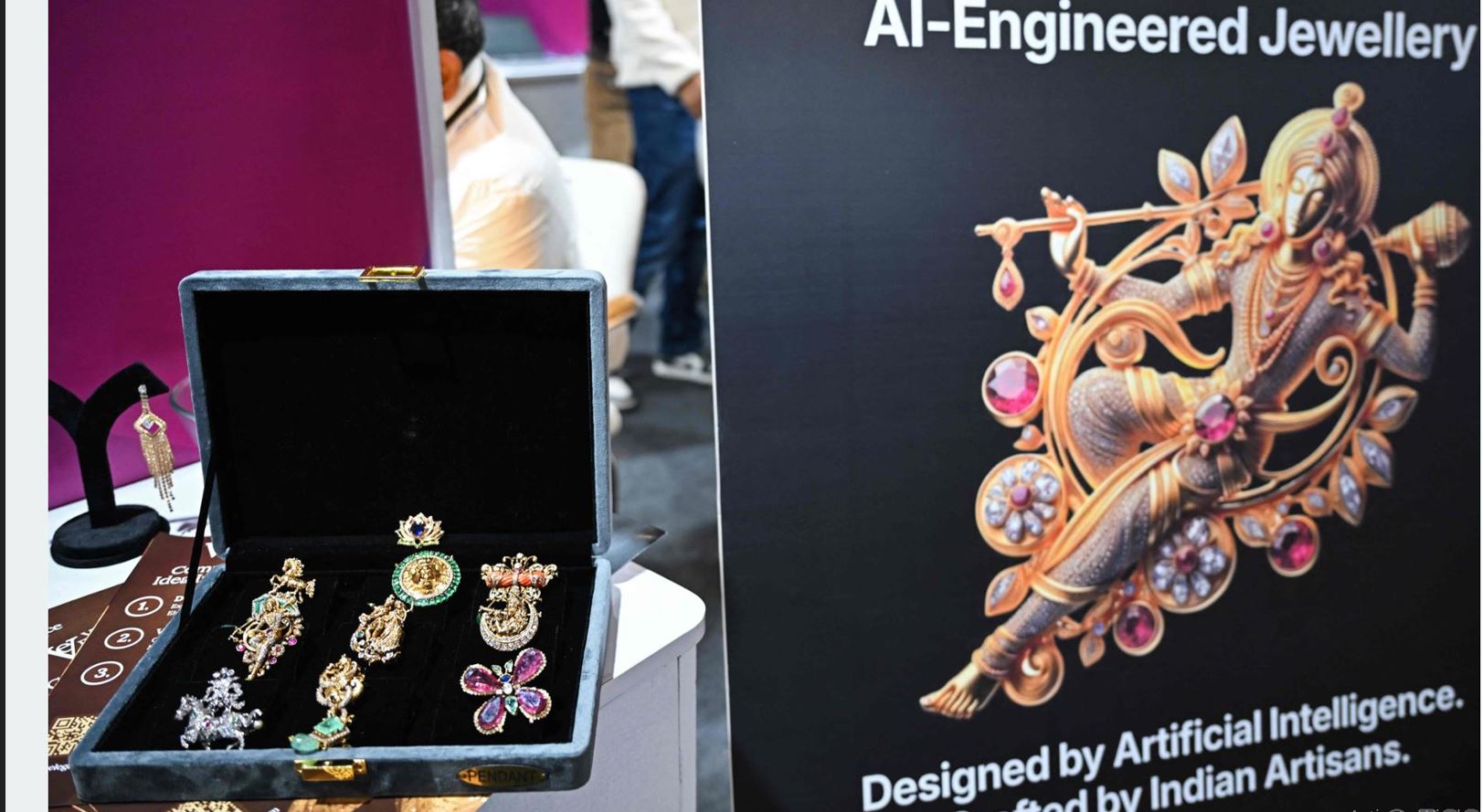
The golden brooch that sparkled in the shape of Lord Krishna at the exhibition hall of the Global AI Summit in New Delhi is not just a handicraft craft but also a confluence of technology and tradition. Although the brooch was hand-crafted by Indian artisans, the detailed design was done by AI.
Siddhartha Soni, 23, has been producing AI-designed jewellery through Idea Jewellery, which he co-founded in 2023. “Traditionally, they would take six to seven months to make such jewellery, but they can be done in a week using AI-generated blueprints and 3D-printed moulds, which require a bit more time for hallmarking,” he told AFP. ”
Sony’s startup grew out of a decades-old family business in Hyderabad. His father and grandfather have been active in the jewelry industry for about 30 years. Enthusiastic about the new technology, her father expresses his desire to take it to international markets so that retailers in countries including the USA can sell custom AI-designed Indian jewellery. But seasoned craftsmen are worried that AI will lose its artistic originality. “We’re losing the art form,” Soni said, “but it’s imperative to move forward with the times.” ”
Tech entrepreneurs and world leaders participating in the AI Summit discussed opportunities as well as risks. Mass job cuts and depletion of human expertise are major concerns. Prime Minister Narendra Modi said that the summit has unleashed the potential of the youth of the country and emphasized the rapid advancement in technology. The Indian government is aiming to invest $200 billion in AI over the next two years, including expansion of data centers and energy infrastructure.
Although Idea Jewellery has not received government grants, it is preparing to collaborate with 20 retailers in major cities. The device, which is based on Google’s upgraded version of Gemini, allows customers to select metals, precious stones and price ranges and order designs from simple text instructions. The device then displays the prototype and generates a detailed 3D model, which the artisans conceive. Some workers are still making AI-designed jewelry, even though they are uncomfortable with the fear of losing their jobs.
The impact of AI is not limited to the jewelry industry. Extreme Gen AI, a startup, has developed a voice-based chat tool for businesses in dozens of local languages. Founder Peace Berry says that as technology becomes cheaper and more sophisticated, the huge call center industry will be affected, but new jobs and skills will also open up.
Similarly, Soil Doctor has conducted an AI-based soil testing program on 500 farms in 10 states. Chief of Staff Vartika Gupta said that access to historical agricultural data will help farmers increase production by reducing the cost of targeted fertilizer. According to him, farmers will be able to produce more in each season at a lower cost.
Finding a balance between traditional skills and modern technology, startups in India are embracing AI as an opportunity, though the question of jobs and originality remains a matter of debate.













प्रतिक्रिया दिनुहोस्