



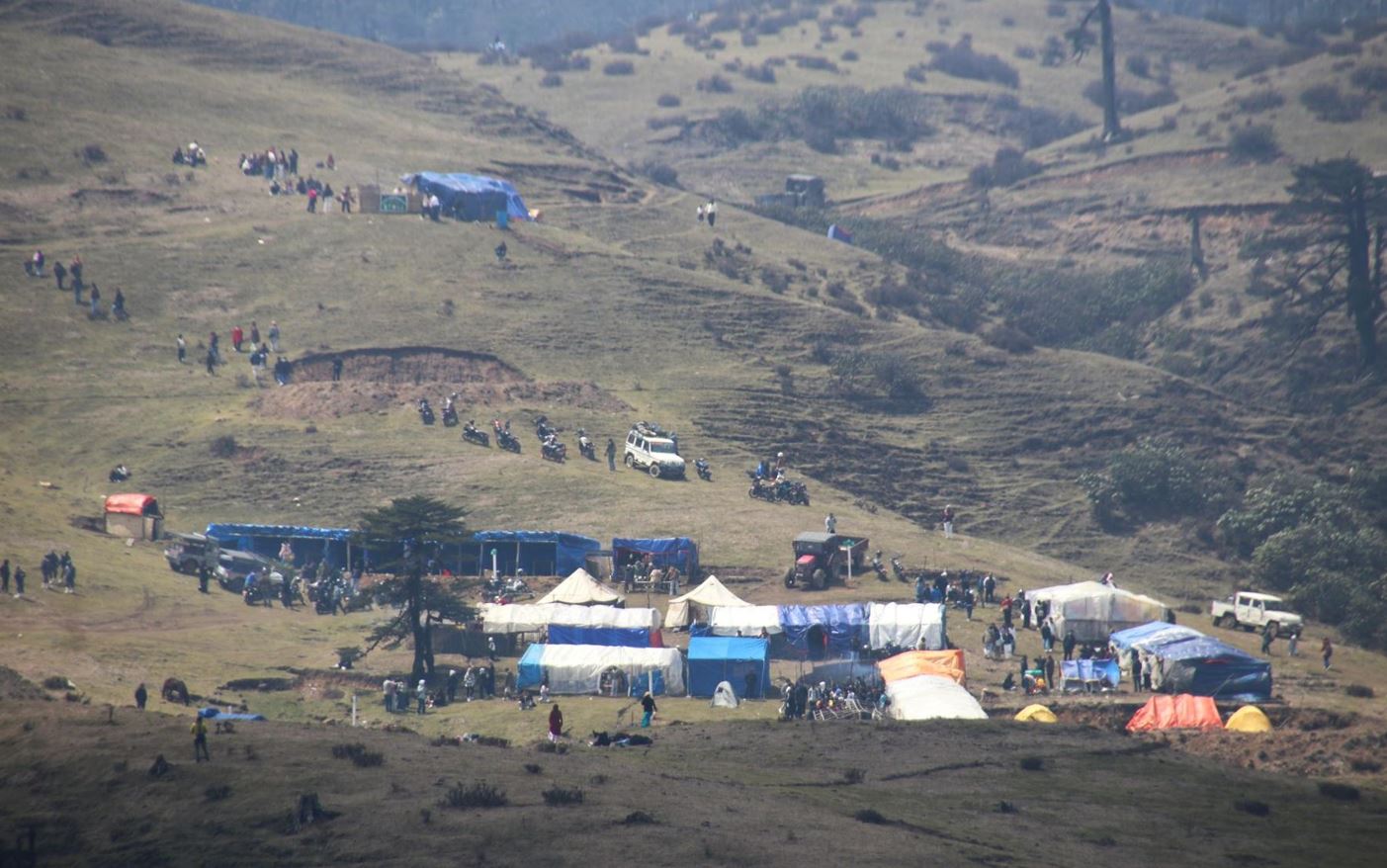
Panchthar. The yak tourism festival taking place at Charrate-Falot area of Falelung rural municipality in Panchthar district for the past nine years has benefitted the yak farmers here.
The festival, which is being held at an altitude of 3,500 metres from the sea level in 2074 BS, has promoted yak rearing and has provided an international market for yak related products. The cowsheds of yak farmers have now become tourist habitats and infrastructure development is also increasing here.
According to Chandra Lal Nepal, owner of Falot Yak Goth and a leading yak herder, the festival has increased the enthusiasm among yak herders. There were 18 yak sheds in Falot area before 2074 BS but now there are 31 yak sheds. “Youths and women are attracted to the profession.
Earlier, only men used to live in cowsheds,” he said, adding, “The cowsheds have improved a lot compared to before.” Now arrangements have been made to keep the tourists in the sheds. This is called ‘Goth-Stay’. Shepherds are attracted to tourism. However, not all the cowsheds have been implemented. At present, only 10-12 sheds can accommodate tourists. Around 150 people can live in these sheds from Sandakpur Ahal to Falot.
According to Nepal, at least five thousand tourists visit Nepal annually. It has been difficult for tourists to reach and stay as cowsheds are reduced to the villages due to excessive rainfall in June, July and August. Earlier, only yak ghee and chhurpi were produced here, but now cheese is produced and sold. According to Nepal, the yak products have got market due to the festival, government agencies have started helping and tourists have started arriving.
Ram Chandra Gurung, president of Kanchenjunga Yak Cheese Producers Group, said the number of yaks has been increasing exponentially in recent years. The number of people living on yak farming has also increased and it has helped a lot in the development of ecotourism. The main reason for this is the increase in the number of tourists. The yak products have started getting good price after the yak festival attracted tourists.
According to Gurung, yak bones are also sold. Horns and tails are also sold. Since many items of yak are used in religious-cultural activities, the shepherds earn income through many means.
Lately, efforts are being made to develop new yaks by bringing in new yaks, which is increasing the number of yaks. According to Gurung, efforts are underway to produce improved breeds by importing yaks from the Himalayan region of Taplejung and Bhutan in which more than 40 yaks have been reared so far. He demanded that the government should now help in artificial insemination in yaks.
Gurung said that the market for yak products is also easy. “The export of chhurpi is sometimes a problem. But the sales are doing well,” he said, adding, “Now yak cheese is being produced.” Its market is also good. But the price has to go up. “A lot of yak cheese is exported to Kathmandu. Currently, cheese is being sold at Rs 800 to Rs 1,000 per kg while yak ghee is priced at Rs 800 per kg.
However, the price of manufactured goods has been low, according to Gurung. “There is a big difference between dairy products of cows and yaks. “Yak is an animal that grazes herbs and gives milk,” said Gurung, adding, “But the price of dairy products of cows and yaks is almost equal.” It is also difficult to cover the cost of production. ”
This time, sheep ghee produced in Yangru of Panchthar was also included in the festival. According to Lokesh Gurung, a buyer, the price of ghee is Rs 12,000 per kg as it takes a lot of effort. “Commercial sheep farming is declining. The demand is high but it is difficult to produce ghee,” he said, adding, “It would have been easier for us if the state also provided some support in this regard.” ”
The yak festival has been organized in Charrate on New Year’s Day for the past nine years. Tourists from different districts of Nepal, India, Bhutan and Bangladesh come to the festival. Many tourists are busy watching the herd of yaks gathered on the occasion of the festival, watching the scenery of the mountain ranges of Nepal, India and Bhutan and getting lost in the colors of rhododendron and chimal. Vice-chairperson of Falelung Rural Municipality Mahendra Hang Jabegu said that the high hills on the Nepal-India border attract everyone to experience the live presentation of Himalayan culture.











प्रतिक्रिया दिनुहोस्