

Kathmandu. The Sudurpaschim Region, which has three major watersheds — Mahakali, Seti and Karnali — is generating less than 1 percent of its potential power generation capacity.
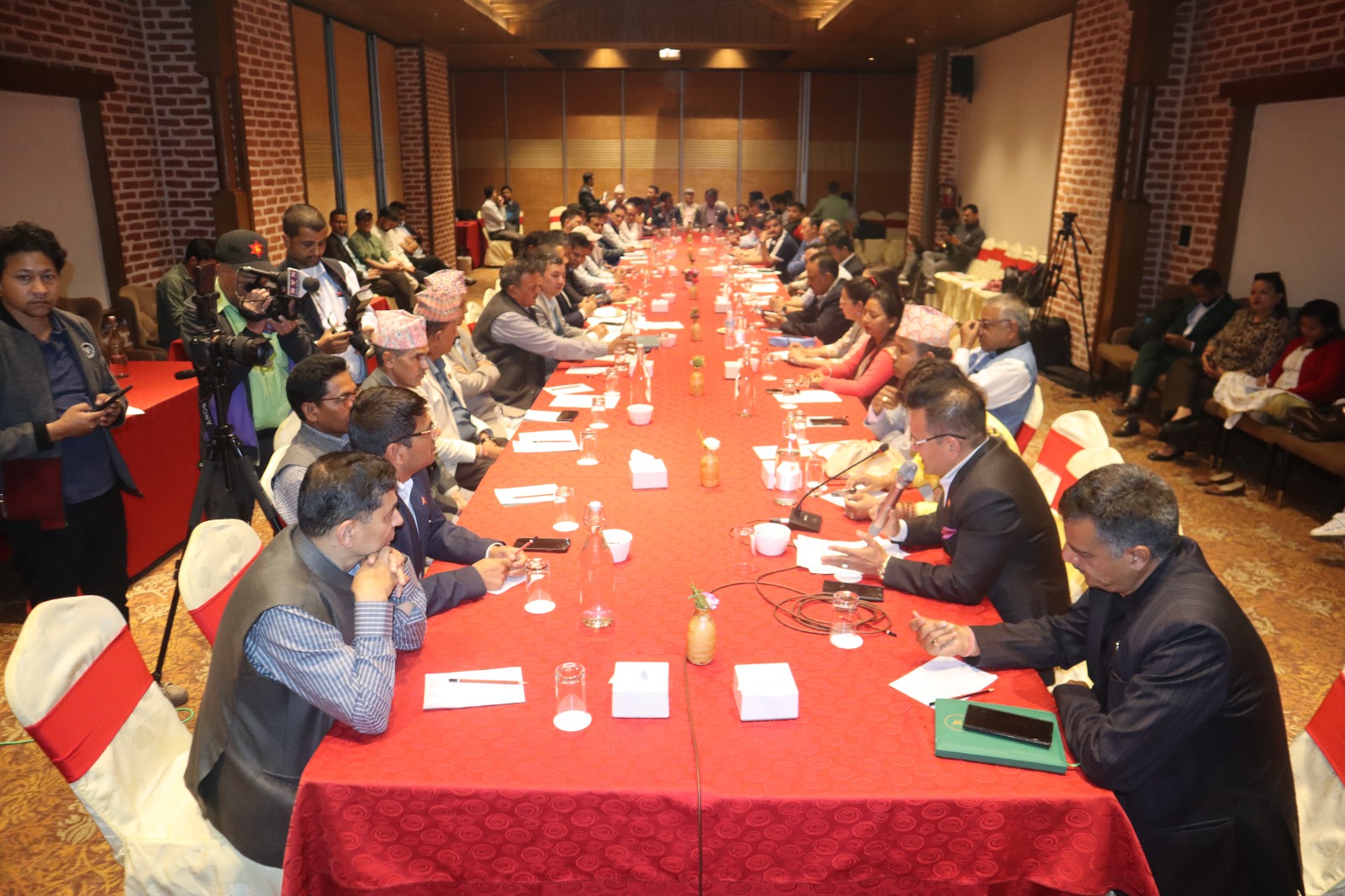
Speaking at an interaction on ‘Possibilities and Challenges of Hydropower Project Construction in the Far-West’ organized by Independent Power Producers’ Association, Nepal (IPPAN) here today, IPPAN Chair Ganesh Karki said that only 176 MW of hydropower has been generated in the far-west region of which at least 18,149 MW hydropower is being produced.
“Even though the country’s hydropower generation potential is 83,000 MW, the Far-West has 20 per cent of the generation capacity. Since it is the shortest distance for export from here to India, there is another attraction. “However, the potential of the Far-West has not been utilized as the state has not been able to build the transmission line and has not given permission to the private sector to build it,” he said. ‘
Karki said that the government should give 50-year permission to hydropower projects to develop hydropower projects not only in the far-west but across the country, the process of the Ministry of Forest should be made easy and swift, the situation of moving files to 14 ministries and more than 30 departments and providing services through a one-door system should be ended.
Mohan Kumar Dangi, senior vice-president of IPPAN, said that the far-western region has lagged behind in hydropower development. “The hydropower generation potential is more than 18,000 MW. However, the electricity generated so far is only 176 MW,” said Dangi, “This is only 0.96 per cent of the generation potential.” ‘
Only the proper use of water resources can make Nepal prosperous. Dangi said that although the electricity produced in Darchula can be sold in Dharchula of India by constructing a transmission line for a few kilometers, the province is lagging behind due to difficult geographical conditions and lack of transmission infrastructure.
He said that the promoters used to take the road to the village in the beginning when they go for the construction of hydropower projects and after the completion of the project, they leave behind the prosperity.
In 2051 BS, the power generation of Nepal was 250 MW, which has now reached 4100 MW after the private sector came in. Dangi said that if the private sector is opened up in transmission and trade, then the private sector can make a leap in the construction of transmission lines and electricity export.
IPPAN Deputy General Secretary Prakash Dulal spoke about how the work is done by the Ministry of Forest and how much procedural hassle there is. He said that in the earlier process, it used to take at least 7-8 years to get permission and start the work, but now again a conspiracy has been hatched to stop the project by bringing a rule that even 51 percent of the community forest users should give consent.
Presenting a working paper at the program, IPPAN executive committee member Suman Joshi said that 61 projects with a capacity of 5,900 MW are in various stages of study in the Far-Western Province and 11 projects with a capacity of 1117 MW can be constructed immediately if the transmission line is confirmed. Joshi also said that if the transmission line is not constructed, there is no possibility of more projects being built in the Far-West for many more years.
According to Joshi, Bajura has 2188 MW, Bajhang has 1935 MW and Achham has 1348 MW.
She said that the hydropower sector has been paying Rs 4.5 billion in royalty annually, providing employment to more than 350,000 people, investing Rs 1300 billion, constructing 3,700 kilometers of roads across the country, constructing 160 health centers, constructing 107 drinking water projects, 55 irrigation projects and providing salaries to 250 teachers.
Investors may not be attracted due to the lack of minimum infrastructure in the Far-West. He said that if the government builds road infrastructure and broadcasting infrastructure on its own or gives subsidies to the private sector, then employment will be created through hydropower generation and the economy here will be revitalized.
There is only one transmission line in operation for the transmission of electricity of private and government projects in the Far-West. Apart from the operation of the 132 KV transmission line from Balach of Darchula to Attariya of Kailali, the construction of any other transmission line has not started.
Chief Executive Officer of National Transmission and Grid Company (RPGCL), Sagar Shrestha, said that although there was a plan to construct the biggest power hub in the far-west region, there is a lack of budget for the construction of transmission lines in the province.
One transmission line from Humla to Dododhara of Kailali via Bajhang and another 400 KV transmission line from West Seti (Bajhang), Doti and Dadeldhura to Dododhara of Kailali is being constructed. Shrestha said that there is also a plan to construct an inter-country transmission line that will bring electricity from Phukot Karnali, Upper Karnali, West Seti and SR-6 to Dododhar and connect it to Bareilly, India.
However, he said that there is a challenge in resource management as a total investment of Rs 130 billion will be required for this. The 400 KV capacity transmission lines to be built in this area can supply 2500-2500 MW of electricity. He also informed that 600 MW of capacity has been booked in West Seti Dododhar.
Shrestha complained that the government has allocated a budget of Rs 180 million for the companies that need to work worth billions of rupees this year. He is of the opinion that if the line is to be built soon, the state and local levels should also move forward to invest.
Former Secretary of the Government of Nepal, Anup Kumar Upadhyay, recalled that the Act was brought to attract the private sector in the electricity sector after realizing that hydropower production was not possible without the investment of the private sector.
Complaining that the country has been handed over to the Ministry of Forest, he said that no matter how much we shout for the development of hydropower, we are not able to work due to the forest.
Upadhyay said that the government should not hesitate to limit the private sector to 49 percent by keeping 51 percent in the current crisis of transmission line and should open the private sector completely.
Who said what to the people’s representatives?
Member of the House of Representatives from Baitadi-1, Hari Mohan Bhandari, said that the government would take initiative to forward the construction of projects including West Seti as the development of energy sector was the first condition for reviving the country’s economy.
Member of the House of Representatives from Bajura-1, Janak Raj Giri, said that the government should take initiative to develop the 1902 MW Phukot Karnali project in the next fiscal year. He claims that this project, which is located on the border of Bajura and Kalikot, will be a game changer for the Sudurpaschim.
He said that despite being a state rich in terms of ecotourism and hydropower generation, it is expected that there is no need to beg from this government with a bowl of gold.
Jagat Joshi, a member of the House of Representatives elected from Kailali-3, said that he would take initiative to formulate necessary laws for the development of the energy sector and for the development of the country as a whole. Joshi also said that he would discuss the matter with the Forest Minister after the promoters and intellectuals complained to the Forest Ministry.
“It is not enough just to embrace water. We should also try to realize the potential of water resources by bringing in foreign investment without adversely affecting the nationality.” He said.
Lawmakers Ganesh BK, Ratna Kumari Thapa and Kriparam Rana among others from the far-west region said hydropower was the first condition for the overall development of the far-western region.
They said that the new government has set a target of generating 30,000 MW in 10 years and for this, the project can be developed by bringing in domestic and foreign investment. They believe that it will be easier to bring in investment from abroad if there is a stable government.
National Assembly members Renu Chand, Narayan Dutta Mishra, Narayan Dutta Bhatta and Garima Shah representing the Far-West in the National Assembly said that although hydropower was the best option for the overall development of the far-western region, it could not be utilized due to lack of transmission infrastructure and forest complexities.
According to Mishra, it was unfortunate for the far-western region that projects like Karnali, Chisapani and West Seti, which were studied 3-4 decades ago, could not move ahead even though the construction of Budhi Gandaki, which was studied after a long time, could not move forward.
TAG_OPEN_strong_76 What does the member of the Provincial Assembly say?
Padam Bahadur Shahi, a member of the Far-Western Provincial Assembly, urged the federal parliamentarians to move ahead by changing the law if the forest has stopped the work.
“The federal government should make the provincial assembly without the right to make laws, then we will also make it. He said, “If we want to build the project by investing money and get rid of the forest, then the state government is ready to put in the budget.” ‘
Member of the Provincial Policy and Planning Commission, Far-Western Nripa Bahadur Sunar recalled that the issue of how to sell electricity without construction of transmission line was raised during the discussion with the promoters of the hydropower project.
Joint Secretary at the Ministry of Energy Surendra Ghimire said that the process hassles would be reduced in the Energy Ministry in the coming days as the file tracking system has been started after the formation of the new government.
Stating that it is difficult to build a hydropower project in the Far-West, Ghimire said, “Transportation is expensive. Even if small things are needed in the project, it has to be taken from Dhangadhi. Now that the infrastructure is improving, it will definitely be easier in the coming days. ‘
National Planning Commission (NPC) member Arjun Jung Thapa said it took three years to extract 250 trips of sand.
He reminded that the private companies got permission to cut trees in six months after the government projects did not get permission to cut trees for six years.
Thapa said that the Planning Commission will suggest the government to change the rule of planting 10 trees for every one tree and the rule of recruiting land instead of land is also not development-oriented.
He said that the budget will not be distributed as it was in the past and he will recommend to the government to build the projects that can be built immediately. Thapa said that the rest of the work has to be done by the private sector and the government will be recommended to facilitate accordingly.











प्रतिक्रिया दिनुहोस्