



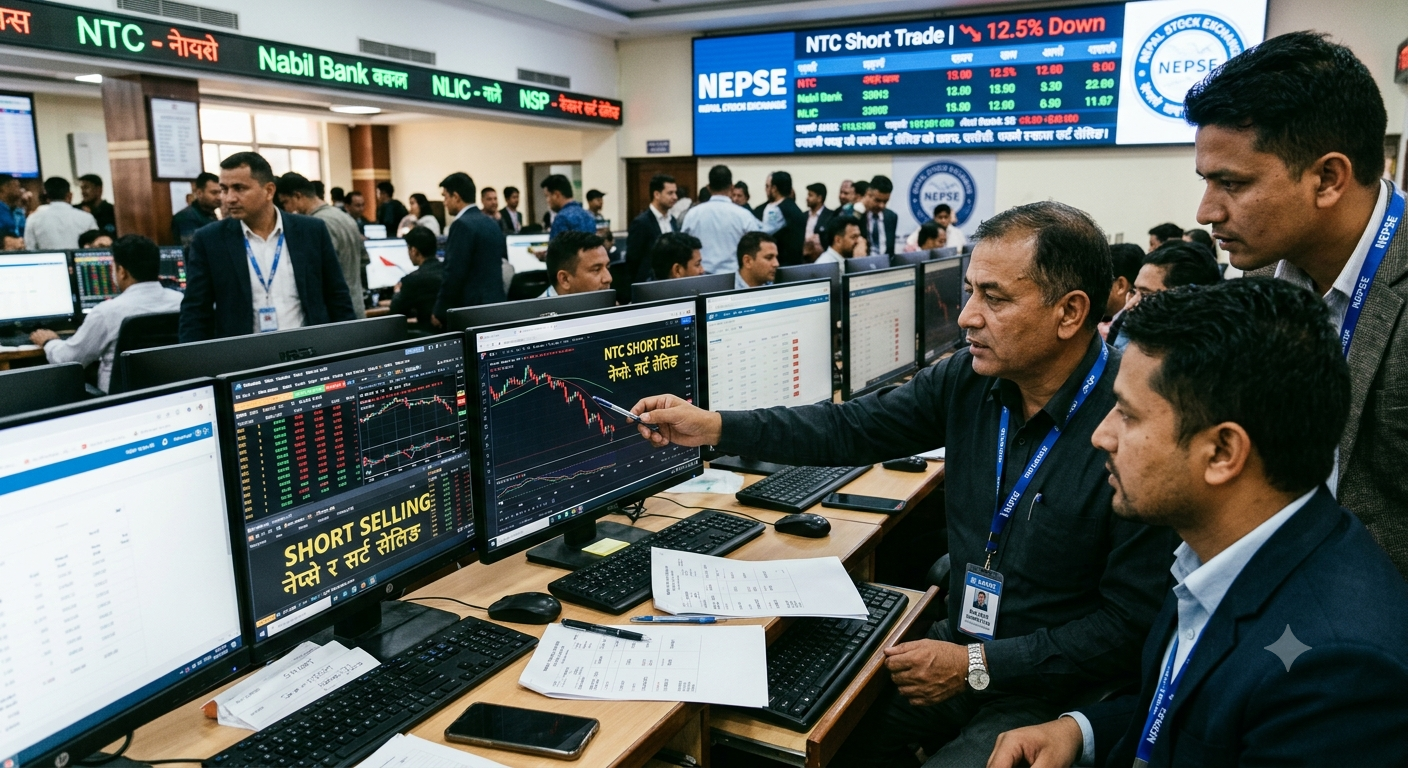
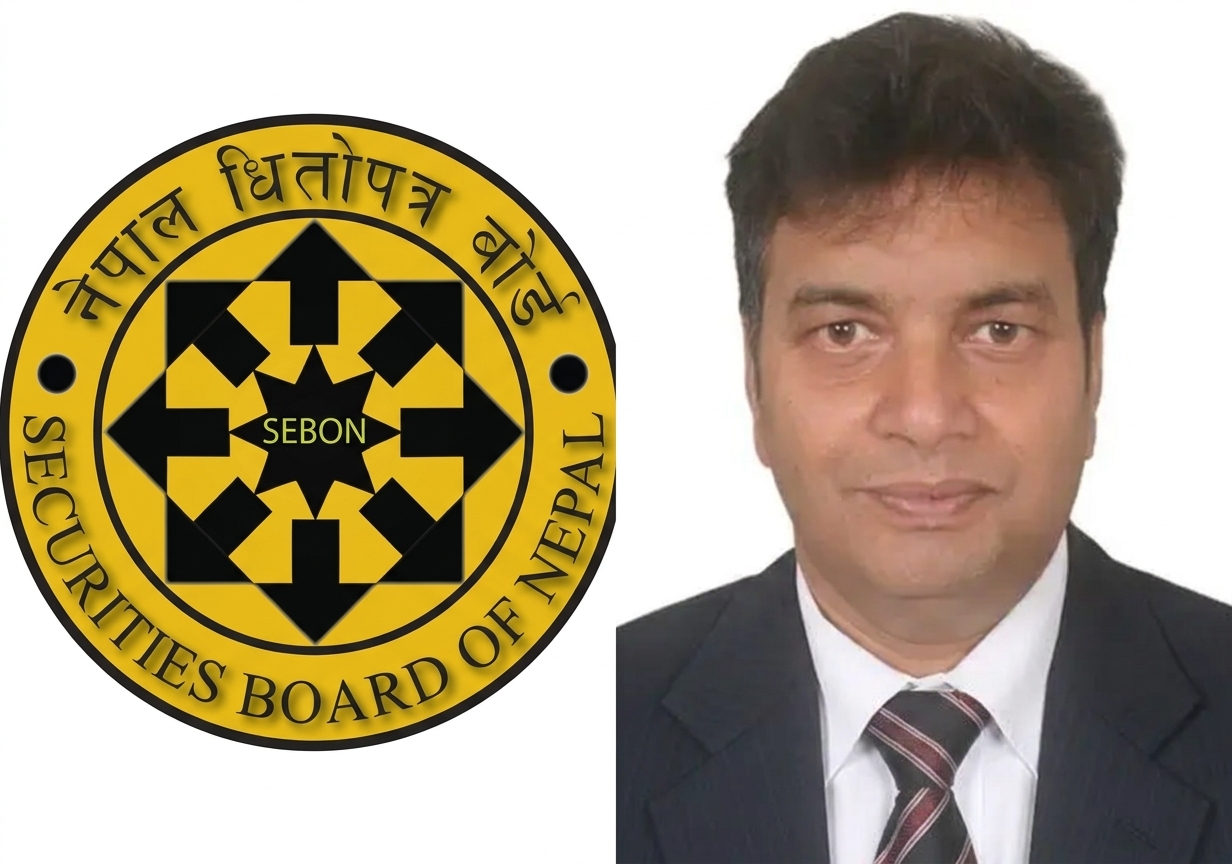
Kathmandu. Chairman of the Securities Board of Nepal Dr. In the meeting of the Finance Committee on Wednesday, Gopal Bhatta claimed that the short selling system will be implemented immediately for those who do not have shares.
He has made three months of policies and programs brought by the board for the current fiscal year to prove his claim.
The issue of short selling in Nepal has been discussed for a long time. However, it has not been implemented. Every chairman who comes to the board has been saying that short selling will be implemented. However, nothing could be completed.
Bhatta, who was appointed by the government with a two-thirds majority in Sebon, has already claimed that the short selling will be implemented immediately. He said that even if the market goes down, if it goes up, then the short selling will be implemented. He said that this arrangement will allow one to buy shares on credit from others during the time of decrease and sell them at increased times.
He met with NEPSE officials last week to implement his claim and sought immediate suggestions on what could be done to implement the short selling. For this, NEPSE officials are preparing suggestions. NEPSE Spokesperson Murahari Parajuli said that the suggestions would be submitted within some time.
Investors borrow shares from brokers or other sources and sell them immediately in the market, and then when the price falls, they buy those shares at a cheap price and return the loan. It is said that this will keep the market balanced and also create investment opportunities for investors.
Even if they do not have securities, the borrower is allowed to short-sell. However, in Nepal, there are no laws to implement it. As fast as the board president wants to implement short selling, legislation is needed in the first phase.
There is no provision for short selling in the Securities Act 2063. First, the board has to amend the act. Regulations should also be made by amending the Act. For this, the necessary bylaws, procedures and guidelines are required as per the need, according to the officials of the board.
NEPSE and board officials argue that it would be easier to implement new regulations as it would be very cumbersome to amend the existing regulations. If short selling is implemented without amending the law, then the businessman will have to pay a cash fine and even go to jail for securities offense.
Those who do not have shares do business by renting shares. For this, the act of borrowing securities should be included as it is indispensable.
Section 94 of the Securities Act deals with fraudulent transactions. Clause (a) of the said section states that “if the securities are bought or sold directly or indirectly, but the actual ownership does not make any difference”, such a transaction shall be considered as a false transaction. Section 101 of the Act provides for penalties and fines for those involved in such transactions.
“Any person who commits any act under Section 94 shall be punished with a fine of Rs 50,000 to Rs 150,000 or imprisonment for a term which may extend to one year or both.
Therefore, there is a need to reinterpret the provisions related to false transactions. Although the ownership of the securities will not be transferred, there should be a clarification in the Act that inter-day transactions and securities credit transactions will not be considered as false transactions. For this, the Act should be amended.
Similarly, in the short selling transaction, the shares held by a person or organization are rented at a certain fee. It is also known as borrowing or borrowing securities.
If a shareholder or company does not want to sell their shares or cannot sell them legally, they rent those shares for a certain amount. In such a transaction, ownership does not change.
It requires the smallest investors. In order to make this transaction larger, it is also necessary to borrow securities. Since the company has to be settled on the same day, the investors can return the shares by borrowing or buying them through the company. For this, a hefty fee has to be paid. There is no possibility of being in a close-out when you buy back the shares that you do not own.
You need a company for that. The company takes over the shares by charging a reasonable fee. The Securities Board of Nepal (SEBON) has stated in its policy and program for the current fiscal year that it will make provision for Security Lending and Borrowing (SLB) to allow the borrowing of securities in the capital market of Nepal.
The policy and program for the current fiscal year has set the goal of formulating rules of SLB, its structure, risk management and creating a platform for digital loans. According to Sebon, the security lending system will increase liquidity in the market and lay the foundation for the development of short selling and derivatives markets.
For this, the company can be opened alone or by the government, NEPSE, CDSC together or by Nepse, CDSC, government, brokers, etc. Nepse officials say that it would be in the interest of the market if the auction market could be conducted to make short selling more reliable. If there is an auction market, it will be easy for the businessman, but it will be expensive.
When short selling is implemented, real margin trading will also be implemented. NEPSE is of the view that it should also be clear about which brokers should be allowed to do short selling. If this is implemented, the amount of market transactions will increase. This will also increase the profit tax received by the state.
Who will do what?
In order to implement short selling, the Securities Board should amend the Act, formulate regulations, bylaws, procedures and guidelines.
Similarly, NEPSE should also prepare policy, institutional and technical infrastructure.
Similarly, CDS and Clearing Limited (CDSC) has been doing the settlement work through CDSC after the transaction has been done in NEPSE.
In order to make short selling transactions functional, the existing system of settlement and settlement needs to be changed. The CDSC has to make necessary preparations in policy, institutional and technical infrastructure.
Although the CDSC is currently providing central deposit, settlement and settlement services, it has not been given the role of a Central Counter Party (CCP).
CCP is required for such a transaction. SEBON should set the policy and institutional basis for granting the CDSC its role as CCP, or through some other alternative institution.
Similarly, securities brokers who meet certain criteria (based on capital, technology and manpower) can be involved as intermediaries in securities borrowing.
The transaction member has to take permission from the stock exchange to provide such facility to the businessman. It is stated that the provisions set by the stock exchange while granting permission to the trading member to provide such trading facilities should be such that they can be modified from time to time.
Experts argue that the capital base of the transaction members who want to provide such transaction services should be strong, so emphasis should be given on the necessary capital structure based on risk. Similarly, all agencies need institutional capacity as well as supervision.
Generally, Nepali investors think that they can make profit only when the market rises. But due to short selling, investors can make money even when the market or the share price of a certain company falls.
The share price of some companies is much higher than the actual price. Short sellers can find out the weaknesses of such companies and short-check them to prevent artificial price increases in the market.
Large investors or mutual funds use it to protect their portfolios. If there is a possibility of the market falling, they can reduce their potential losses by shorting some shares.
In short selling, the price of the stock can go up as much as possible. If the price skyrockets, the short seller can also suffer an unlimited loss. If a company’s stock is too short and its price suddenly starts rising, short sellers are forced to buy shares to reduce their losses. As a result, the demand in the market can suddenly increase and the share price can rise unexpectedly. For this, regulatory bodies and stakeholders should provide financial literacy.
Short selling is called naked short selling. Shorting is based on speculation, not on the basis of borrowing or borrowing shares. In such a situation, if you do not get the shares later, you can rent the shares. The fee for this is very high.
What is the law of other countries?
In some countries, short selling has been banned, while in some countries, the regulatory body has given instructions to open and close short selling according to the market situation. In some countries, short-selling orders can be entered in the latest transaction without decreasing the price.
The Securities and Exchange Board of India (SEBI) has allowed short selling. Both retail and institutional investors are exempted from short selling. However, these facilities are mainly available in listed shares of derivatives and share borrowers.
You can’t go for short sale without taking a share loan or confirming the delivery. Retail investors often make short sales on the same day.
Institutional investors are not allowed to switch off intra-day. They have to compulsorily deliver shares in the settlement. Institutional investors should disclose that it is a short sale when placing an order. Retail investors can make announcements within the trading deadline.
In Pakistan, it is regulated by the Pakistan Stock Exchange (PSE) and the regulator SECP. In Pakistan, short selling must be followed by the uptick or zero plus tick rule.
You cannot place a short sale order at a price lower than the last trading price of the shares. As a result, the market cannot be reduced all of a sudden. Certain limits have been set to prevent excessive short selling. An investor can only short sell up to 2% of the average daily transaction of a certain share. For short selling, one has to borrow shares only through the official Security Lending and Borrowing (SLB) market.
In the UK, the Financial Conduct Authority (FCA) regulates short selling under new short-selling regulations. In the UK, short selling is considered important for the liquidity and price discovery of financial markets. If an investor holds a short position of 0.2 per cent or more of the company’s total issued shares, it must inform the FCA.
In the UK, short selling cannot be done without borrowing shares or guaranteeing that they will be obtained. Naked shorting is banned.
At the same time, China’s regulator, the China Security Regulation Commission (CSRC), has tightened and regulated short selling. When the market crashes, China immediately imposes temporary bans or tighter limits on short selling. Investors can only short sell in a limited number of companies. Also, the rate of borrowing shares from brokers and the deposit is very high.
In China, directors, directors or large investors with more than 5 percent stake are barred from buying, selling or selling shares within six months. If this is done, the company will recover all the profits from it. More special approvals and regulations have been put in place for foreign institutional investors to short-sell in the Chinese market.














प्रतिक्रिया दिनुहोस्