

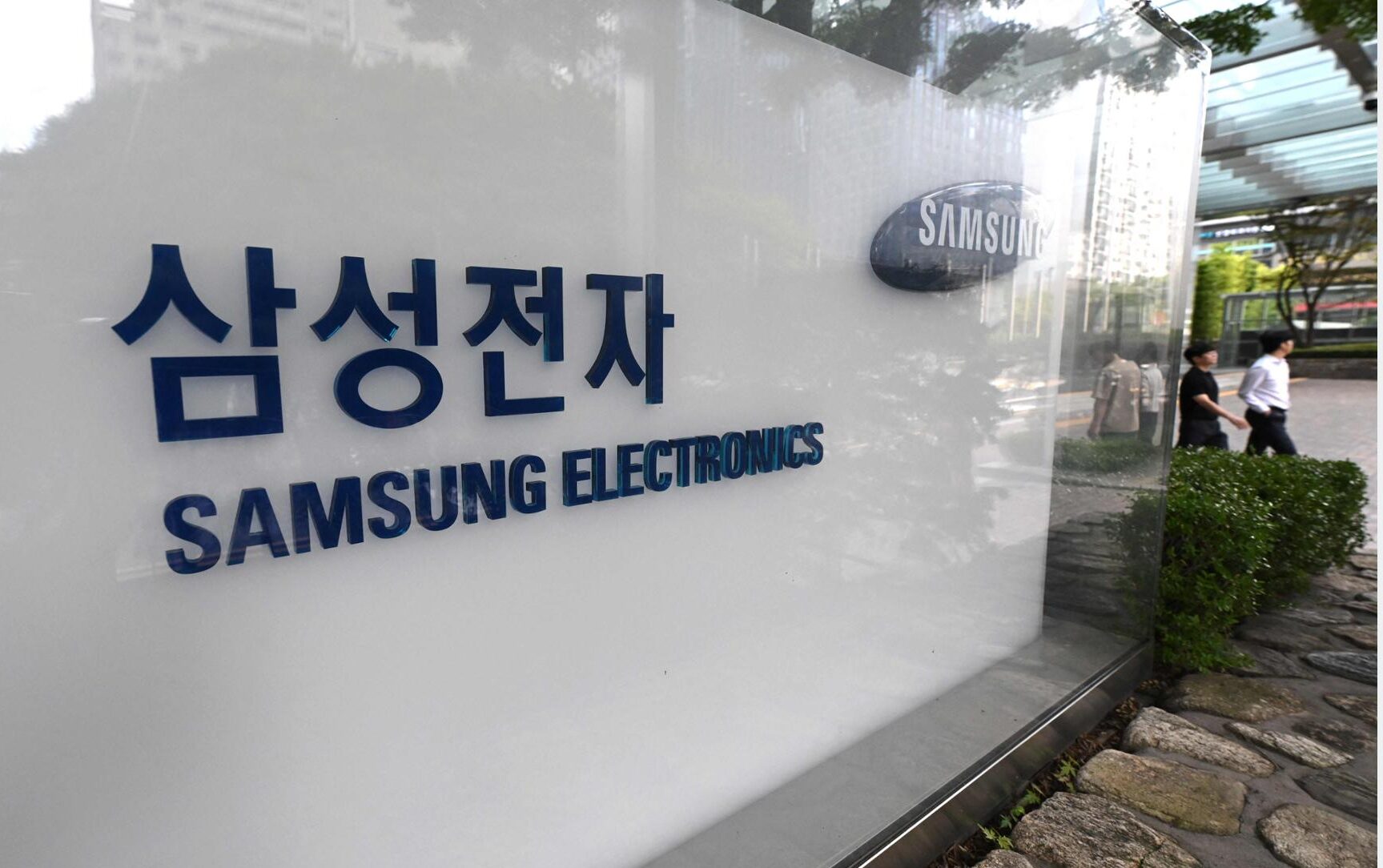
Kathmandu. South Korean tech giant Samsung Electronics reported a historic financial milestone in the second quarter of 2026, driven by strong demand for high-performance memory chips needed for artificial intelligence (AI) datacenters. The company’s operating profit jumped nearly 19 times from the same period last year to 89.5 trillion won, an annual increase of nearly 1,800 percent.
Although the financial results are strong, South Korea’s stock market has been volatile due to concerns about whether the rapid investment in AI will be sustainable in the long term. This is the reason why the shares of Samsung and competitor SK Hynix have fallen sharply.
According to Samsung’s data, the company’s revenue reached 1.715 trillion won in the April-June period. This is 130 percent more than the previous year. The company’s net profit also increased by about 1,300 percent to 716 trillion won during the period. South Korea’s Yonhap news agency said the results met market expectations, citing financial data.
Shares of AI-related companies were under heavy selling pressure on South Korea’s stock market on Wednesday, despite financial gains. Samsung’s shares fell more than 12 percent, while its main competitor SK Hynix fell another 20 percent after falling 14 percent the previous day. The market value of SK Hynix, which reached a record high in the last one month, has almost halved.
SK Hynix also reported significantly higher revenue and operating profit in the second quarter than a year earlier, but it fell short of analysts’ expectations.
Samsung, SK Hynix and US-based Micron are among the world’s leading high-bandwidth memory (HBM) chip makers. These chips are essential for AI processors such as running chatbots, performing complex calculations, and creating realistic images.
Samsung said its memory business delivered its best ever quarterly performance, prioritizing server generation. Shares of the company were up nearly three percent on Thursday morning after two consecutive days of declines.
The company expects that demand for server-related products will remain strong in the second half of the year. The company expects the market to be more dynamic due to infrastructure expansion, increasing investment in AI, and the expansion of ‘Agent AI’ technology, which allows users to perform tasks independently.
The company’s Chief Financial Officer Park Soon-chol said that the global shortage of memory chips will worsen in 2027 and the impact will persist until 2028.
Samsung has said it is preparing to open its first chip manufacturing facility in Taylor, Texas, this year. Construction of the second plant will begin later this year and the target is to reach full commercial production by 2030.
According to analysts, the rapid expansion of AI has led to a significant increase in the price and shipment of not only high-end HBM chips but also traditional NAND and DRAM memory chips.
According to MS Hwang, an analyst at market research firm Counterpoint, Samsung is aggressively expanding its market share in various business segments, leveraging its strong base in the memory space.
Samsung recently announced a strategic partnership with US chipmaker Broadcom to provide advanced memory solutions, including HBM. The total value of the partnership is expected to exceed $200 billion by 2030.
According to Jo Won, head of economic research at Hyundai Research Institute, the partnership is part of Samsung’s strategy to expand Nvidia’s limited customer base and strengthen long-term relationships with other AI chip makers.
At the same time, Samsung has also denied speculation about the possibility of listing on the US stock market. The company’s financial officer said there was no need to raise capital immediately as there was strong cash flow.
South Korea’s growing semiconductor industry has also significantly boosted government revenues. President Lee Jae-myung described the situation as a “golden opportunity” for new investments.
The government also confirmed plans by Samsung and SK Hynix to jointly invest eight trillion won to set up four state-of-the-art chip production facilities at the former military airport area of Guangzhou.
However, analyst Jo Won said the project is long-term and it will take time to pay off, adding that the biggest challenge is the risk that the global semiconductor supercycle could end sooner than expected.













प्रतिक्रिया दिनुहोस्