

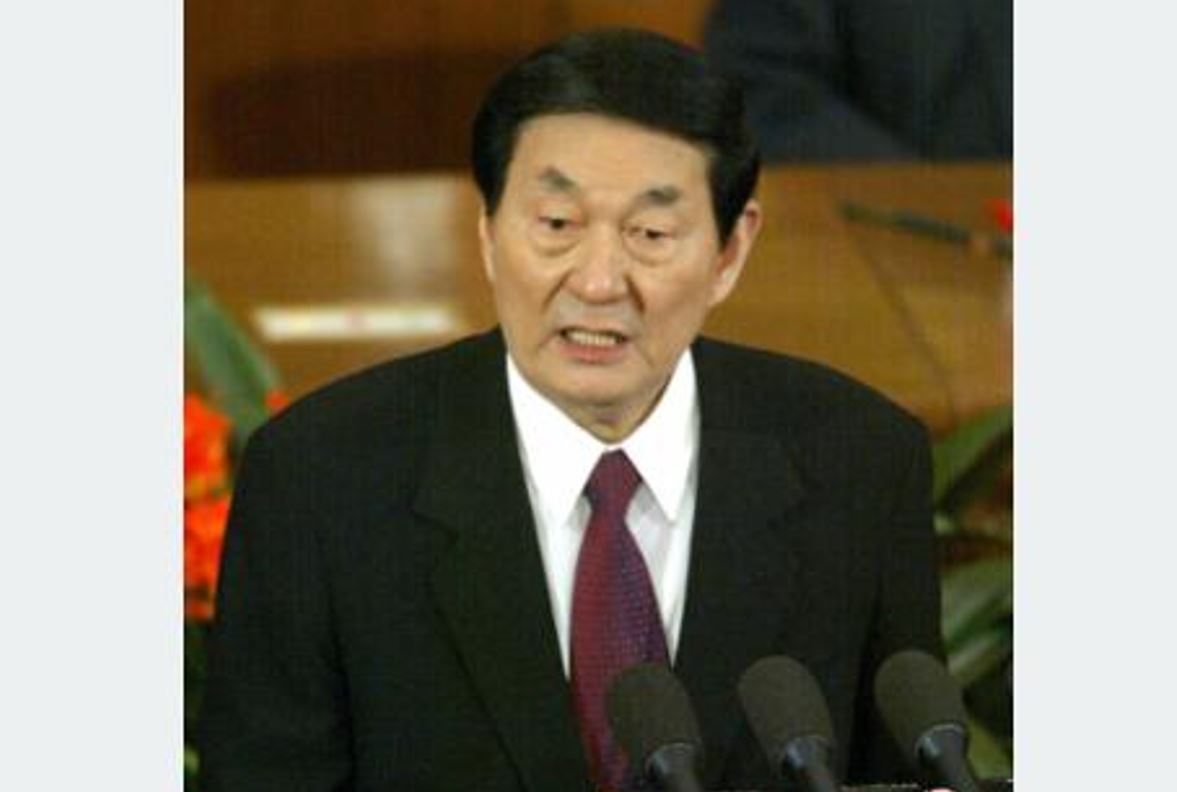
Kathmandu. Zhu Rongji, the former premier of a major market reform that will further integrate China into the global economy and lay the groundwork for rapid economic growth, has died at the age of 97. His death marks the end of an important chapter in China’s economic transformation.
He died in Beijing on Wednesday morning after suffering from the disease, state-run Xinhua news agency reported. A joint message of condolence issued by China’s top political body described his life as one of revolution, struggle and glory.
In his condolence message, he said that he had fully dedicated his life to the service of the people and had contributed to the communist cause. His death has been described as a great loss to the party and the country.
Zhu became China’s premier in 1998. As prime minister, he made a mark as a decisive leader and a firm believer in market-oriented economic reforms. During his tenure, China took significant steps to rapidly move from a state-controlled economy to a market-oriented economic system.
Among his major reforms were a massive program to privatise long-losing state-owned industries, reform of the urban housing system, and policies that encouraged home ownership. These reforms brought about major changes in China’s economic structure and played an important role in the expansion of the private sector and consumer-oriented economy.
The reforms during Zhu’s tenure also laid the groundwork for the rapid expansion of the real estate and construction sectors. Before the severe debt crisis in 2020, nearly a quarter of China’s economy was tied to this sector. However, in recent years, this sector has become one of the major challenges to China’s economy.
He is also credited with playing a key role in shielding China from the effects of the 1997 Asian financial crisis. At the time, many of the region’s economies were in serious financial trouble. China, on the other hand, managed to keep its currency and economy relatively stable.
Another of Zhu’s most important contributions is the negotiations to make China a member of the World Trade Organization (WTO). He led the negotiations for China’s accession to the WTO in 2001. China’s accession to the World Trade Organization (WTO) is seen as a historic step to link an economy that has long been isolated from the outside world under Mao Zedong’s leadership.
While his economic reforms have helped lift millions of Chinese people out of poverty, they have also been criticized for increasing income and wealth inequality. This notion of market-oriented reform gradually weakened in China’s political leadership.
After Xi Jinping came to power in 2012, China reaffirmed the state’s role in the economy and began pushing for more balanced development. The Xi leadership has criticized the uncontrolled expansion of capital and cracked down on large private companies that are considered monopolistic and the over-expanding real estate sector.
Zhu’s obituary described him as an outstanding member of the Communist Party of China, a long-tested and loyal communist warrior, and one of the best leaders of the Party and the state.
The obituary called for learning from Zhu’s revolutionary spirit, high character and good conduct and to unite more closely with the current leadership. This shows the Party’s formal respect for him and the importance given to his role in China’s economic history.
After news of Zhu’s death broke, his name quickly became one of the top trends on Weibo. Within hours of the news, the content was viewed more than 190 million times.
Many users on Weibo remember him as an important contributor to China’s economic development. One user called him a “people’s good prime minister”. The comment received more than 17,000 likes. Other users also paid tribute to him using candle emojis.
Zhu Rongji’s political legacy is closely linked to China’s rapid economic transformation. The market reforms he spearheaded laid the groundwork for China to move toward the center of the global economy. While some of his policies have created new challenges in recent years, his role in the process of integrating China into the world market is historically significant.

















प्रतिक्रिया दिनुहोस्