


KATHMANDU, Sept 14: The government has released the ‘Private Investment Protection and Promotion Strategy’ with the objective of protecting, protecting and promoting the investment of the private sector and boosting the morale of the investors.
The government has made it clear that the strategy has been brought to create an environment conducive for the private sector to invest with high morale for rapid economic development and employment generation in the country. The strategy prioritizes the protection of investors, industrial and business structures, asset protection, economic recovery, legal and regulatory simplification, investment protection and promotion, and youth entrepreneurship development.
The 100 agendas related to governance reforms approved by the Council of Ministers on March 28, 2002 included an action plan to formulate and implement a strategy for the security and promotion of the private sector. According to the same action plan, the strategy has been approved and implemented. The implementation of the strategy is expected to boost the morale of the private sector and contribute to the overall development of the economy by guaranteeing the safety and protection of industrial and commercial investment.
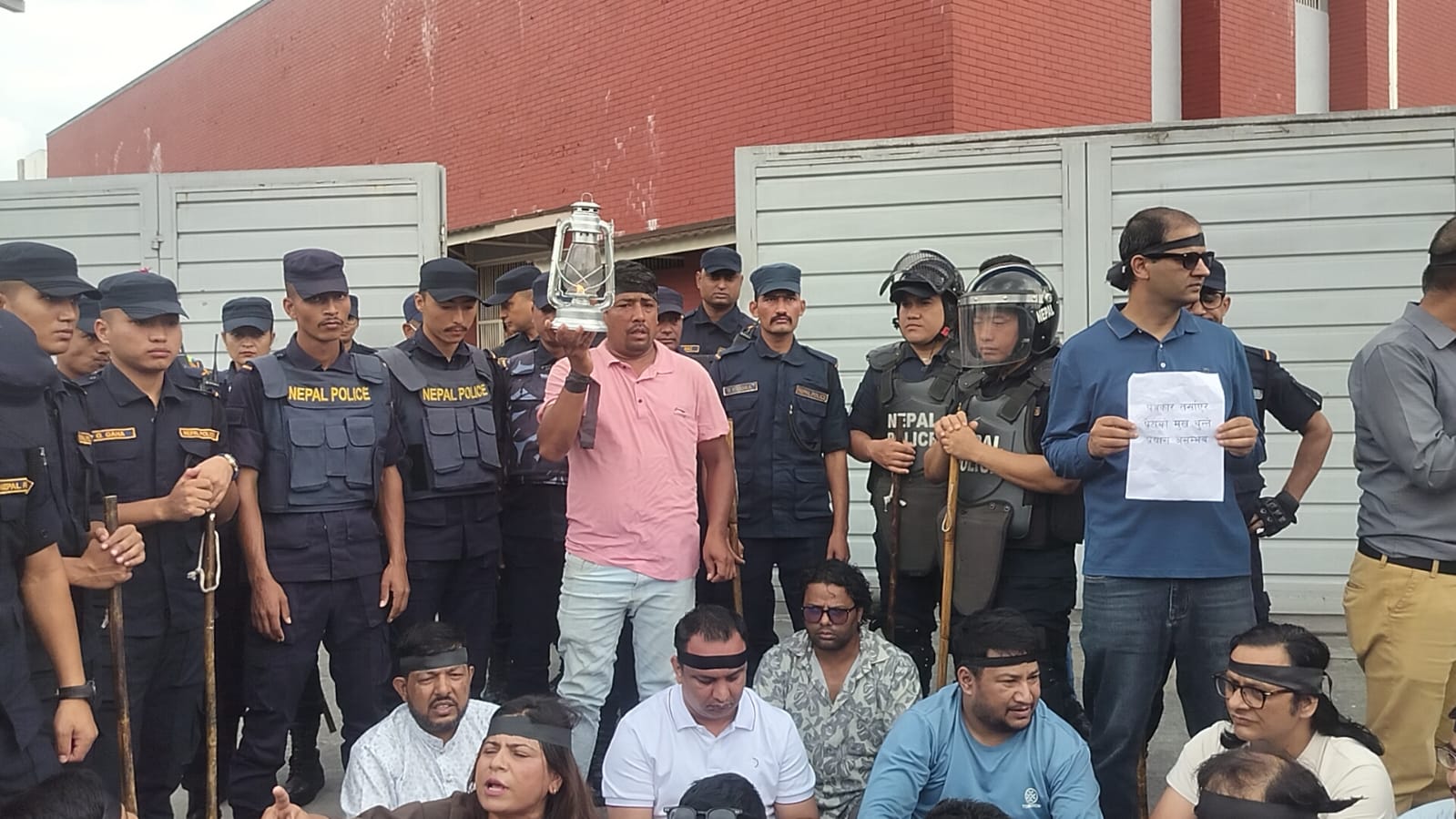
The main objective of the strategy is to address the impact on the industry and business due to agitations, demonstrations, bandhs, strikes and socio-political instability in different pretexts. The ongoing strategy states that looting and arson occur in and around the industrial premises during the agitation, obstructing the operation of industries and directly or indirectly affecting the production and management process.
The National Planning Commission (NPC) has assessed the loss of physical property worth Rs 84 billion while assessing the damage caused to public property, physical infrastructures and private institutions during the agitation of September 7, 2005. In this context, a study conducted by Tribhuvan University had also suggested declaring the industry and business as ‘zone of peace’ and formulating the Industrial Security Bill to ensure the security of the industries in case of agitation.
The government through the strategy aims to ensure security of industrial establishments, banks and financial institutions, small and medium enterprises (SMEs) and the service sector. The objective of the strategy is to create a safe, stable and credible business environment by increasing coordination among the security agencies, government mechanisms and the private sector.
The strategy has provisioned the establishment of the Industrial Security Force gradually for the security of the physical assets of the industrial and commercial establishments. Likewise, the existing legal provisions relating to industrial safety would be reviewed and amended periodically. The strategy also states that the industrial corridor, industrial zone, special economic zone and industrial village would be declared as ‘peace zone’ and arrangements would be made to prevent any untoward activities from taking place there. The government has a plan to categorize industries and businesses on the basis of security risks and provide security accordingly.
As per the ongoing strategy, rapid security teams would be mobilized as per the risk of the industry and business while security liaison persons would be assigned to the nearest security unit. Similarly, a zero-tolerance policy will be adopted in case of attacks, vandalism and arson on industrial and commercial establishments. The same policy will be applicable to attacks and vandalism on private property and residences of industrialists and entrepreneurs.
The strategy has made provision for launching a special search campaign to return the goods looted from industrial and commercial establishments during the agitation. Security patrolling will be deployed continuously along highways and strategic routes to ensure uninterrupted supply of goods and services.
Similarly, the ‘hotline’ at the District Emergency Operation Centre and the Province Emergency Operation Centre in each district would be operated as an industrial security hotline for 24 hours.
The District Industrial and Commercial Security Coordination Committee will be formed under the coordination of the Chief District Officer, comprising chiefs of district-based security bodies and representatives of industrialists and entrepreneurs. The committee has implemented the strategy to regularly review and analyze the industrial security challenges in the district.
Similarly, the government has adopted a policy of providing relief and concessions to the private industries and businesses that were torched or vandalized due to the agitation for the resumption of their operations. It is stated in the strategy that exemptions, facilities and concessions can be provided for one fiscal year or for a certain period by making provisions in the prevailing laws and annual budget.
The strategy states that the agitation affected entrepreneurs could be given one-time waiver on the fees levied while renewing the business or license, and for industries and businesses to be reconstructed, the map pass fee, electricity and drinking water connection fee and integrated property tax would be waived once on the basis of certain criteria.
The strategy also states that the environmental regulations and other laws will be amended to make it mandatory to conduct only preliminary environmental audit while relocating damaged industries or businesses to new locations. Similarly, arrangements will be made to provide concessional loans from banks and financial institutions for the revival of damaged private industries and businesses.
The strategy also prioritizes simplifying regulatory processes for investors. The government plans to simplify the process related to industry and business registration by maintaining interconnection between the Department of Industry, Department of Commerce, Supply and Consumer Protection and the electronic system of the Office of the Company Registrar.
The strategy has also proposed a provision of maintaining at least two different levels of customs duty on industrial raw materials and final finished goods in order to promote industrialization and create jobs. Likewise, the exemptions, facilities and concessions provided as per the tax policies and laws will be kept stable for at least five years.
The strategy also includes the promotion of the mining industry. The Ministry has also made a plan to make amendment to the laws related to operation of mines and mines, forest and national park, environment, land and local government to make arrangements for allowing exploration and excavation of mines, right to use of forest area, environmental impact assessment approval, felling of trees and land-related works from the Department of Mines and Geology.
Similarly, a strategy has been adopted to reduce the logistics cost of business by mobilizing investment through the public-private partnership (PPP) model in the construction and operation of public infrastructures. The government has also included micro, cottage and small industries and start-ups as an important part of the strategy. Arrangements would be made to run the entrepreneurship development and employment generation programme at the local level on the cost sharing basis of the three tiers of governments.
According to the strategy, programmes for entrepreneurship and skill development, technology pursuit, technology transfer and upgradation of indigenous technologies would be expanded for the promotion of small and cottage industries. Similarly, the scope and scope of youth-targeted start-up loans will be expanded to encourage the production of new thinking and technology-based goods and services.
Likewise, arrangements have been made to provide exemptions, facilities and concessions as per the prevailing laws for the revival, reconstruction and management of sick industries run by the private sector that can be revived by identifying and classifying the sick industries. The government has made it clear in the strategy issued by the government that the industries declared sick would also be provided services, facilities and concessions as per the law.












प्रतिक्रिया दिनुहोस्