Efforts for policy-level and legal reforms continue, from legal reforms in infrastructure to tunnels, sick contracts for 160 roads terminated
लगानी न्यूज
Kathmandu. In the field of infrastructure and development in Nepal, many policy and legal reforms have been attempted in the years since the ‘Jenji’ movement.
The ‘Public Procurement Act, 2063’, which has been depicted as a hindrance in the development of the country for years, has been amended by the elected government after the Genji movement and made it timely. The timely amendment and revision of this law in the field of infrastructure construction and development projects has been taken as an important step.
This is seen as a link to ease the infrastructure and development construction by gradually eliminating the complexities and obstacles seen in the infrastructure construction sector.
Director General of the Department of Roads, Dr Bijaya Jaisi said that the government formed after the Genji movement has done a remarkable job of policy and legal reforms through public procurement (second amendment).TAG_OPEN_div_117
He said that the Public Procurement Act is timely, construction-friendly and good governance. “The government has tried to reduce the time of international and national tenders by making the Public Procurement Act time-bound and to prevent malpractices by the construction companies,” he said.TAG_OPEN_div_115
The Public Procurement (Second Amendment) Act, 2083 has also decided to reduce the time taken for inviting tenders. Through the amendment of the Act, the deadline for national level tenders has been fixed at 21 days and for calling for re-tenders. Earlier, the deadline for calling for re-tenders was 30 days and 15 days for re-invitation.TAG_OPEN_div_113
According to the Public Procurement (Second Amendment) Act, 2083, 30 days have been fixed for the call for international tenders and 15 days for the re-invitation of international tenders. Earlier, the time limit for calling for international tenders was 45 days and for re-invitation of 21 days.TAG_OPEN_div_111
TAG_OPEN_div_109 Various provisions of the Public Procurement Act have been amended to make the development and infrastructure friendly. The newly provisioned provisions of the Public Procurement Act are of international standard, which will also play an important role in reducing the practical complexities, said Director General Jaisi.
The government has formulated and implemented the National Transport Policy, 2083, which is of long-term importance not only to the infrastructure sector but also to the transport sector. The government has implemented the National Transport Policy, 2083 keeping in mind the timely and practical aspects after nearly 25 years of the National Transport Policy, 2058.
The vision of the National Transport Policy, 2083 states that there is a sustainable, safe, universal, inclusive, green and technology-friendly transportation system. The policy emphasizes the development and management of technology-friendly, environment-friendly, energy-efficient, safe and easy integrated transport system in collaboration with the federal, provincial and local governments. The government has also formulated and implemented the ‘National Transport Policy, 2083’ to promote electric vehicles and charging stations. The meeting of the Council of Ministers on July 9, 2083 has already approved and implemented this policy.
The policy aims to make Nepal’s integrated transport system safe, accessible, sustainable and competitive to make an effective contribution to economic prosperity, social inclusion and regional integration. The Government of Nepal has been taking various initiatives with the objective of promoting regional connectivity, economic corridor development and cross-border transportation through regional forums such as BBIN, SASEC and BIMSTEC. This has also shown signs of improvement in the transport sector.TAG_OPEN_div_103
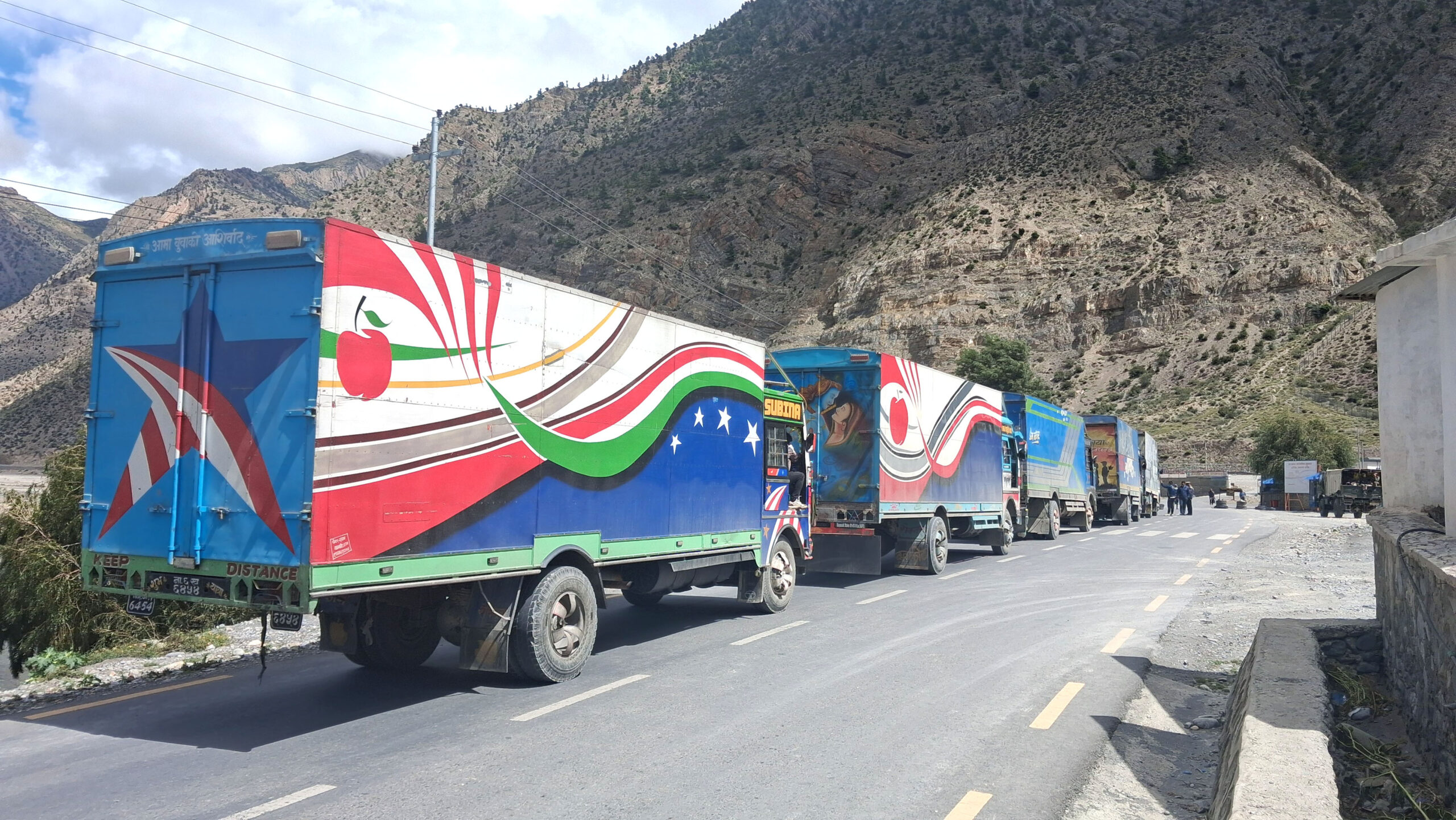
In the context of the increasing risks and impacts of climate change, Nepal has committed to the Paris Agreement and has prioritized the development of a climate-resilient green and sustainable transport system. Accordingly, the number of electric vehicles has reached 63,280 among the registered vehicles in the country.TAG_OPEN_div_101
Till February of the fiscal year 2082/83, 62,49,732 vehicles have been registered across the country. Among the registered vehicles, more than 50 lakh are motorcycles. The share of motorcycles is more than 80 percent.
Entry into the Tunnel Era
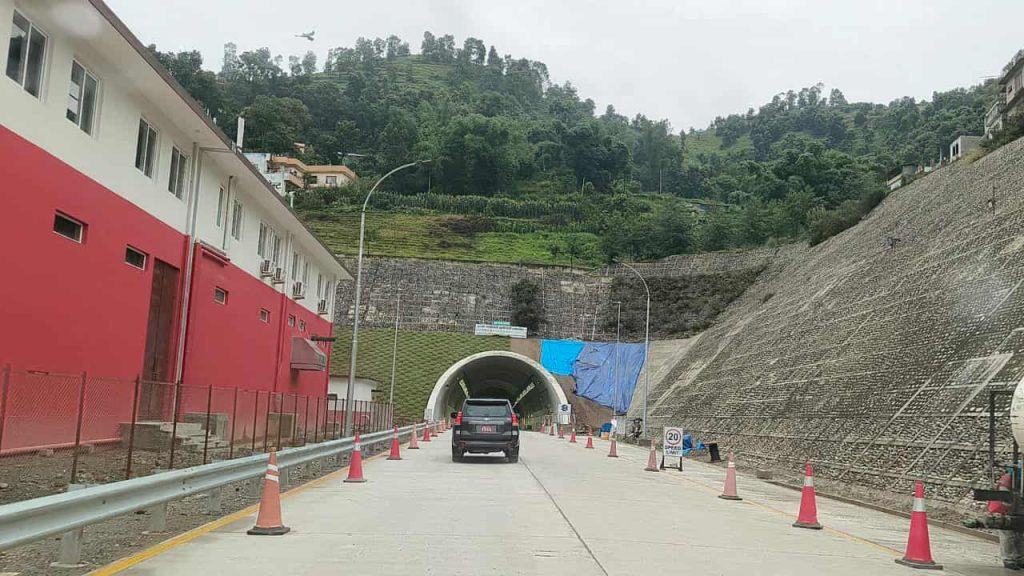
Not only policy and legal reforms, but the country has also moved towards the tunnel age after the operation of the Nagdhunga Tunnel Way during the same period. The dream of the Nepali people to drive vehicles on the tunnel way for years has also come true.
The Nagdhunga Tunnel Way, which was started on November 14, 2019, has been formally opened to traffic from July 26.TAG_OPEN_div_93
This tunnel way is 2,68 TAG_OPEN_div_91 8 meters long. With the operation of the tunnel, the situation of wastage of fuel and time has ended to some extent due to traffic jam on the Nagdhunga-Naubise tunnel way. Director of the Nagdhunga Tunnel Construction Project Saujanya Nepal said that with the operation of the Nagdhunga tunnel way, the road has entered the era of tunnel way. “With the operation of the tunnel way, the hope of prosperity of the country has been raised through the tunnel way in Nepal,” he said, “The experience and learning of the Nagdhunga tunnel way should also be taken as an opportunity to expand the skills and capacity of other tunnel ways.” ”
Ride license available
One year after the
Genji movement, the end of the compulsion to carry a driver’s license receipt for years has also been portrayed as a major achievement.
TAG_OPEN_div_85 The general public who paid the revenue of the license but did not get the license got the license in a short time. The Department of Transport Management has sent 27,47,253 driving licenses to the concerned transport office through post office for the last four years due to various reasons. Keshav Khatiwada, director of the Department of Transport Management, said that these licenses were sent through post office till July 23.
He said, “As per the agreement signed between the Department and the Security Printing Center on Kartik 12, 2082, the details of the driving license printed by the security printing center have been sent to the concerned body as the printing has been pending for the last four years due to various reasons.”TAG_OPEN_div_83 ”
} The department has said that it has improved the system to get the details of the national identity card number in the coming days for the acquisition and renewal of new licenses and to make the revenue payment online.
The government has not only solved the problems seen in the printing of driving licenses. The contractors have also taken the initiative to address the old problems from a new perspective by ending the contracts of sick projects that have added to the frustration of the general public.
160 road patients broke contracts
}
According to the Department of Roads, about 160 sick contracts that were not started or completed on time have been terminated in the span of one year after the Jenji agitation. Even now, the Department of Roads is continuing to break the sick contracts of the roads that have been stuck for years. Jaisi, Director General of the Roads Department, said that about 160 sick contracts have been terminated in a period of one year. Sick contracts have not only been terminated. The Department of Roads has said that the work of awarding contracts for sick projects is also being done on priority.TAG_OPEN_div_75
Infrastructure Development Minister Sunil Lamsal has also been making efforts to resolve the problems on the roads by conducting on-site studies of various roads. “The minister himself has visited the site and identified the sick contracts and necessary action has also been taken,” said Director General Jaisi, adding, “Efforts are also being made to resolve the complaints of the general public in the areas of roads, bridges and other areas immediately.” According to the Department of Roads, new tenders have been called by scrapping the contracts of the Dhulikhel-Khaba and Balaju road sections. “Now the government is running its own infrastructure company and moving ahead with the work through it,” he said.TAG_OPEN_div_73
Although the government has made remarkable achievements in law and policy reforms and governance reforms in the last one year, capital expenditure targeted at development and infrastructure has not been comparatively inadequate.TAG_OPEN_div_71
Overall capital expenditure 46.79 per cent
}
The government had allocated Rs 407.88 billion for capital expenditure for infrastructure development in the last fiscal year TAG_OPEN_div_67 2082/83. According to the Office of the Comptroller General of Accounts, 46.79 per cent of the target or Rs 190.84 billion was spent in the last fiscal year. The Department of Roads, on the other hand, had allocated Rs 120 billion for capital expenditure in the last fiscal year. Jaisi said that 60 per cent of the total capital budget of the roads department was spent. “In the last financial year, the finance ministry initially stopped the budget as there was no capital expenditure. As a result, the contract could not be completed on time,” said Jaisi, adding that due to the war in the Middle East, the price of construction materials, especially bitumen, doubled. The capital expenditure has been relatively high even though the contractors are waiting for the price to come down and get the work done. ”
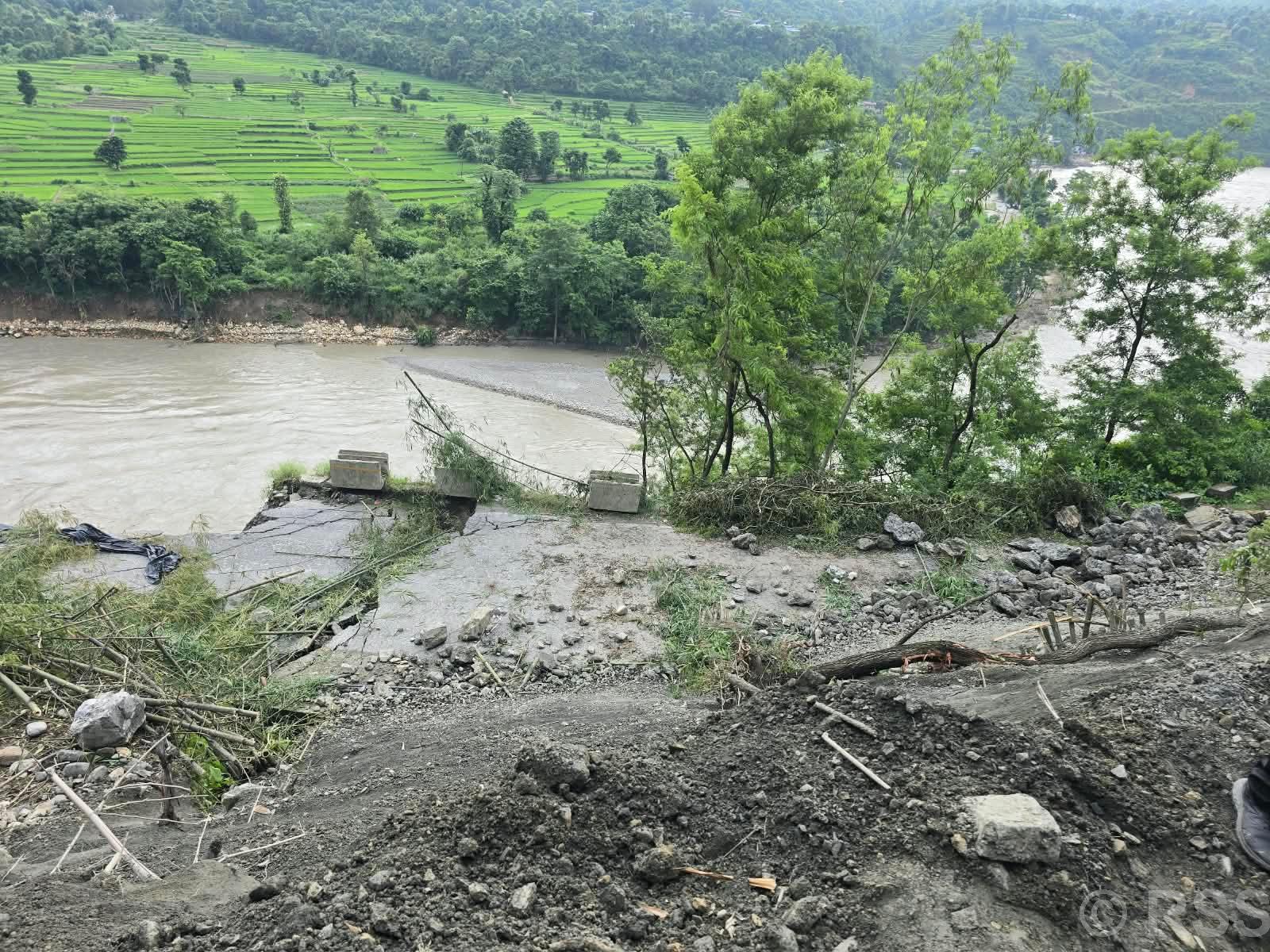
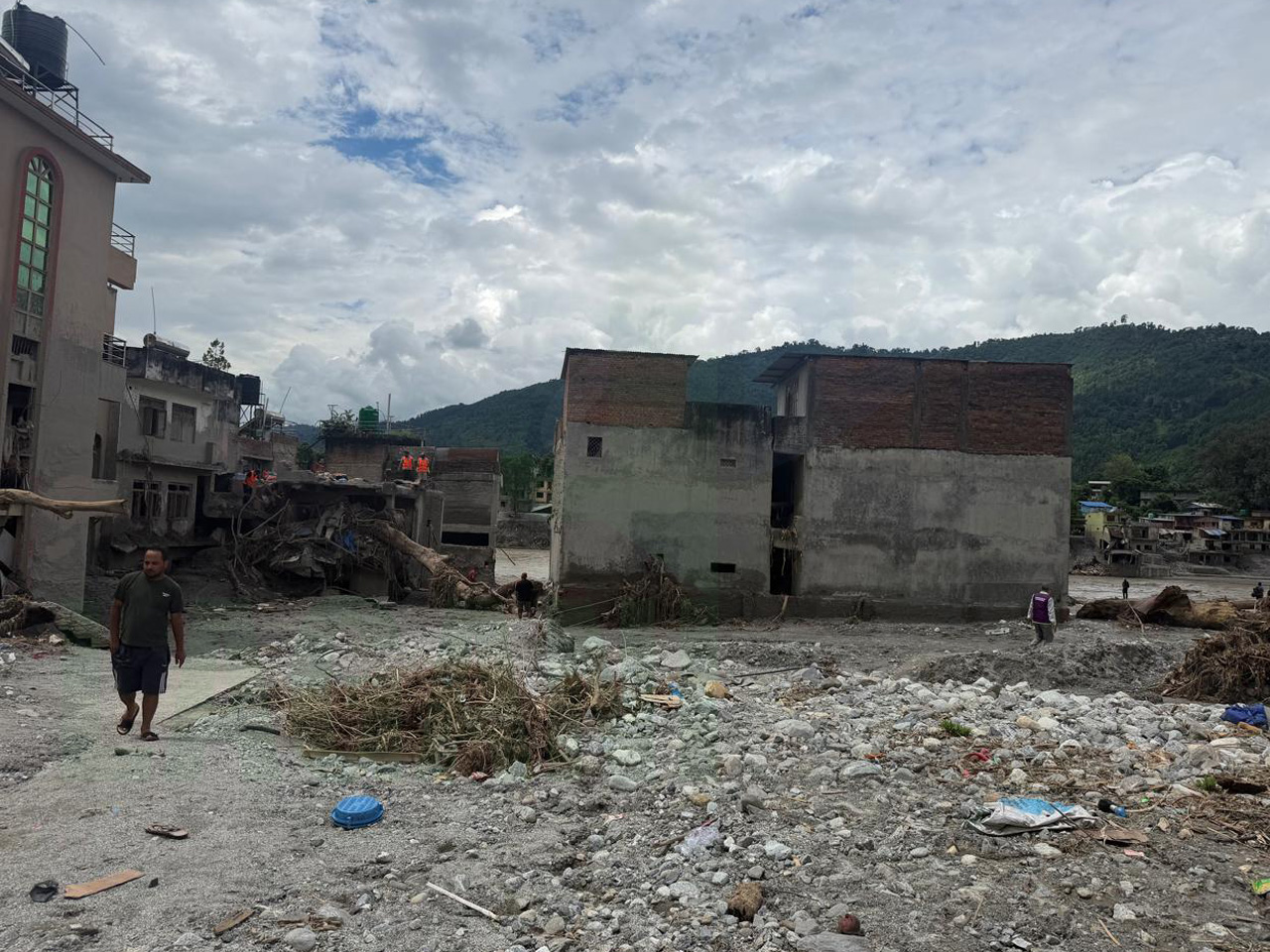
While the government is trying to carry out governance reforms and development works at its own pace, the flood in the Bhotekoshi River on August 26 has caused huge damage and damage to roads, bridges, suspension bridges, private houses and government structures in Rasuwa, Nuwakot, Dhading, Gorkha and other districts. The flood not only caused physical but also human damage. Director General of the Department of Roads, Jaisi, said that due to the floods in the Bhotekoshi River, the damage and damage to roads and bridges and other structures has been estimated to be more than Rs 20 billion. According to him, the flood has damaged 40 kilometers of roads and 31 bridges.
According to the National Disaster Risk Reduction and Management Authority (NDRRMA), it is estimated that the floods in and around Bhotekoshi have caused more than Rs 387 billion.TAG_OPEN_div_63











प्रतिक्रिया दिनुहोस्