Genji Martyrs’ Day: From street discontent to good governance and institutional transformation, how much has been completed?
लगानी न्यूज
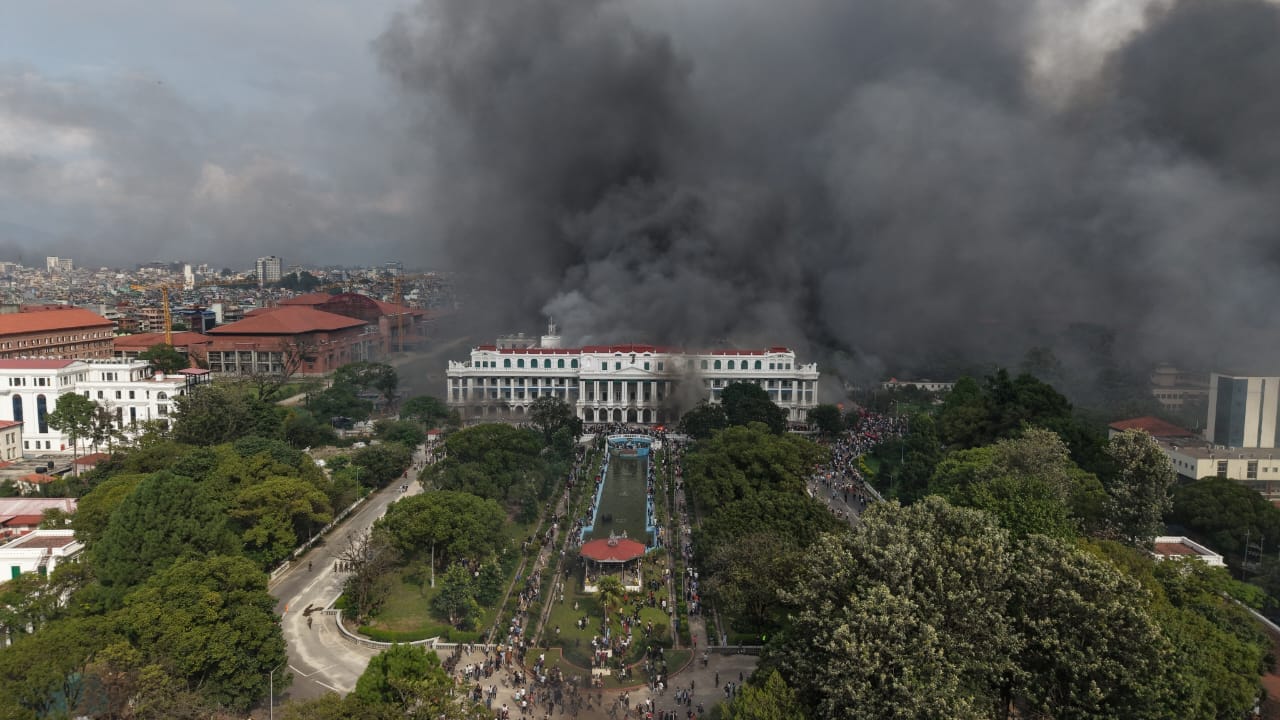
Kathmandu. That scene seen on the streets of Kathmandu a year ago will be remembered in Nepal’s political and social history for a long time.
Placards in hand, live on mobile phones and thousands of youths with aspirations for a change of heart, took to the streets. Although their anger was against a decision of the time, there was dissatisfaction that had accumulated over the years.
The Genji movement, which began with a ban on social media, gradually grew into a voice against the style of governance, the efficiency of political leadership, corruption, nepotism, unemployment, public services, and inequality of opportunity.TAG_OPEN_div_171
Today, on September 23, the same movement has completed one year. The government has declared a public holiday today in memory and honor of the youths who lost their lives during the movement.
TAG_OPEN_div_167 In a span of one year, the country has experienced a major change politically. Similarly, the issues of good governance and accountability raised by the movement have now become a part of the main debate on the running of the state.
From social media to street
}
The then background of the Genji movement was the ban on social media. After the ban on social media platforms, dissatisfaction among the youth increased. For the digital generation, social media was not just a means of entertainment; it had also become an important basis for information, expression, education, business, employment, and social relations. Therefore, the youth took the ban as an interference on their expression and digital rights. The protest that started on social media reached the streets within a few days.
TAG_OPEN_div_161 The protests on September 23 and 24 saw a significant presence of youth protesters in various parts of the country, including Kathmandu. As the nature and demands of the movement expanded, it was not just a question of freedom of social media.
Controlling corruption, political accountability, reform of public institutions, job creation, equality of opportunity, transparency and participation of the new generation in the governance of the state were the main themes of the movement.TAG_OPEN_div_159
Why was the new generation angry?
The discontent of the Genji generation was not created in a single day or by one incident. For a long time, political instability, unemployment, inflation, sluggishness in public service delivery, allegations of corruption, inequality of access to opportunities, and a culture of political patronage were increasing the frustration among the youth.TAG_OPEN_div_155
The compulsion to go abroad for employment even after having higher education was a common problem of many youths. Administrative hassles, lack of capital, policy uncertainty and market limitations added to the challenges of trying to venture back home.TAG_OPEN_div_153
The youth did not only seek employment opportunities from the state. They wanted a fair system. They wanted to get opportunities on the basis of merit. They wanted a system where there was no need for political access or acquaintance while going to get services in government offices. Therefore, the main spirit of the movement was that the state should be accountable to the citizens.
The TAG_OPEN_div_149 movement also raised serious questions about the political parties and the leadership. The new generation tried to establish itself as an active participant in the policy making and governance process, not just a voter who was considered at the time of elections.
} The political developments that have developed after the movement also seem to reflect the people’s desire for change. The new political force has received a strong mandate in the elections held on March 21.
The election results have been analysed by many as an expression of dissatisfaction with the old political working style, expectations for the new leadership and desire for change. In this sense, the Zenji movement seems to have influenced the political discourse of Nepal not only directly but indirectly.
Good Governance Priority
}
The current government led by Prime Minister Walendra Shah has given priority to good governance, transparency, corruption control and administrative reforms. The government has prioritized the delivery of public services, making the government structure efficient, making the appointment process in public bodies transparent and the use and expansion of digital technology.TAG_OPEN_div_141
The number of federal ministries has been reduced to 18. It is estimated that reducing the number of ministries will save about 20 billion annually to the state exchequer. The government has presented the decision to reduce the number of ministries as a reform to reduce administrative expenses and make the state machinery more effective.
} The government has further refined and launched the ‘Nagarik App’ by saying ‘no longer online, not online’. The app has been launched with the goal of digitizing all types of services provided by the government and providing services through an integrated platform. Various government services can be obtained from the same app.
Through TAG_OPEN_div_135 the app, details of citizenship, passport, educational certificate, and voter ID card can be obtained. Also, details of the amount deposited in the accounts of Citizen Investment Fund, Provident Fund and Social Security Fund can be obtained.
Quick service to the citizens has been ensured by removing irregularities, sluggishness, etc. in service delivery. This has made cumbersome public services simple, accessible and accessible. Citizenship, passports, driving licenses and land revenue services have been made efficient and effective. The economic austerity policy has strengthened the foundation of economic governance.
Attempts to reform the administrative structure
}
The government has adopted a policy of reducing public expenditure and increasing administrative efficiency through the dismantling and adjustment of unnecessary administrative structures.TAG_OPEN_div_129
Efforts to reduce the influence of trade unions and student organizations considered close to political parties and to free public institutions from partisan interference are also included in the reform agenda. The issue of making the appointment process in public bodies transparent and merit-based is also linked to the important issues raised by the Genji movement.TAG_OPEN_div_127
The main expectation of the new generation has been to give priority to qualifications, experience and efficiency rather than political affiliation while making appointments to important state bodies.TAG_OPEN_div_125
The issue of freeing universities from partisan politics is also linked to the broader reform agenda of the Genji movement. The challenge of making institutions of higher education centers of academic excellence, research and innovation still remains.
Digital Rights and the Expectations of the New Generation
The Genji movement is a movement of the digital generation, so digital rights are an important aspect of it. The debate that social media needs to be operated in a responsible, safe and transparent manner rather than banning it has been strengthened after the movement.
An environment in which citizens can question government decisions, get information and participate in public debate through digital means is an important foundation of democratic governance.TAG_OPEN_div_117
The government has emphasized on administrative reforms and good governance. There is a need to increase private sector investment, encourage entrepreneurship, facilitate startups and innovations, expand skill education, and connect the youth with production.
Good governance does not only mean controlling corruption. Creating an economic environment where citizens can live with dignity with their labor, skills and abilities is also an important part of good governance. With the political change, there should be a change in the administrative culture. The hassle faced by the citizens to get services in government offices has reduced. The decision-making process is transparent.TAG_OPEN_div_113
Shared responsibility of the ruling party and the opposition
}
The Genji movement did not question only one political party or group. It questioned the entire political culture. Therefore, its solution is possible only through collective political commitment.
The ruling party will have to continue with the agenda of good governance and institutional reforms. The opposition will also have to play a constructive role in the necessary reforms and not only criticize the wrongdoings of the government.
Civil society, private sector, media, youth, and all state agencies need to play their role responsibly.TAG_OPEN_div_105
{
}
The Genji movement has given voice to the restlessness of a generation. That voice has forced not only the political leadership but all the institutions of the state to rethink their way of working.
TAG_OPEN_div_99 The need of the hour is not to limit the spirit of the movement to continuous political discontent. It is to make it the energy of nation building.
TAG_OPEN_div_97 Necessary reforms in the state structure, end of administrative hassles, simplification of legal process, control of corruption, quality education, employment generation and ensuring digital rights should be the main priorities of the coming days.
The need of the hour is to move forward keeping the national interest, collectivism and greater unity at the center. Change will be sustainable only if both the ruling party and the opposition rise above the political competition and give priority to the service of the citizens and the national interest. A year ago, the voices raised on the streets posed the question of a generation, “When will our future change?”TAG_OPEN_div_95
The change sought by the youth will be meaningful only when the opportunity to live with dignity is created in the country, government services are easy and transparent, citizens’ trust in public institutions will increase, and citizens’ voice will have a meaningful place in state decisions.TAG_OPEN_div_93
The real success of the Genji movement will be not only in the change of government, but also in the change in the culture of running the state. Only if the discontent born on the streets is transformed into an institutional reform and the results seen in the daily lives of the citizens, will the sacrifices made a year ago and the voices raised have long-term meaning.















प्रतिक्रिया दिनुहोस्