



The devastating floods in the Bhotekoshi River have brought back to the surface the growing risks and losses that Nepal has been facing due to climate change.
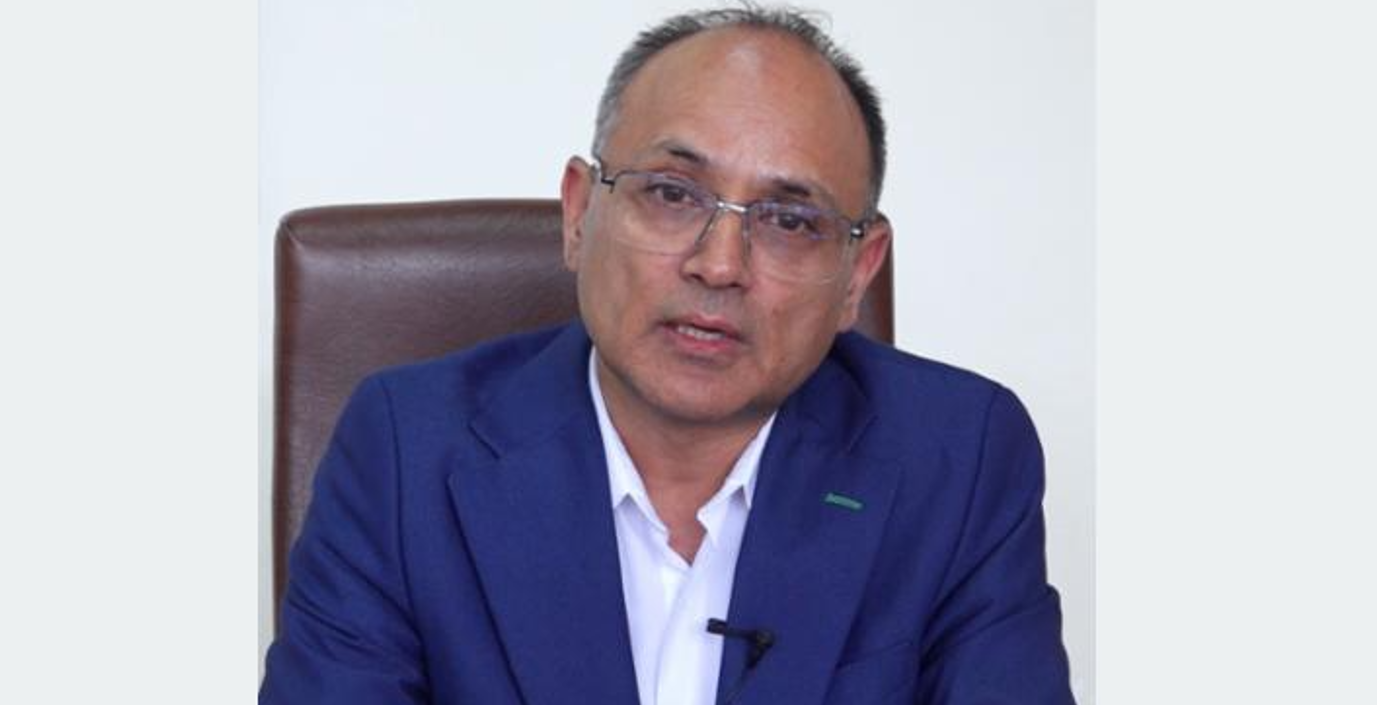
Chief of Climate Management Division under the Ministry of Agriculture, Forest and Environment, Dr Maheshwor Dhakal, said that glacial risk was increasing in the high mountainous region and called for a strong voice for climate justice, adequate climate finance and easy access to damage fund.
Here is an excerpt from the conversation with him about the Bhotekoshi floods, climate-related damage and the upcoming COP31:
The unexpected and devastating flood in the Bhotekoshi River on August 26 caused a huge loss of life and property. How do you analyze this event in the context of the risks posed by climate change and the increasing climate-related disaster?
The kind of flood that occurred in the Bhotekoshi River on the morning of August 26 is a climate hazard. Its impact has been felt by the communities living in the lower riparian areas and the citizens of all levels and sections of Nepal. There is no need to look for more evidence for this.
I don’t think there should be any doubt whether the floods in the Bhotekoshi are due to climate change or not. Looking at the scientific reports and studies so far, the temperature of the earth is increasing overall. Studies by the International Centre for Integrated Mountain Development (ICIMOD) and the Intergovernmental Panel on Climate Change (IPCC) have proved that the general increase in temperature in the lower coastal areas will have a greater impact in the high mountainous region.
The melting of mountains, melting of snow, and the formation and rupture of glacial lakes continue. Due to this, there is a risk of floods and landslides in the lower coastal areas and a large amount of loss of property and property. Earlier, reducing the amount of water in the Imja and Chyorolpa glacial lakes and sending them down can also be taken as an example of climate adaptation.
According to the IPCC’s ‘Cryosphere and Ocean in the Changing Climate’ report, the impact of temperature rise is more pronounced in the Hindu Kush Himalaya region, especially in the high Himalayan region. Previous studies have shown that due to this, water sources are gradually depleting, fires are increasing, and there is a direct impact on the tourism sector.
Looking at the data of the studies and research that has come before us now, it seems that the snow has melted due to the increase in temperature. As the snow melts, the melting of large frozen ice begins. As the water melts and due to the pressure of the snow, the snowflakes flow down, and the land is washed away with them.
This phenomenon in the upper reaches is called a glacial rocky landslide by scientists. Then, in the lower coastal region, where the ground is steep, the water that comes with the snow flowing from above, the impact of falling and melting of snowflakes and the speed at which it has washed away soil, sediments and other materials in the lower coastal areas is unimaginable. It could have been assumed that such an event could have happened, but no one could have said that such a big event would happen like this. Looking at the damage we have suffered now, its speed and impact, there is no doubt that it is a climate phenomenon.
Another important thing is that no human being on earth has reached the place where the Bhotekoshi flood originated. Everyone has guessed from outside. Now we have called it a climate phenomenon and if someone says no, then we have to bring proof of it. Otherwise, there is no basis to say that it is not climate-related. In my opinion, it is a hundred percent climate action.
This incident has happened in the zero-carbon zone where Nepal has a low carbon emission, there is no physical infrastructure development in that area, no industries have been opened and there is no human settlement. If there are doubts about such a zero-carbon event, then it is difficult for me to believe that such a person is a climate change expert or an activist.
As the temperature increased, the surface of the earth warmed, the snow melted, and when the snow melted, the land also washed away. That’s why we called it glacial landslide. It has had a big impact on the lower coastal areas when it comes down. If you look at the current damage data, the situation is very painful. It cannot be estimated at any cost.
Climate experts and activists seem to have different opinions on this issue, right?
Sometimes, there are differences of opinion among some experts in the media. It is one thing to have a difference but it is another thing to have a difference regarding the current incident. Therefore, we should be very sensitive to this issue. This incident should send a message that we Nepalis are at high risk of climate change and climate risk.
We should unite to solve this risk and make our voice heard at the international level. Political leadership, policy makers, scientists, researchers, private sector, civil society, media and all other organs of the society should unanimously discuss the issue of ‘This is a climate incident, what should be the plan to avoid it?’ This is the rest of our work. But I do not see any confusion about the nature of the incident whether the Bhotekoshi flood is a climate action or not.
Nepal’s contribution to climate change is negligible, but Nepal has suffered huge loss of life and property due to its impact. What concrete commitments should Nepal demand from the international community on climate finance, loss reduction fund and other support in the name of climate justice?
We also need to understand how different and how much of the same issue is sometimes climate finance and climate justice. Many friends have talked about compensation, but my request is that people in government and public bodies should study the Climate Change Convention, the Paris Agreement, the policies of the Government of Nepal and the various decisions of the Climate Conference (COP) and form their opinions.
The Paris Agreement aims to limit the increase in the temperature of the earth to 1.5 degrees Celsius and if that is not possible, it will not go above two degrees, but we have already said that the limit of 1.5 degrees Celsius has been exceeded for the mountains. If this limit has already been exceeded for the mountains, then the situation is even worse.
If we look at Nepal’s climate risk and climate justice with climate finance, there is no doubt that the main reason for the melting of Nepal’s mountains is the main reason for the warming. There is no need to look for separate evidence for this. But the historical role of rich, developed and industrialized countries is added to the question of how the temperature has risen. Since history, these countries have been emitting carbon in the course of advancing their physical development infrastructure and they have also benefited from the economic growth that has been obtained.
Now its climate risks are imposed on us. Therefore, our voice for climate justice has been raised loudly. However, the word ‘compensation’ is not explicitly mentioned in the Convention on Climate Change and the Paris Agreement. But there is a provision for ‘loss and damage’. Article 8 of the Paris Agreement is important for this.
Under this, after a long discussion, the ‘Loss and Damage Recovery Fund’ was established in the 27th COP and came into operation from the 28th COP. Other funds such as the Green Climate Fund, the World Environment Facility, the Adaptation Fund and others are also working to increase adaptability and reduce emissions to deal with climate risks. Bilateral and multilateral international agreements and funds have also been supporting in this area.
As far as climate justice is concerned, Nepal needs and needs climate justice. But the question of how to achieve climate justice is important. Article 9 of the Paris Agreement states that financial resources are needed for climate risk reduction, control, management and address and this is called climate finance. Developed countries have to play a leadership role and support climate finance.
The situation is very painful considering the big incident in Bhotekoshi, the loss of property and property due to it and the number of Nepali brothers and sisters we have lost. It is still unknown where a large number of people are, whether they will come back or not.
In such a situation, we should say with restraint that the rich, industrialized and developed countries should be sensitive to the risks we face today, even though our role in carbon emissions is negligible, and help Nepal to come out of this terrible situation.
Clause 9.2 of Article 9 of the Paris Agreement also explicitly states that the economically advanced countries will cooperate. Looking at who has played how much role in climate change in the coming days, there is no dispute that the economic and industrial development of the developed countries has increased the risk of climate change. They have also accepted this.
We believe that rich countries will play a leadership and accountable role in solving Nepal’s problems. For this reason, the request letter signed jointly by the Minister of Agriculture, Forest and Environment and the Finance Minister of the Government of Nepal has been submitted to the Loss and Loss Resolution Fund.
Similarly, other bilateral and multilateral development partners and various countries have also been requested and some have helped by understanding themselves. This is also an opportunity for everyone to help in times of distress, but now we have to play our role so that such incidents do not happen in the future.
No one should lose their lives or loss of property due to climate risks, so that we can all build a resilient, healthy, prosperous and prosperous society by being safe from climate risks. We should work for that.
After the Bhotekoshi floods, we are raising climate change and the historical carbon emissions of rich countries as the main reasons. With the increasing risk due to climate change, there are also responsibilities that Nepal has to fulfill at its own level and needs to improve?
In the case of rich countries, I have said that there is no doubt that rich countries have a role to play in increasing the temperature of the earth’s surface. There is no doubt that we are suffering because of this. That is why we need climate justice. But when it comes to demanding climate justice, the role of civil society and people in public office and the way they speak is different. Those in public office should take the initiative through diplomatic channels.
The words used by the friends in the civil society can naturally be a bit harsh. They may also try to emotionally connect people by adopting an aggressive style. It should not be taken otherwise. But this does not mean that the civil society should not speak outside the government’s opinion. Again, when we talk about excessive compensation or excessive blame, the developed countries may lose their leadership role and their responsibilities. Therefore, we should also be aware of the act of provoking them unnecessarily.
This is also the reason why the principle of ‘common but different responsibilities and different capacities’ has been included in the Paris Agreement. Climate risks and the effects of climate change are common, but their scale and extent are different. Therefore, collective efforts are needed to solve common problems. Collective efforts cannot be done equally even if everyone wants to. The role of rich countries is more important in this.
The Paris Agreement was made with this intention. Therefore, the economically rich and industrialized countries should play a leading role in such events. We will raise this voice in the upcoming international forums. We will raise this issue mainly in the United Nations General Assembly and the upcoming 31st COP Climate Conference.
Last week, a meeting of ministers and representatives of 44 countries of the least developed countries was held in Dili, the capital of Timor-Leste. How did the meeting address the Bhotekoshi floods?
Last week, ministers and representatives of 44 countries of the Least Developed Countries gathered in Dili, the capital of Timor-Leste. Nepal’s situation has been addressed with first priority. It has been unanimously discussed that Nepal’s problem should be understood and this issue should be discussed in the next COP.
Now, as we are taking more initiatives, it is expected that there will be a wider discussion on the events of Nepal in the upcoming Kop. The Government of Nepal has also started preparations for this. We are aware of this and will raise this voice loudly in the coming days.
The 81st General Assembly will be held at the United Nations Headquarters from September 8 to September 28. What is Nepal preparing to raise the voice of climate justice and make the issue more complicated?
The Ministry of Foreign Affairs prepares for meetings and conferences in the General Assembly of the United Nations. The Ministry of Foreign Affairs has already started internal preparations in this regard. We are discussing with the Ministry of Foreign Affairs how we can help technically.
In this context, we have also proposed a high-level ‘side event’. We are working on the topics of inviting speakers, which countries to participate in and topics of discussion. We have prepared a concept paper and submitted it to the Permanent Mission of Nepal to the United Nations. They are coordinating with us there.
How strong is the basis for Nepal to receive financial assistance from the Loss and Damage Response Fund, citing the Bhotekoshi floods as a shining example in terms of climate-related loss and damage?
The Loss and Loss Response Fund was established to address such climate-related events and the affected communities. At present, there is not much money deposited in this fund. At COP30, an international implementation framework aimed at making it easier for developing and climate-vulnerable countries to access financial resources for climate change loss and damage was announced at COP30 to distribute whatever money has come.
Under this, 250 million US dollars were made available for various proposals and a period of six months was fixed for this. Nepal had also submitted three proposals. Now those proposals are being evaluated.
Bhotekoshi needs to get such assistance. After sending the letter, there has been a serious discussion on this issue, but due to the lack of a clear procedure, internal discussions have started in the board on how to move forward. There have been ‘virtual’ meetings on this issue time and again. They are clear that this is a sensitive issue and we should be sensitive, but in the absence of a procedure, there is a need to find some way on how to address it.
The tenth board meeting of the fund has also been called. In the meantime, there has also been a discussion on whether more special board meetings can be held, but no official decision has been taken in this regard. This fund has been set up so that such incidents happen and they can be addressed immediately.
Now there is a widespread understanding that Nepal should get the same amount from the Climate Loss and Damage Fund as it costs to rebuild due to the Bhotekoshi floods. How much claim can Nepal actually make regarding the Bhotekoshi floods?
Whether it is for optimization from internationally established funds, for reducing emissions or for addressing losses and losses, there are certain methods and procedures. The funds go according to the same methods and procedures. Since the current incident is new, we have requested it, but there is no clear procedure to address such incidents.
Therefore, we have requested to move forward in this direction if we can address the incident of Nepal by making the procedure soon. We believe that this will bring some positive results. If a precedent can be set from this incident, it will be easier to address such incidents in the future.
One thing is important to understand that the board of the Loss and Loss Address Fund is now in a position to address Nepal as it is an incident in Nepal, but tomorrow a similar incident can happen in any country or community in the world. We want that wherever such an incident happens in the future, the fund should not be in a position to just look at the big problem, but should be ready to fulfill its responsibility. We are coordinating and cooperating accordingly.
The United Nations Climate Change Conference (COP-31) to be held in Antalya, Turkey from November 9 to 20 is also seen as a conference to implement the past climate commitments. What concrete commitments and decisions does Nepal expect from the international community after the Bhotekoshi floods? What strategies is Nepal adopting to effectively establish its issues in the international dialogue?
The 31st COP is being jointly organized by Turkey and Australia. Here are some of the main things that we are expecting right now. First of all, the scope of the amount in the Loss and Loss Fund should be expanded. The amount in the fund is very low. It should be increased to a fund of at least billions of dollars. The money received from this fund should be given directly to high-risk, mountainous and less developed countries like Nepal.
It should not be in the form of a loan. This is our first demand. Second, the mountain issue should be established separately and with priority at the international level. The impact of warming on the mountains has a direct impact on the lives and livelihoods of millions of people living in the lower coastal areas. Therefore, this issue should be included in the main decision of the COP. Third, there should be easy and quick access to climate finance.
At present, it is a complex process that takes two to three years to approve a proposal. It should be shortened and there should be a provision to get financial resources directly and quickly in case of an immediate disaster. We have already started preparations on these issues. Our ministry is preparing a position paper by forming various thematic groups. We are preparing to create a strong and unanimous voice with the support and cooperation of scientists, researchers, civil society and media.
Finally, what are the immediate steps that the government should take to protect the people of the downstream areas and avoid future hazards like the Bhotekoshi disaster?
The issue of raising our voice in the international forum and demanding climate justice is in place, but there is a lot of work to be done in our own homes. First, the early warning system needs to be modernized and effective. As soon as an incident occurs in the upper coastal area or across the border to China, it should be reported to the settlements in the lower coastal areas within a few minutes.
Second, integrated watershed management and risk mapping should be done to relocate the most vulnerable settlements along the river to safer places or make them safer. Third, while constructing infrastructure – whether it is roads, hydropower projects or bridges – the policy of building only after climate adaptation and risk assessment should be strictly followed. The capacity of the local level and community should be enhanced as the local community is the first responder in the event of a disaster.
If we can equip them with preparedness, search and rescue and early warning training and the necessary resources, we can prevent the loss of property and property on a large scale. Therefore, there is no alternative to moving forward in a planned manner with seriousness. -RSS, Pragati Dhakal}
















प्रतिक्रिया दिनुहोस्