

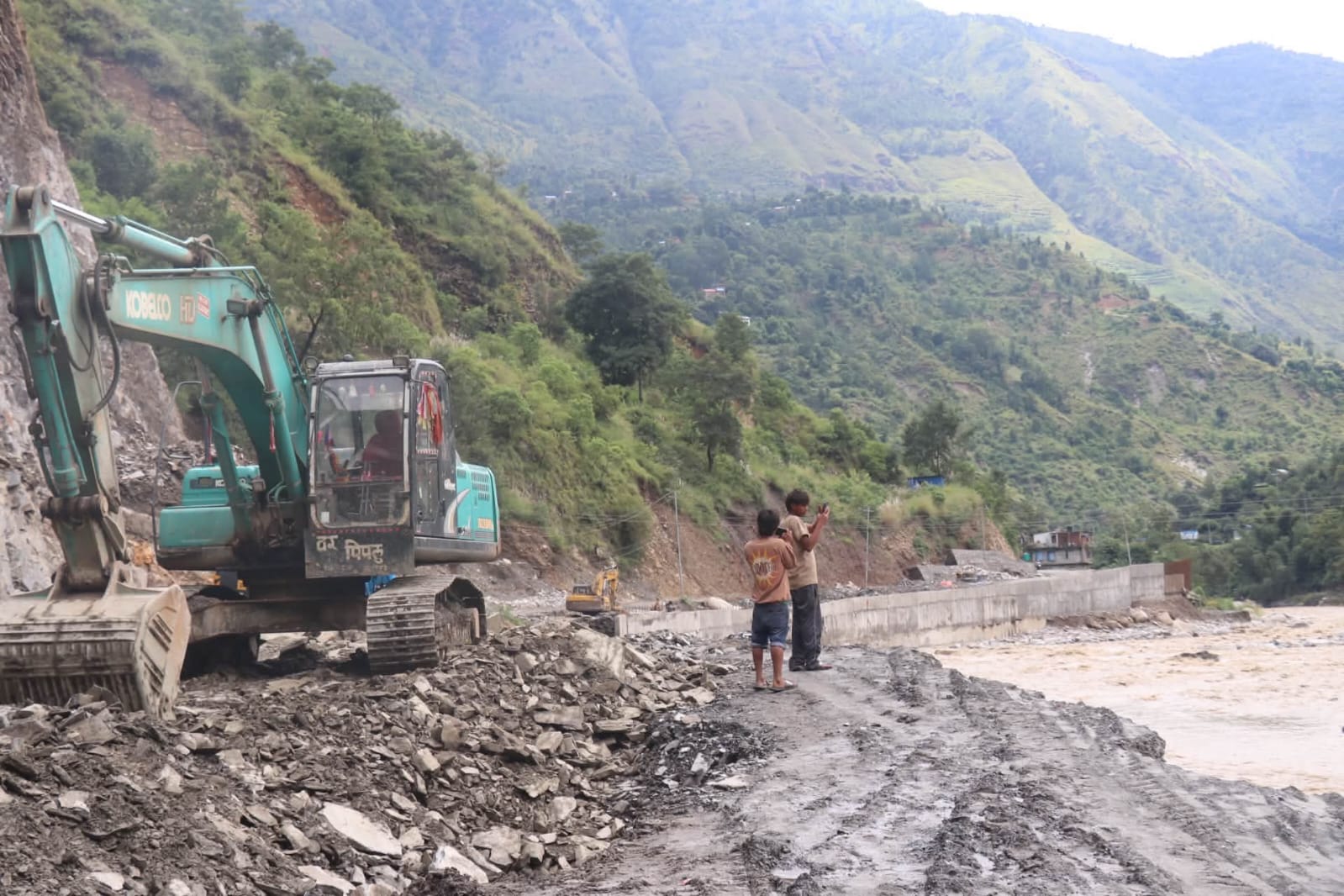
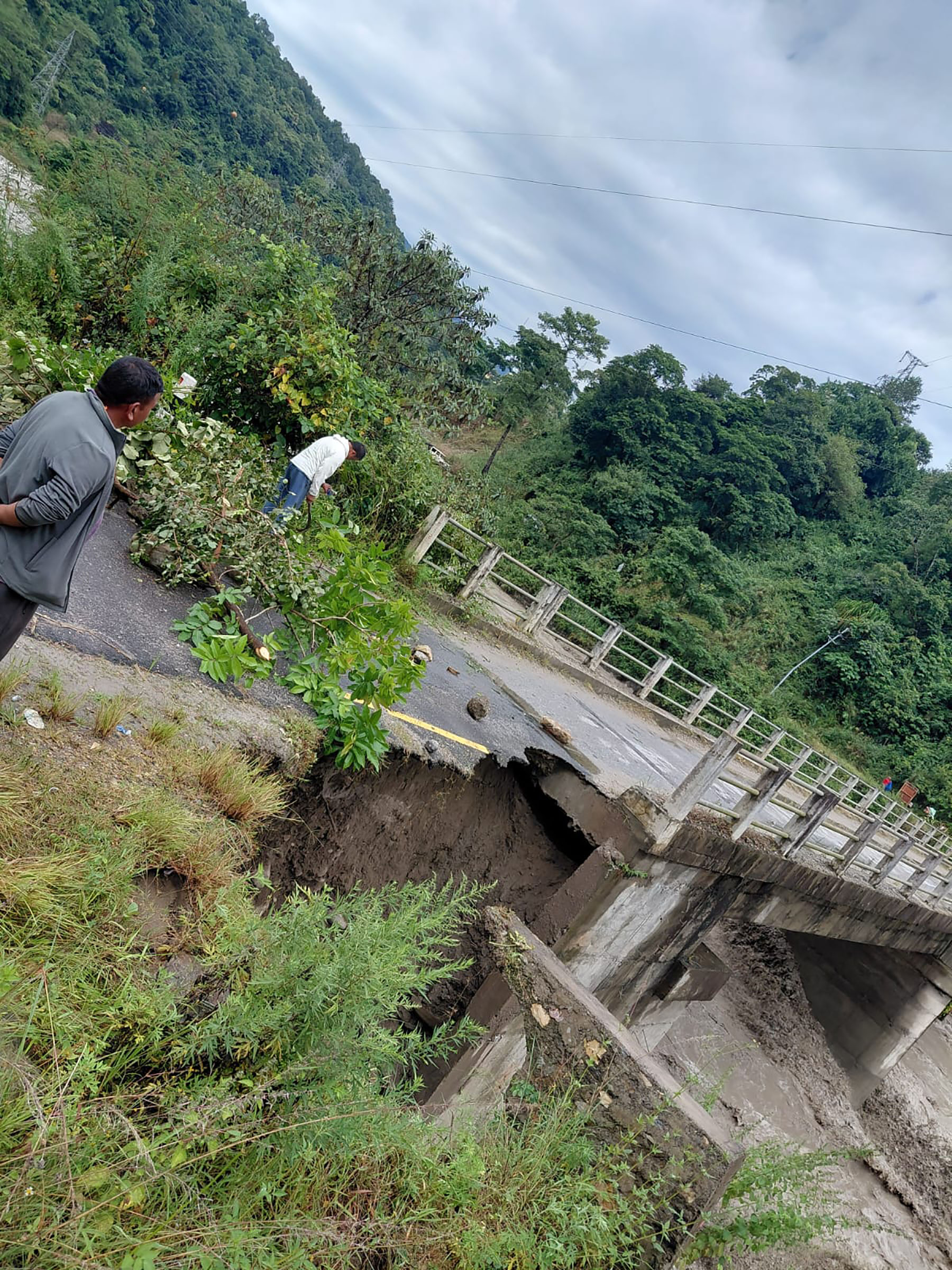
Banepa. The Khurkot-Bhakundebesi section of the BP Highway, which was blocked at several places due to landslides and erosion of the Roshi river due to incessant rains, remains closed today.
Chief District Officer Gopal Kumar Adhikari said vehicular movement along the section is yet to be resumed.
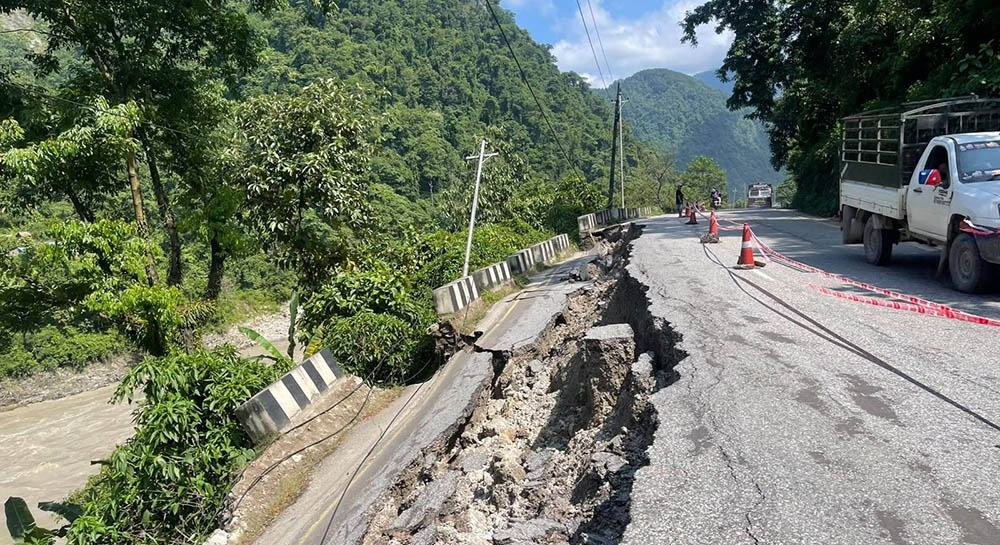
A team from the Division Road Office, Bhaktapur has been active since this morning to operate the road. Adhikari said that if the weather permits, the road is likely to come into operation from the afternoon of September 29. This obstruction has brought the problem of floods, landslides and river erosion on the BP Highway back to the surface during the rainy season. The Kavre section of the highway is currently in the stage of permanent reconstruction after the floods and landslides in the Roshi River along with the incessant rains in the second week of September 2081 caused major damage to the Kavre section of the highway. Temporary diversions were constructed at various places for immediate vehicular operation after a large section of the road was washed away.
The BP Highway, which is an important lifeway connecting the eastern and central regions of the country with the federal capital Kathmandu, was constructed with the technical and financial assistance of the Japanese Cooperation Agency (JICA). It has been connecting the capital with the transportation, trade and daily life of the Terai and eastern districts. Therefore, the obstruction on the highway has a direct impact on the passengers and drivers, as well as the local settlements and businesses.
Although the traffic has been operated through temporary diversions built at the places where the road has been washed away after the floods of 2081 BS, the journey has not been easy. Drivers say that it is difficult to drive on the diversion which is muddy during the rainy season and dusty when it is sunny. According to Binod Dahal, a driver who regularly drives vehicles on BP Ramarg, he has been facing daily problems due to the condition of the diversion. “There is a problem of mud and dust in the diversion built temporarily at the place where the road is washed away, but due to the bad condition of the road, small vehicles touch the ground everywhere. The vehicle breaks down, but we have to risk the life of the passengers,” he said.
The problems of the locals who are directly connected to the highway are also the same. According to Buddha Lama, a local of Kaldhunga of Roshi Rural Municipality-11, the flood had caused a lot of damage to both the settlement and the road. “This road leading to our house and courtyard was the main economic basis of our life. But the flood destroyed both the settlement and the road. Now, even if the traffic is going through the temporary diversion, the fear of dust, mud and floods due to rain again remains,” he said. He stressed the need to build a quick and strong structure for a permanent solution to the area.
The local government has also demanded that the reconstruction should be made sustainable and safe and not limited to immediate repairs. Dinesh Lama, chairperson of Roshi Rural Municipality, said that the infrastructure should be built to reduce the risk in the coming days by learning lessons from the disaster. “The state needs to ensure immediate resources for the reconstruction of BP Highway. While constructing the highway, it is necessary to build strong structures to withstand natural disasters by taking the opinion of the citizens as well as the local government. The locals expect that the government, which claims to complete the road reconstruction in two years, will continue the work with technical study after considering our suggestions,” he said.
He has also put forward the option of changing the road track in some of the most vulnerable areas and taking it to a safer area. The Road Division Office Bhaktapur under the Department of Roads has started the reconstruction and upgradation work amidst the problems of the citizens and the concern of the local level. Chief of the Road Division, Bhaktapur, Engineer Suman Yogesh, said that the 25.11 km road section from Barkhekhola to Bhakundebesi is being constructed in four different packages.
Under Package-1, the 3.22-km Barkhekhola-Piple road section is being constructed with the assistance of JICA. An agreement has been signed with Japanese company Shimizu Corporation for this. Nippon Koi Co Limited and Yahio Engineering Corporation JV are the consultants. The project is expected to be completed within two years. Under Package-2, a contract agreement has been signed with Uma & Co÷Bhandari Amar Jyoti JV for the construction of the 2.30 km Piple-Dalabesi road section. The cost estimate was Rs 1.21 billion and the contract was signed for Rs 688 million.
Khani/A1/Kamal Jeet JV Kathmandu is constructing the 8.50-km road section under Package-3. The cost estimate was Rs 2.45 billion, but 46 percent physical progress has been made so far. Similarly, under Package-4, the construction of the 11.09 km road section is being carried out by Lama÷Nava Kantipur JV Kathmandu. Division chief Yogesh said that 35 percent physical progress has been made so far in the construction of the 11.09 km road section of the Charsyabesi-Bhakundebesi road section. Division chief Yogesh said that 35 percent physical progress has been made so far in the construction of the 11.09 km road section of the Charsyabesi-Bhakundebesi road section of Rs 2.52 billion. Division chief Yogesh said that 35 percent physical progress has been made so far in the construction of the 11.09 km road section of the Charsabesi-Bhakundebesi road section. Division chief Yogesh said that 35 percent physical progress has been made so far.
Priority has also been given to the construction of various technical structures to make the road safe from floods and landslides. According to Division Chief Yogesh, RCC cantilever wall is being constructed in high-risk areas. Out of the total length of 6,300 meters, 3,760 meters have been completed so far. The work of 1,145 meters of micropile has been completed 100 percent. Out of 5,740 meters of plum concrete, 2,189 meters or 38 percent of the work has been completed and 4,105 meters or 70 percent of the 5,900 meters of stone masonry has been completed.
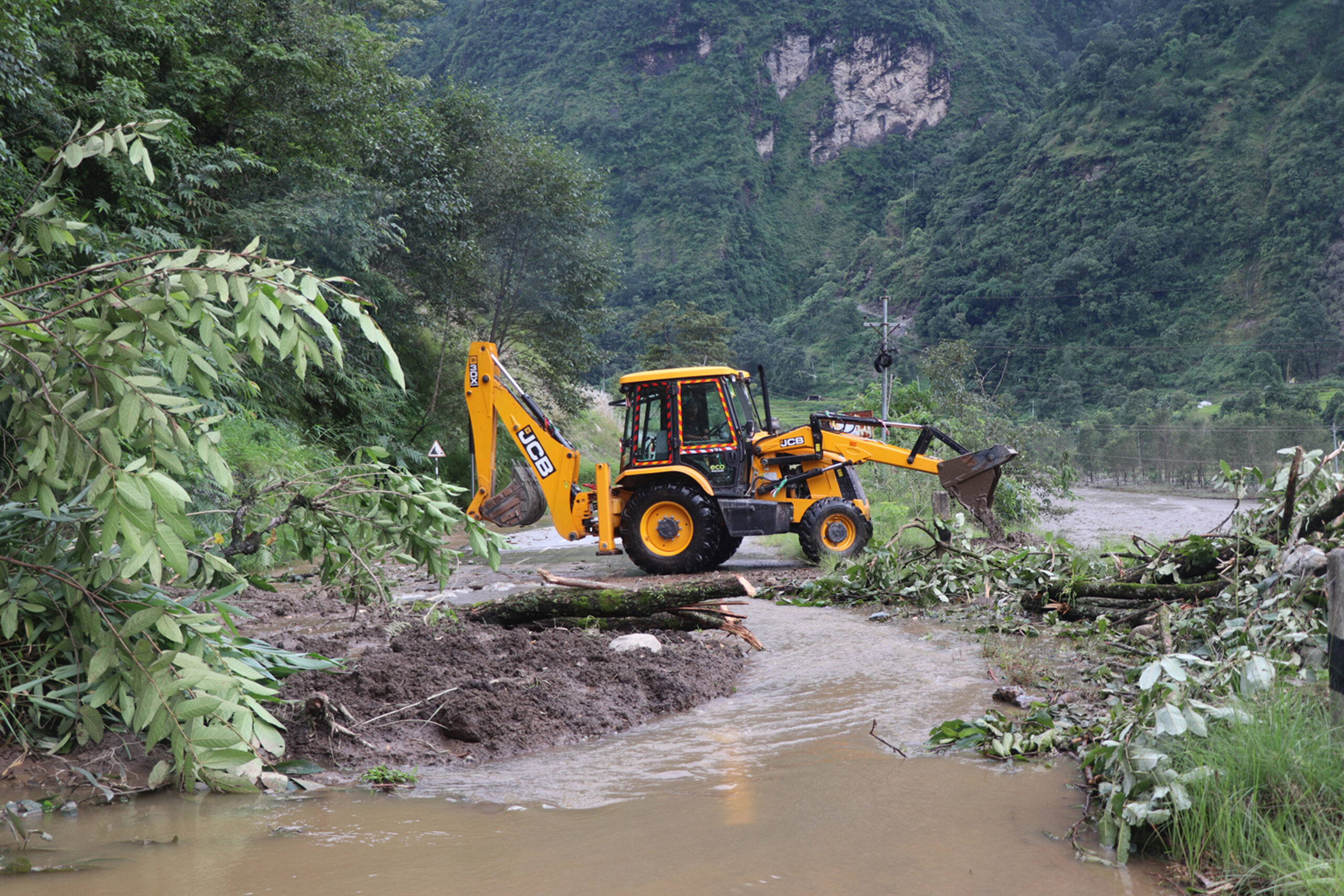
According to the Road Division Office, a gravel level road has been constructed by constructing an RCC cantilever wall up to a height of at least 4.5 meters in the risky areas to prevent traffic disruption during the rainy season. A total of 13 excavators, six loaders and 11 tippers have been kept on standby at Chaukidanda, Katunjebesi, Charsabesi, Gimtibesi-Narke, Chiuribas-Boksikuna, Kaldhunga, Dalabesi and dry landslides to avoid possible accidental obstructions and landslides. While the permanent reconstruction is underway, the risk of flooding remains in the temporary diversion. The floods caused by incessant rains on October 1 and 18, 2002 had damaged the diversions constructed last year. The Road Division Office, Bhaktapur had spent around Rs 100 million on the diversions constructed from Chaukidanda to Nepalthok, but the highway was again affected after the floods from Roshi River swept away various parts of the diversion.
Incessant rains since September 22 this year have also caused landslides and mudslides at various places along the BP Highway and the Roshi River has eroded the roads and diversions. Vehicular movement has been affected due to landslides in Namobuddha Municipality-6, Chaukidanda, Roshi Rural Municipality-7, Gimdibesi of Ward No. 8 and Mamti of Ward No. 11.
Vehicles going eastward from Kathmandu have been stopped in Dhulikhel after the Roshi river erodes the diversion at Chaukidanda. The closure of the Khurkot-Bhakundebesi section is also a result of the obstruction caused by this rainfall, landslide and river erosion.
In the reconstruction of the BP Highway, there are both challenges to keep the road operational immediately and to make it safe in the long run. There is a need to build structures not only to restore the roads damaged by floods but also to reduce the risk of future disasters. The floods of 2081 caused a lot of damage to the road, the floods of 2082 showed the limitations of temporary diversions, and the rains of 2083 have again repeated the problem of diversion, erosion and landslides, but in the meantime, work is going on on various packages of permanent reconstruction.
On the one hand, reconstruction structures are being added, while on the other hand, rains, floods and landslides are showing the weakness of the temporary structures. Commuters are suffering from mud and dust, drivers are driving in danger and locals are waiting for safe roads. The need of the hour is to complete the under-construction structures on time and find a long-term solution in the risky areas. The reconstruction of BP Highway will get the expected significance only if the citizens can travel safely and smoothly.














प्रतिक्रिया दिनुहोस्