


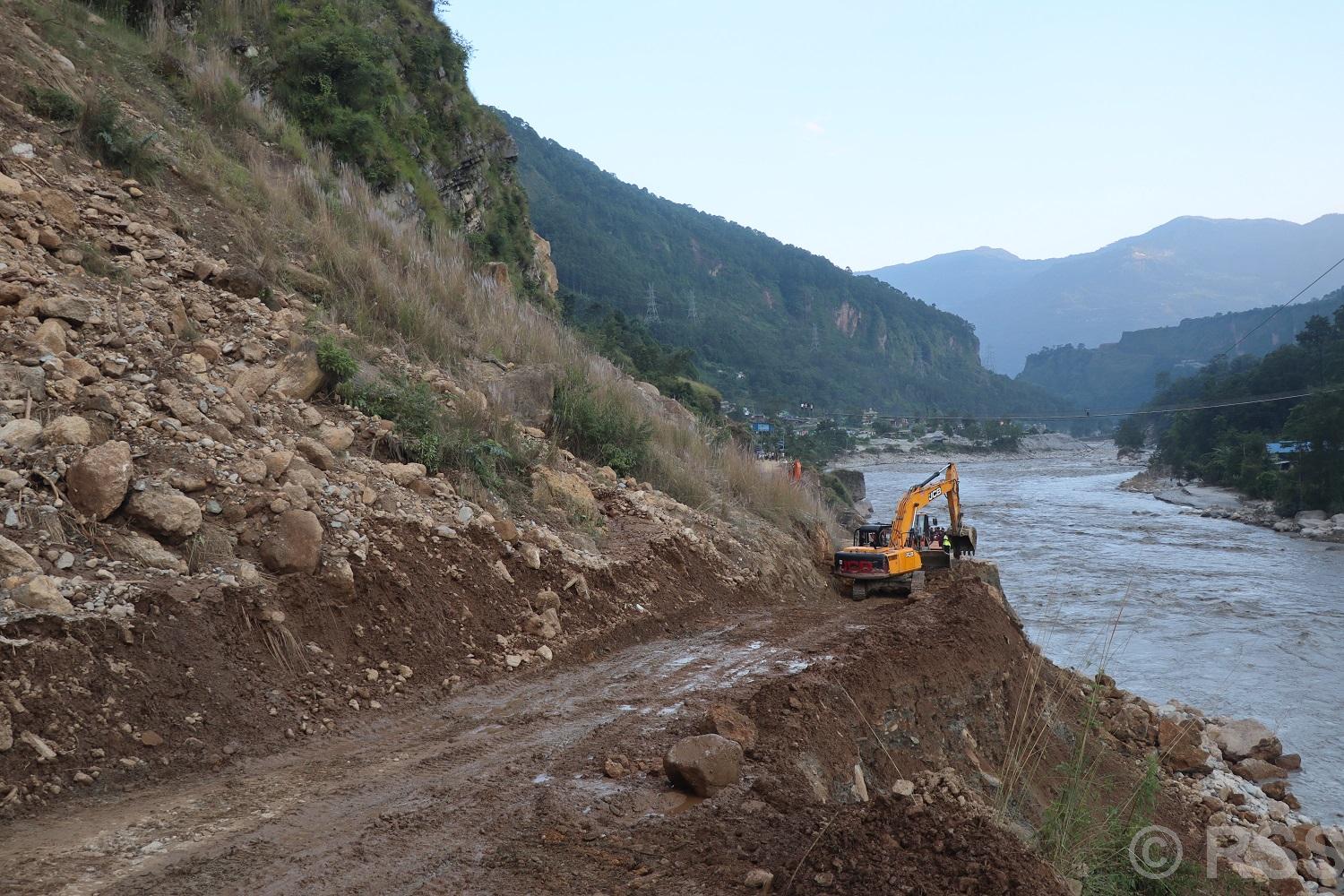
Kathmandu. The World Bank has projected that Nepal’s economic growth rate will be limited to 3.7 percent in the fiscal year 2083/84 due to disruption in the industry and service sector due to the devastating floods in Rasuwa on August 26. Earlier, Nepal’s economic growth rate was estimated to be 5.2 percent.
The latest report on Nepal’s development released by the World Bank on Tuesday has estimated that the industrial sector will become a major obstacle to economic growth in the current fiscal year due to the extensive damage caused by floods.
The report states that the floods have caused major damage to hydropower projects, solar energy, electricity transmission lines and transport infrastructure, which will directly affect electricity generation, productive activities and movement of goods. Similarly, the World Bank estimates that the service sector will also be affected due to the disruption in trade, transport, tourism and financial activities.
The impact of the damage in the agricultural sector on the overall production is estimated to be relatively limited. However, the World Bank has said that it will have a significant impact on the livelihood of the citizens of the affected areas.
Economic activities are expected to improve as the reconstruction and rehabilitation activities intensify. Based on this, Nepal’s economic growth rate in the fiscal year 2084/85 is 5. The World Bank has projected that it will reach 2 percent.
David Sislane, World Bank’s Division Director for the Maldives, Nepal and Sri Lanka, said that although the floods in Rasuwa have caused a huge human and economic impact, it has also created an opportunity to rethink Nepal’s infrastructure and basic services.
He said that priority should be given to resiliency and alternative arrangements in infrastructure planning and investment, especially keeping in mind climate change and changing risks. He said that the World Bank is ready to support the Government of Nepal in investing in the necessary systems and implementing appropriate policies to take Nepal forward on the path of more resilient and sustainable development.
The World Bank has suggested that as Nepal moves towards reconstruction through rescue and relief, it should not be limited to the rehabilitation of damaged structures but also to conduct an updated assessment of multi-disaster risk. The report states that careful consideration of location and design should be given to the construction of infrastructure and to ensure alternative arrangements in important networks of transport, energy and communications.
The World Bank has also stressed the need to further strengthen disaster early warning systems and build an integrated social protection system that enables the delivery of post-disaster assistance to vulnerable households.
The World Bank’s latest South Asia Economic Update Report predicts that South Asia’s economy will grow by 6.9 percent in 2026. The South Asian economy is expected to remain resilient to the global economic shocks due to strong domestic demand.
However, the region’s economic growth is expected to slow to 6.7 percent in 2027.
The report also analyses the potential for the strategic use of artificial intelligence (AI) to create new sources of economic growth. Although the use of AI is increasing in South Asia, its use is still far behind in developed economies, according to the World Bank.
Franziska Onsarg, chief economist for Asia at the World Bank Group, said that the use of AI in public service delivery is an area of significant potential in areas where skilled workers such as health, education and agriculture are facing a shortage of skilled workforce.
For the effective use of AI, the report suggests developing the skills of human resources, creating a business-friendly environment, and improving physical and digital infrastructure.
The World Bank also stressed the need to remove barriers to the use of AI by small businesses, encourage innovation at the local level, and establish a clear regulatory framework around AI.











प्रतिक्रिया दिनुहोस्