

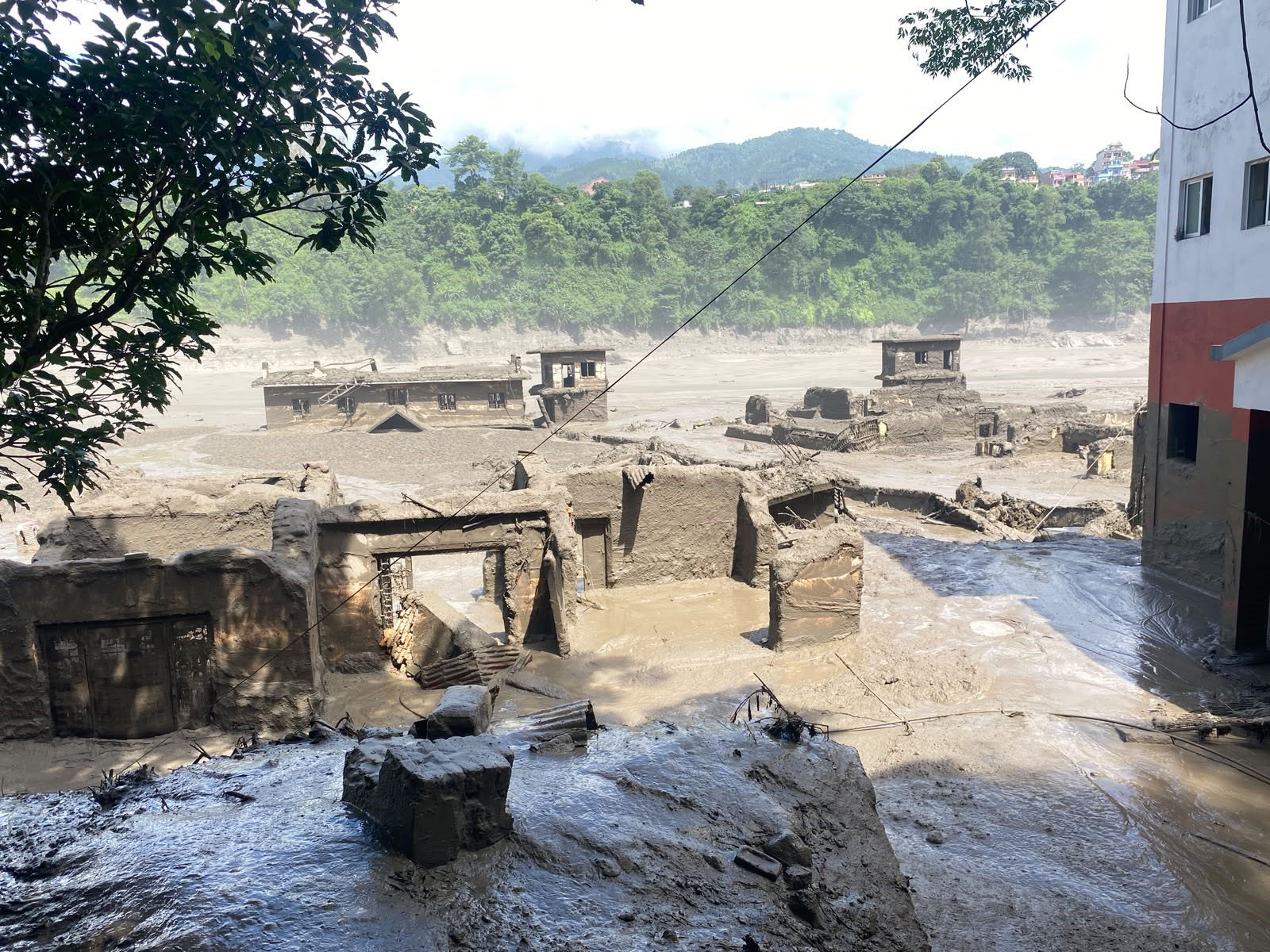
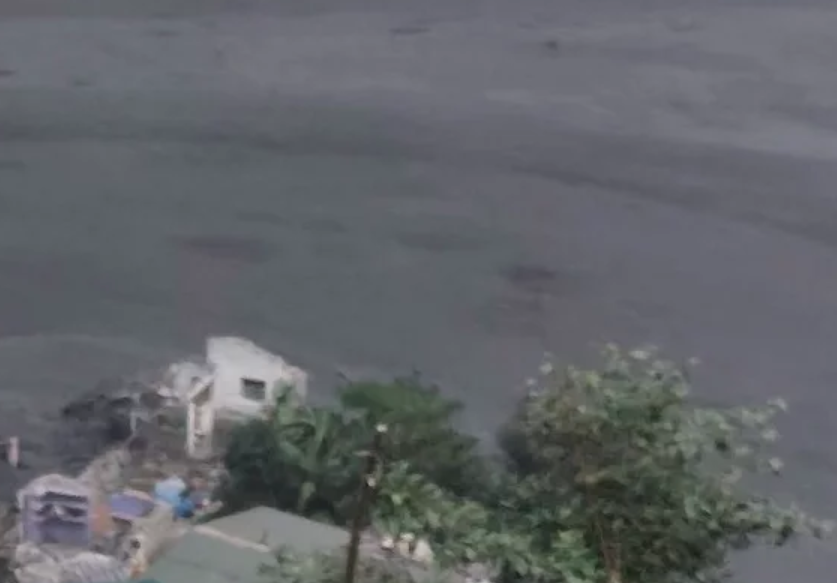
Kathmandu. The floods in the Rasuwagadhi and Bhotekoshi rivers on August 26 have caused a loss of Rs 79.17 billion to households and businesses. According to the preliminary survey released by the National Planning Commission, the floods caused a loss of Rs 69.57 billion to households and Rs 9.60 billion to businesses and establishments.
The floods have affected 7,316 households and establishments in 15 local levels of Rasuwa, Nuwakot, Dhading and Gorkha. Of them, 6,817 households and 499 businesses have been affected. According to the commission’s survey, 32,872 people have been directly affected by the floods.
According to the data released by the commission on Friday, although the source of the floods is Rasuwa, the most damage has been done in Nuwakot. In Nuwakot, 4,164 households and establishments and 17,954 people have been affected. This is more than half of the total affected population.
A total of 1,977 households and 9,676 households have been affected in Rasuwa, 1,052 households and 4,584 households in Dhading and 123 households and 658 households in Gorkha. Among the affected population, the gender identity of 16,714 men, 16,080 women and 78 people is yet to be revealed.
The floods have damaged 4,151 buildings of 3,067 households. Of these, 2,989 structures or about 72 percent have been completely damaged. Similarly, 508 structures have been buried with mud and mud, 302 have been partially damaged, 192 have suffered minor damage and 141 structures have collapsed.
Among the damaged structures, 2,256 are in Nuwakot, 1,236 in Rasuwa, 630 in Dhading and 29 in Gorkha. These structures include 2,792 houses, 288 goths, Dhansar and Mataan, 651 trusses, 263 huts and 142 other structures.
The post-damage situation has made the challenge of reconstruction more serious. According to the survey, 3,194 structures or 76.95 per cent are in non-recyclable condition. 332 structures can be used only after complete repair and 320 structures are in general repair. The number of structures that can remain unrepaired is only 97.
Land accounts for the largest share of the total loss to households. The floods have caused a loss of about Rs 35.44 billion on 507.97 hectares of land belonging to 3,610 families. This is more than half of the total loss to households.
The damaged buildings occupied 54.65 hectares of land. The damage has been estimated at Rs 13.26 billion on the land owned by the house and Rs 11.95 billion based on the cost of the construction of the building.
Similarly, Rs 5.02 billion has been damaged in cash, valuable, cultural and archaeological items of the households. This has affected 2,330 families. A total of 1,423 two-wheelers and four-wheelers belonging to 1,115 families have been damaged to the tune of Rs 1.24 billion.
The floods damaged household items worth Rs 1.45 billion for 3,187 households and temporary household items worth Rs 663.5 million for 2,769 households.
On the agricultural side, 2,951 families lost Rs 23.21 crore in their crops and Rs 10.41 crore in the stored food grains of 1,876 households. According to the survey, there was a loss of Rs 21.42 crore in livestock and fisheries.
Likewise, 794 big livestock, 6,659 small livestock, more than 216,000 chickens and ducks and 52,658 kilogrammes of fish were swept away or destroyed by the floods.
The floods have damaged 1,638 businesses and establishments in four districts. Likewise, 962 businesses and establishments have been affected in Nuwakot, 416 in Rasuwa, 241 in Dhading and 19 in Gorkha.
Of the affected businesses, 774 or 47.25 per cent are related to wholesale and retail trade. 337 establishments in the hotel and food service sector or 20.57 per cent have been affected.
Likewise, 166 industries related to agriculture, forestry and fishery, 136 other service providers, 70 industrial production, 47 construction industries, 31 transport and storage establishments and 17 financial services establishments were also hit by the damages.
Only 403 vehicles of commercial establishments have suffered a loss of Rs 94 crore. The survey data shows that the floods have dealt a big blow to the business, hotel and tourism-based economy of the Rasuwagadhi border area.
Managing the permanent settlement of the families who lost their homes due to the floods is also challenging. Of the 3,067 householders surveyed, the highest number of 939 households, or 30.62 per cent, said that they would live there if the government provided them with land.
Similarly, 590 families (19.24 per cent) said they wanted to live in government-built communal accommodation. According to this, almost half of the affected families would depend on government support for rehabilitation.
However, 797 families (25.99 per cent) want to return to the places where they lived before the floods despite being at risk. Similarly, 565 families have opted to live on their own land within the district and 159 families have opted to live on their own land elsewhere in the country.
The National Planning Commission (NPC) conducted the preliminary survey after the Council of Ministers on August 26 decided to prepare the Post-Disaster Needs Assessment (PDNA) report.
A total of 58 teams, including 156 technical and administrative staff from various government agencies, were mobilized for the survey. These teams reached the affected areas through online apps and tablets and collected data.
According to the Commission, the details of the affected families who are out of the country in course of work or visit have been collected from the local levels concerned.
According to the commission, the details made public are preliminary. A detailed report is being prepared covering the damage and damage caused to infrastructure, productive, social and environmental sectors by the floods. The full report is expected to provide a more clear assessment of the resources and investment required for reconstruction, rehabilitation and rehabilitation.















प्रतिक्रिया दिनुहोस्