



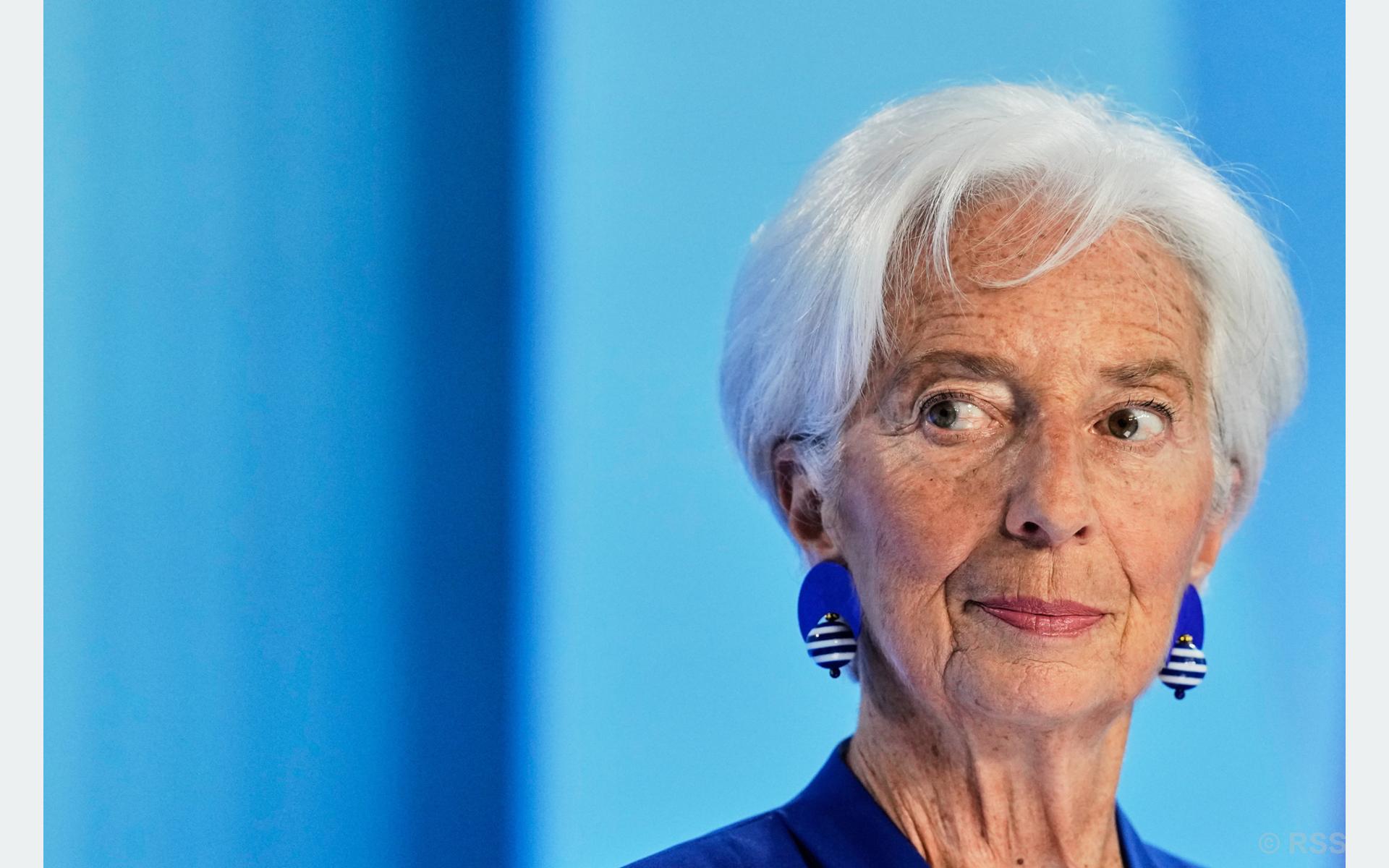
KATHMANDU: European Central Bank (ECB) President Christine Lagarde is set to step down on February 7, nine months before the end of her eight-year term. Her decision will allow European Union (EU) leaders to choose a new president before France’s 2027 presidential election. Analysts say this could have an impact on the appointment process if right-wing candidate Marine Le Pen wins.
The 70-year-old Lagarde’s term was scheduled to end on October 31, 2027. She said it was a matter of pride and privilege to lead the ECB and that she wanted to speak freely on issues other than monetary policy, free from the obligation of political neutrality associated with the post.
The ECB sets interest rates for the 21 countries that use the euro. This affects the cost of borrowing, from buying a home to setting up an industry. European Council President Antonio Costa said the process of selecting a new president would begin immediately.
ECB chief economist Philippe Lane’s term ends on May 31, while executive board member Isabelle Schnabel will step down on Jan. 3. Holger Schmiding, chief economist at Berenberg Bank, said European Union (EU) leaders could try to reach an agreement on the appointment of three senior positions before the Dec. 17-18 summit.
The probable candidates for ECB president are Klaus Not, the former head of the central bank of the Netherlands, and Pablo Hernández de Cos, general manager of the Bank for International Settlements. According to Schmiding, the possibility of Le Pen winning in France is to elect President Emmanuel Macron as the new president.
During Lagarde’s tenure as Mario Draghi’s successor in 2019, the ECB launched a 1.35 trillion euro emergency bond purchase program in 2020 to maintain credit flow to the economy during the COVID-19 pandemic. In 2012, Draghi pledged to take all necessary steps to protect the euro, helping to ease market volatility caused by the eurozone debt crisis.
Lagarde’s resignation announcement has also overshadowed the ECB’s interest rate decision. The bank has kept the key interest rate unchanged at 2.5 percent, even though oil prices have risen to 3.8 percent due to the US war with Iran. The ECB’s inflation target is 2 percent. Analysts say that while interest rates are important for controlling inflation, rising interest rates in the bond market have made credit more expensive for the private sector.
















प्रतिक्रिया दिनुहोस्