

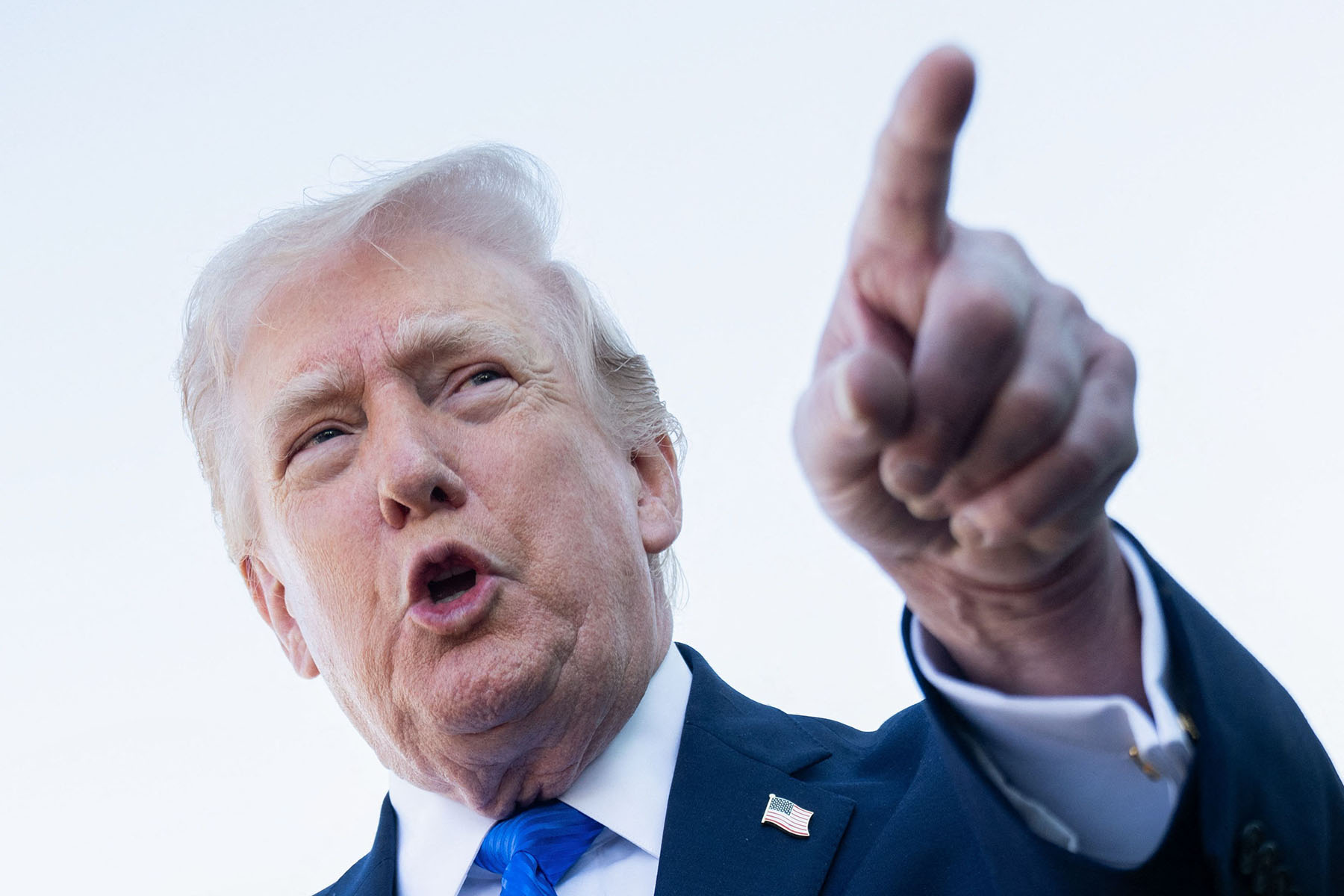
Kathmandu. As uncertainty deepens over a possible deal between the United States and Iran, Tehran has sent a clear message that no deal will be possible until Iran’s rights are fully protected.
Tehran: Tehran’s top negotiators have reaffirmed their distrust of Washington amid reports that US President Donald Trump has proposed a new and tougher proposal.
Tehran: Iran’s top leader Mohammad Bagher Ghalibaf said on Sunday that the United States could not be easily trusted and that no deal would be ratified until the rights of the Iranian people were upheld. His comments came after the New York Times and Axios reported that the Trump administration had sent a revised “tough” proposal to Iran. However, the details of the proposal have not yet been made public.
The deal is believed to be aimed at formally ending the Middle East war, de-escalating regional tensions and reopening the Strait of Hormuz, vital for global energy supplies. But there are signs that any changes to the draft could prolong the talks and deepen long-standing mistrust.
Iran has been in talks with the US since February on the future of its nuclear program. But in the meantime, air and missile strikes by the US and Israel have inflicted heavy damage on many senior security and political leadership levels in the Islamic Republic. Since then, relations between the two sides have become more strained.
Tehran has repeatedly claimed that its nuclear program is purely for civilian purposes. But the United States and its Western allies fear that Iran may eventually seek to develop a nuclear weapon.
Trump said his priorities were to prevent Iran from developing any nuclear weapons and to reopen the Strait of Hormuz, which was blocked since the war began. In an interview with his daughter-in-law Laura Trump on Fox News, he said, “I want to make sure that we don’t have any nuclear weapons there.” They agreed that it was very interesting. ”
But Tehran has long been skeptical of Trump’s claims. There are signs that the two sides are still far apart on key contentious issues. “We will not accept any deal until we are sure that the rights of the Iranian people are protected,” Ghalibaf said in a video message broadcast on state television. ”
According to the news agency Snim, the text exchange process is underway and both sides are regularly proposing amendments. Iran’s Foreign Minister Abbas Araghchi said many of the claims were speculation until a final conclusion was made.
According to Iranian media, Tehran has demanded the release of its stash worth about $12 billion before moving forward with concrete nuclear talks. At the same time, Iran has rejected Trump’s earlier comments about dismantling its enriched uranium stockpile as “baseless”.
Meanwhile, new facts have also come out in the military field. Washington has said that one of the stated objectives of the war is to dismantle Iran’s ballistic missile program. America’s top military official, Gen. Dan Cain, claimed that more than 80% of Iran’s missile infrastructure had been hit in April.
But according to a report by CNN on Sunday, satellite image analysis shows a different picture. According to the report, Tehran has been able to re-excavate more than 50 of the 69 tunnels at 18 underground missile sites affected by the US strike.
Daily attacks across Iran and the Gulf region have eased since a temporary ceasefire between Tehran and Washington in April. However, complete peace has not been maintained and sporadic incidents have occurred. Iran’s state broadcaster IRIB said the Iranian Revolutionary Guards shot down a US military drone “as it was about to enter Iranian territorial waters”. However, the US has not confirmed the incident.
The Strait of Hormuz, the main route for global oil supplies, is also at the center of the talks. Pressure is mounting on Trump to reach an agreement to ease U.S. and Iranian blockades around the Gulf and normalize maritime movement. Under the deal, Trump said Iran would not charge ships that use the waters. Iran’s Fars news agency, citing sources, said there was no such provision in the proposed draft.
According to the ISNA news agency, lawmaker Alireza Salimi said a plan to strengthen Iran’s “management rights and sovereignty” in the Straits would soon be presented to parliament. It may also include the issue of imposition of administrative fee.
Tehran insists that the Lebanese question should be included in a potential peace process. Amid the fierce conflict there, Lebanon has accused Israel of “mass destruction and destruction” tactics, while Israel is expanding its military offensive against Iran-backed Hezbollah.
Israel and Hezbollah announced a formal ceasefire on April 17, but it has not been implemented in practice. Both sides have repeatedly accused each other of violations. Eight people, including three women, were killed in Israeli strikes in the Deir Zahrani area of southern Lebanon on Sunday, according to the Lebanese Health Ministry.
The UN Security Council will convene an emergency meeting on Monday to discuss the situation following the capture of the strategically medieval Beaufort Fort, diplomatic sources told AFP. On Sunday, smoke could be seen rising from the area around the fort and AFP journalists could see Israeli flags flying over it. Israel had used this fort as a military base during its last two decades of occupation.
Israeli Prime Minister Benjamin Netanyahu called the control of Beaufort a “dramatic change”.














प्रतिक्रिया दिनुहोस्