

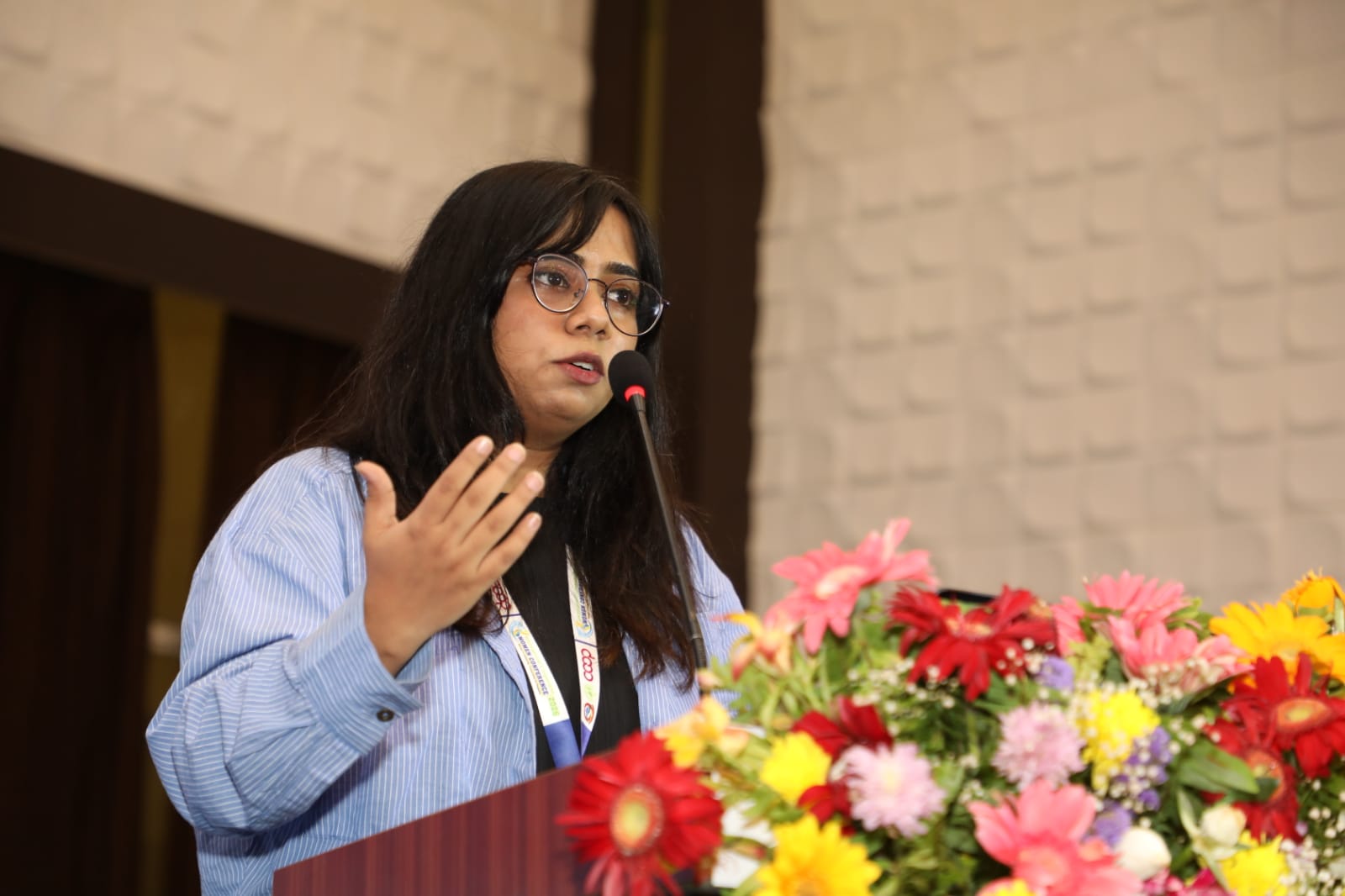
Kathmandu. Stakeholders have stressed the need for data-driven policies, access to resources and capacity building to ensure women’s leadership, economic empowerment and meaningful participation in decision-making in the cooperatives and agriculture sectors.
Nitya Shukla of International Cooperative Federation of Asia and Pacific (ICA-AP) said that data and evidence-based work is imperative to understand the real situation of women in the cooperative movement and to take them to the leadership level.
According to her, the women’s committee of ICA-AP was established in South Korea in 1998. It focuses on four key areas: economic empowerment, social empowerment, knowledge and training and solidarity. According to Shukla, 43 per cent of women participate in the government, but inequality persists. Women are not only participants in cooperatives but also producers, entrepreneurs, innovators and caregivers.
“Women make up about 40 per cent of the agricultural labour force in the Asia-Pacific region, but only 10 to 20 per cent of land is owned by women, which is a huge gap because without land ownership, it is very difficult for women to get loans from banks and power in formal decision-making,” she said. ’
She said that although the number of women in the cooperative’s membership is high, their presence in top positions such as board representatives, senior management and CEO is very low. Stating that the organization has been supporting women cooperatives through workshops, capacity building programs and various platforms, she said that women leadership development has been made one of the major priorities of the organization.
Stating that this was her first visit to Nepal, Shukla said that the enthusiasm, activism and commitment of Nepali women cooperatives to change is inspiring.
Likewise, Bhawani Thapaliya, an expert at the Food and Agriculture Organization (FAO) Nepal, said that economic empowerment of women will only increase their access and influence in the decision-making process of the household and society. She said that she has seen first-hand how the family started valuing the views of the women of the village only after they started earning an income.
According to her, although 70 per cent of women in Nepal are involved in the agriculture sector, access to resources, technology, and resources is still limited. Not getting equal pay for equal work, lack of ownership of property and lack of digital skills are some of the major challenges faced by women.
“Special efforts are needed to expand access to information and technology as women have less leisure time due to household chores, farming and childcare,” Thapaliya said.
Referring to the United Nations declaring the year 2026 as the International Year of Women Farmers, the speakers stressed on the need of further recognition of the contribution of women in agriculture and cooperatives. The announcement is expected to recognise the role of women, increase investment in them and encourage policy reforms.
Stating that FAO has been implementing programs for women’s leadership development, capacity building and economic empowerment, Thapaliya said that various projects have been forwarded to include people with disabilities, indigenous nationalities and gender and sexual minorities in the agriculture system.
In the discussion of the international conference, the participants raised important issues related to women’s empowerment, technology in agriculture, and policy reforms.
Maya Shah of Kailali proposed zero percent tax on the income tax of cooperatives run by women. He believes that this demand should be included in the manifesto of the conference. Poudel requested. Similarly, Sunita Bham from Karnali questioned the low participation of young women in cooperatives, especially in agricultural cooperatives.
She said that women are dependent on men due to the use of technology in agriculture and lack of training to operate machinery. The participants of the conference stressed on the need of tax exemption, access to technology and attraction of young generation to encourage women cooperatives.
Former Minister Dr. On the occasion, Bimala Rai Poudel highlighted the status of women in women empowerment and agricultural development and praised the cooperative movement in the Asian region for its contribution in economic earnings.
She pointed out that although Nepal’s policies are good, there are problems in implementation. She said that the government should take concrete steps for the products produced by women farmers. She said that a youth incubation lab has been started for the youths and various trainings have been provided.
It has organized 100 programs to encourage new thinking of the youth. She also stressed on increasing access to technology to connect women in production and cooperatives effectively.
















प्रतिक्रिया दिनुहोस्