

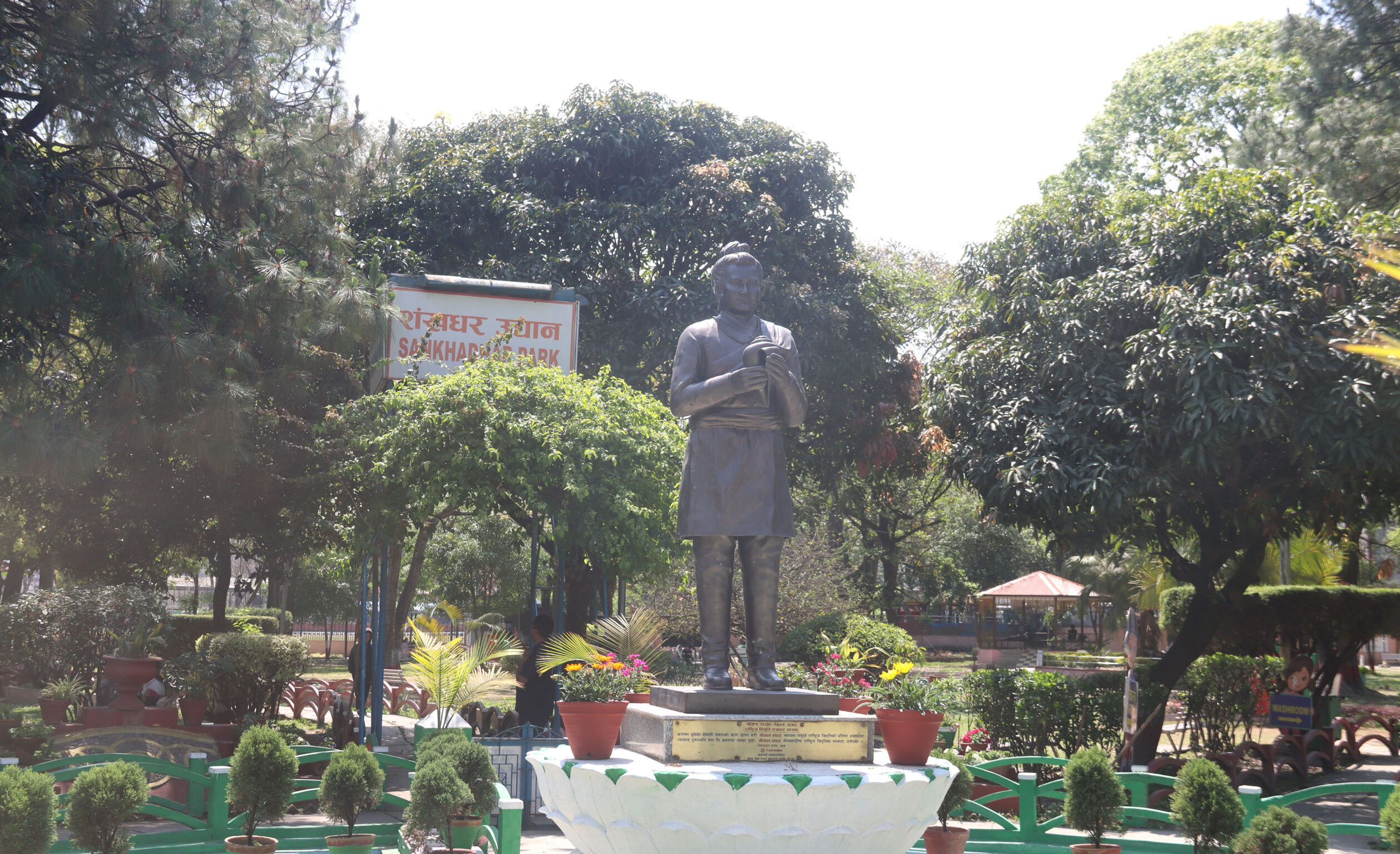
Kathmandu. However, this season of Chaitra Baisakh is the time for the trees to grow and become greenery everywhere. However, this time, the Kathmandu Valley has seen a bit more greenery than the previous springs. With the arrival of the spring season, some roads in Kathmandu have become clean and green on both sides and near the settlements. Until last week, the sky in Kathmandu was overcast due to drought and smog. The rain in the past few days has washed away the leaves of the trees and the roads and settlements have also been cleaned.
KATHMANDU: The haze seen in the sky of Kathmandu Valley has been cleared with the rainfall. With the removal of fog, the surrounding areas of the valley have also become clean and green. At this time, greenery can be seen in various parks along the main roads of Kathmandu. Many foreign tourists also come to Nepal in the spring season.
Lainchaur-Maharajgunj road, Jamal-Bhadrakali road, Maitighar-Tinkune road, Thapathali-Kalimati road and Kupandole-Pulchowk-Jawalakhel road in Lalitpur have attracted people’s attention.
In Lalitpur, after Chiribabu Maharjan became the mayor of the municipality in the 2074 local level elections, more saplings were planted along the road of Lalitpur. The area around the zoo located in Jawalakhel, Lalitpur is also now green. Similarly, the Shankhadhar Park (Ratna Park), Baisdhara Park (Balaju Park) and Shankha Park among other parks in the heart of Kathmandu have been covered with greenery with the sprouts of the parks.
During the 18th SAARC Summit held in Kathmandu in December 2014, a sapling was planted from Tribhuvan International Airport (TIA) to Tinkune, Maitighar, Thapathali, Tripureshwor and Soaltee Hotel.
Although some of these plants could not be grown, some were not allowed to die by the locals of the same area. These saplings have grown and adorned the roadside. The remaining saplings have grown and now added some sparkle to the beauty of Kathmandu.
During the Corona epidemic, the importance of oxygen was widely publicized. Since then, there has been an increase in awareness and feeling among people that as much as possible, trees should be grown in the premises of their homes or in the surrounding settlements and roads. This has also helped in creating a greener environment in Kathmandu in recent period.
With the awareness of oxygen during Corona, many people have planted trees around the house and on the roof. Kaushi farming has also increased in Kathmandu since the pandemic. This has also contributed to the greenery of Kathmandu.
Engineer of Parks and Greenery Promotion Project under Kathmandu Metropolitan City, Sarkardeep Shrestha said that the metropolis has been promoting greenery by constructing parks in 140 open spaces in the metropolis.
“The KMC has given priority to the construction of parks in the open spaces of Kathmandu to plant flowers, grass and plantation of saplings on the banks of rivers,” he said. According to him, the metropolis has been managing the park in four parts through boundary contract.
The contractor has been working to plant flowers, sow grass and clean the park in the park. Seasonal flowers are blooming in most of the parks in Kathmandu at present. Apart from this, the metropolis has also been planting saplings on the footpaths along the big roads of Kathmandu. Engineer Shrestha said 8,000 saplings were planted in the fiscal year 2081÷082 alone. He said that there is a plan to plant four thousand saplings in the current fiscal year.
The metropolis has also put forward a campaign to plant new saplings in place of the saplings that died last year. Engineer Shrestha said the metropolis plants 30,000 flower saplings in a season.
Apart from this, the metropolis has been pruning the big trees inside Kathmandu. Shrestha further said that the plantation of begambeli and fruits of different species has been forwarded on the bank of two big rivers of Kathmandu, Bagmati and Bishnumati.
Uttam Kumar Ghale, chief of the Shankhadhar Park and Ranipokhari unit (Ratnapark), said a large number of people have been coming to see the greenery of Ratnapark. According to him, the number of visitors to Ratnapark is increasing day by day with the management of Ratnapark by the Metropolitan City’s Parks and Greenery Promotion Division 15 years ago.
Entry to the park is free for senior citizens, physically challenged and single women, said Ghale. With the installation of free internet service in Ratnapark, the number of people entering Ratnapark and availing internet service has also increased. The park has come up with various plans to make the environment of Kathmandu more effective.
Anupa Ghimire, information officer at the Division Forest Office, Kathmandu, said that the Division Forest Office Kathmandu has produced one lakh saplings in Chalnakhel. He said that the produced saplings will be planted on a multi-year basis.
Information Officer Ghimire said that the Division Forest Office planted more than a thousand saplings on the footpaths along the roads of Tokha Municipality, Tarakeshwor Municipality, Gokarneshwor Municipality and Kalanki to Thankot last year.
The Division Forest Office last year provided 10,000 saplings to various associations, organizations and groups for tree plantation and thousands of saplings to 137 community forests in Kathmandu, said Information Officer Ghimire.
The Division Forest Office has set a target of planting around one thousand saplings on various roadsides in the Kathmandu Valley in the current fiscal year. Senior cardiologist at Grande International Hospital, Dr Milan Prakash Shrestha, said that with the addition of greenery, the infection to lung and heart can be reduced. “The cleaner the environment, the more people will be able to breathe cleanly, and with the clean environment, the infection of lungs and heart will be reduced,” said Dr Shrestha.
During the spring season, different species of plants change their leaves, so the beauty of this place has created a pleasant environment among the people. In the past, people used to think of Kathmandu as a city that saw only dust and garbage.
The face of Kathmandu has changed. Now, the capital city should not be portrayed in that way. This greenery is also trying to convey the same message.













प्रतिक्रिया दिनुहोस्