

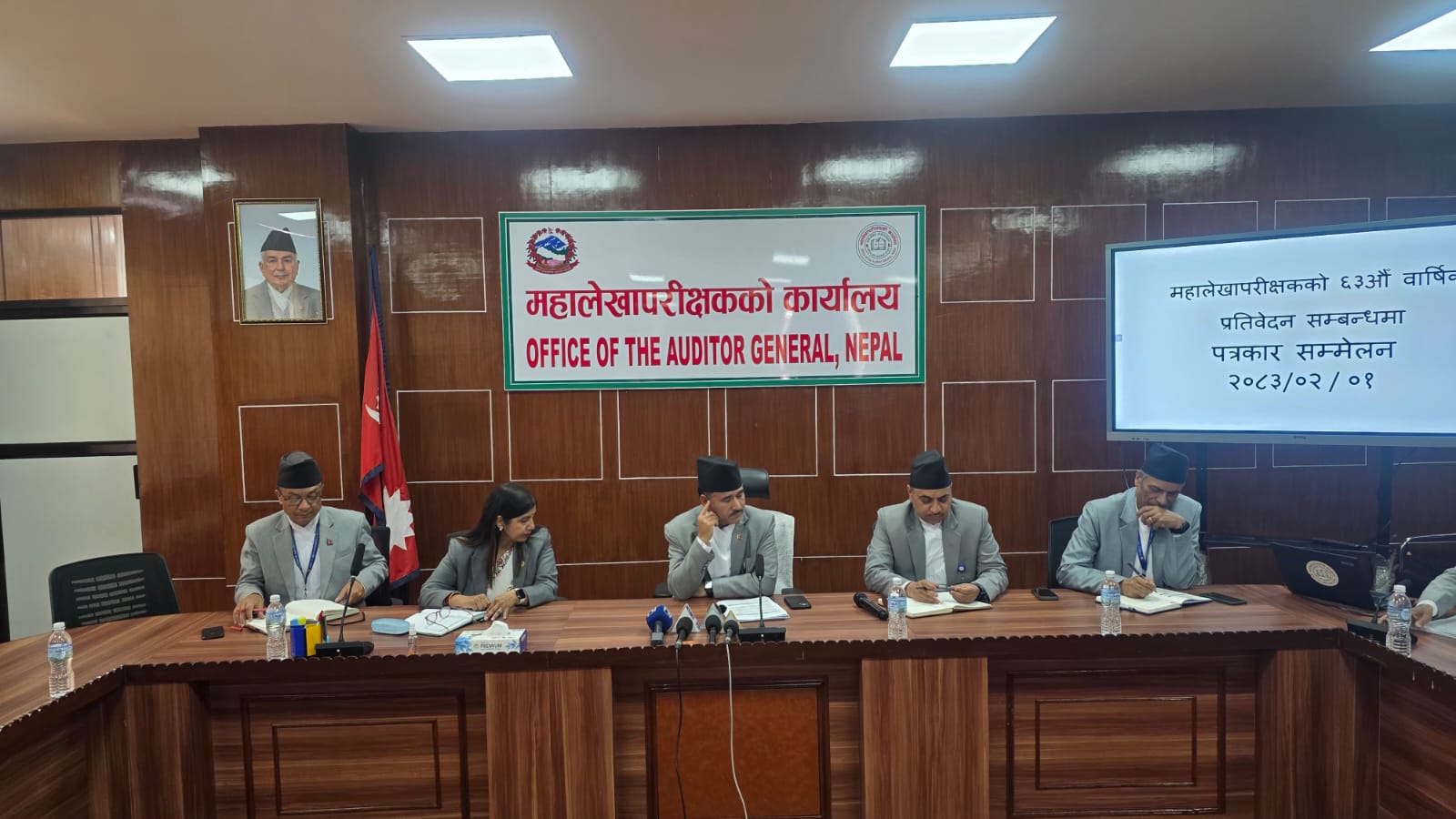
Kathmandu. Tax evasion has been found on electric vehicles imported into Nepal. The Auditor General’s report has shown that the tax has been evased by showing low peak motor power of electric vehicles.
According to the Comptroller and Auditor General, Rs 2.50 billion was evaded by the Rasuwa Customs Office and Rs 1.23 billion from Tatopani Customs Office through technical specification of vehicles published by the authorized manufacturers, the dynamometer test and the technical test of motor capacity as well as the standards set by the manufacturers of these vehicles.
The Comptroller and Auditor General has suggested that this exemption should be recovered by investigating the tariff and tax. According to the Schedule 3 of the Electric Vehicles Customs Duty Act, 2081 BS, 20 percent customs duty, 15 percent excise duty and VAT will be levied if the peak motor power of the imported electric vehicle is 50 to 100 kilowatts.
Customs clearance is done on the basis of peak power in the invoice submitted by various importers while importing electric vehicles. However, the capacity of the motor has not been tested technically. In this regard, the Department of Transport Management has not been found to be issuing certificates of competency on the road without checking the motor capacity.
It has been found that although various importers have declared the capacity of peak motor power, technical testing has not been done and test reports have not been attached to confirm the motor capacity from the manufacturers of electric vehicles or other official independent checkers as per the standards of the producing country.
Based on the catalogue on the web page of the manufacturing companies of these vehicles and the details of exports to other countries, the imported vehicles have the capacity of 100 KW to 200 KW. According to the statement, the vehicles imported from Rasuwa and Tatopani Customs Office have to be cleared by the customs office, but the capacity of the vehicles imported from Rasuwa and Tatopani Customs Office is 99. It was found that 9 and 100 kilowatts were tested.
An importer from the Tatopani and Rasuwa Customs Office has cleared the customs with the mention of 200 KW peak motor power of the Jikr X-model vehicle imported from China. If we examine the details of the goods exported to China and other countries, including the catalogue on the web page of the vehicle manufacturer, the battery capacity of the vehicle will be 66 kW, maximum torque is 512 Nm, rear wheel drive and peak motor capacity is 272 PS (horsepower) i.e. 200.06 kW. It has been found that 60 per cent customs duty and 35 per cent excise duty should be levied on goods ranging from 200 to 300 kg.
According to the catalogue available on the official company’s webpage of Dipal and Jacob J6 Averter 11 and X Ping models imported by various importers, the Dipel E07 Peak Motor Power is 252 kW and Jacob J6 has a peak motor power of 205 kW and others have more than 200 kW and the peak motor power of less than 200 kW is shown and the peak motor power of Tatopani is 100 to 200 KW Rs 2.1 million 25 thousand and Rs 812 million 888 from the Rasuwa Customs Office, including Rs 90 crore 42 lakh 13 thousand and Rs 1 billion 10 crore 9 lakh 43 thousand has to be recovered.
Various importers from Tatopani Customs Office have cleared the test of 50 KW Peak Motor Power for importing Nami box vehicles from China. The Department of Transport Management has also not tested the actual peak motor power of the vehicle. According to the brochure available on the Nepalese version of the company, Daofeng Nepal, the vehicle has similar features and a peak motor capacity of 70 KW.
It has also been found that the importer has also passed the test in various transactions that the peak motor capacity of the same model vehicle is 50 to 100. Therefore, the committee has suggested that the pickup power of the electric motor should be checked from cars, jeeps and vans of more than 50 kilowatts but not more than 100 kilowatts and the customs duty of 20 percent and excise duty of 15 percent should be investigated and recovered from 17 crore 41 lakh 29 thousand rupees.
Various importers from Tatopani Customs Office have tested the X30 LEV passenger van imported from China by showing its peak motor power of 50 KW. The manufacturer or other independent investigator of the vehicle does not have a test report to confirm the motor capability. When examining the details of the goods exported to China or other countries, including the catalogue on the web page of the manufacturer, the battery capacity of the vehicle of the vehicle was 41%. 86 and 32. The total peak motor power of the van is 14 kW and the total peak motor power of the van is 60 kW.
According to the online brochure and webpage of NADA Auto Show, the peak motor power of the van is 60 KW, the pickup power of the electric motor should be checked under the car, jeep and van of more than 50 KW but not exceeding 100 KW and the customs duty of 20 percent and excise duty 15 percent should be recovered after investigation.













प्रतिक्रिया दिनुहोस्