

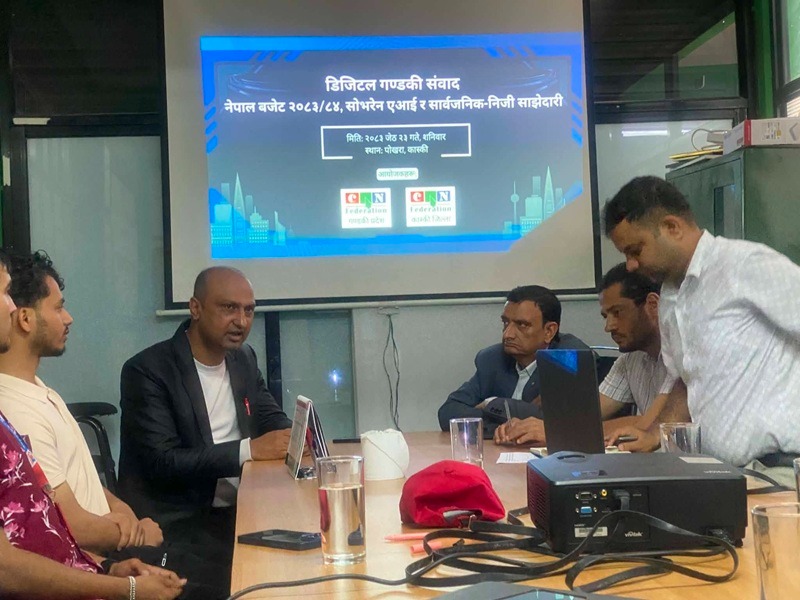
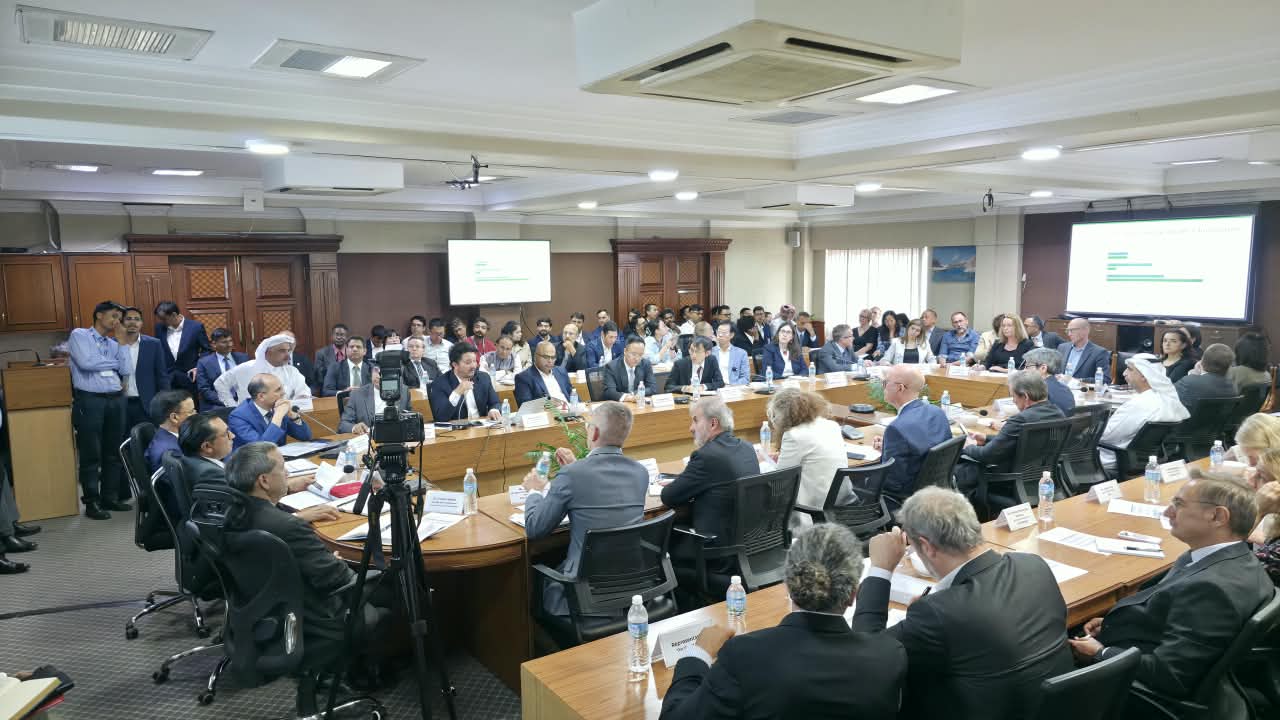
Pokhara. Pokhara—The much-awaited provincial gathering ‘Digital Gandaki Sambad 2026’ organized in Pokhara of Kaski district concluded in a grand manner.
The event jointly organized by CAN Federation Gandaki Province and Kaski Chapter of CAN Federation has prepared a new strategic basis to accelerate Nepal’s digital economy.
New blueprint for digital transformation
The keynote speaker of the event Mr. Chiranjibi Adhikari, Acting President of CAN Federation and Digital Transformation Leader, presented a historic working paper titled “Digital Gandaki Sambad 2026: Promoting Nepal’s National IT Agenda through Sovereign AI and Strategic Policy Advocacy”. He unveiled a concrete policy roadmap for achieving regional self-reliance, secure infrastructure and data sovereignty.
Appreciating the concept, Gunanidhi Pandey, President of CAN Federation Gandaki Province said, “This long-term concept framework developed and initiated by Digital Transformation Leader Chiranjibi Adhikari is highly commendable. Grounded in sovereign AI and strategic policy advocacy, this framework is an important foundation for advancing the digital agenda of the province and the nation as a whole. “
The leaders of the tech sector present at the conference expressed solidarity to take this plan to the implementation level.
Purushottam Kunwar, president of CAN Federation, Kaski said that the farsighted vision of Acting President Adhikari has provided an excellent way to connect policy and implementation.
ICT Cooperative Pokhara Chairman Sabi Sherchan expressed his insights on internet infrastructure, digital payments and secure digital governance.
CAN Federation has put forward 5 different topics to the government to convert high-level objectives into measurable results. Jasma
Encouraging the IT industry: Policy advocacy to maintain 1% corporate tax rate for domestic IT companies, domestic software priority: Amending the Public Procurement Act to “Made in Nepal” is a mandatory priority.
Sovereign AI and Good Governance: Deployment of a local language-based Large Language Model to automate local administrative services, mandatory security audit of all local level portals as per national security standards, and data security ensure.
It has also demanded the establishment of environment-friendly data centre and ICT innovation lab in Pokhara by utilizing the hydropower potential of Gandaki.
The problem of the digital divide was pointed out at the conference. According to an analysis of more than 434 local governments, about 6 percent of ward offices still do not have access to electricity and 5 percent do not have internet access. To address this, emphasis has been laid on the ‘Data for Decision Making’ system.
The conference has concluded to materialize the vision of Digital Nepal in collaboration with the federal and provincial governments by upholding the three pillars of the Constitution of Nepal – cooperation, coexistence and coordination.












प्रतिक्रिया दिनुहोस्