

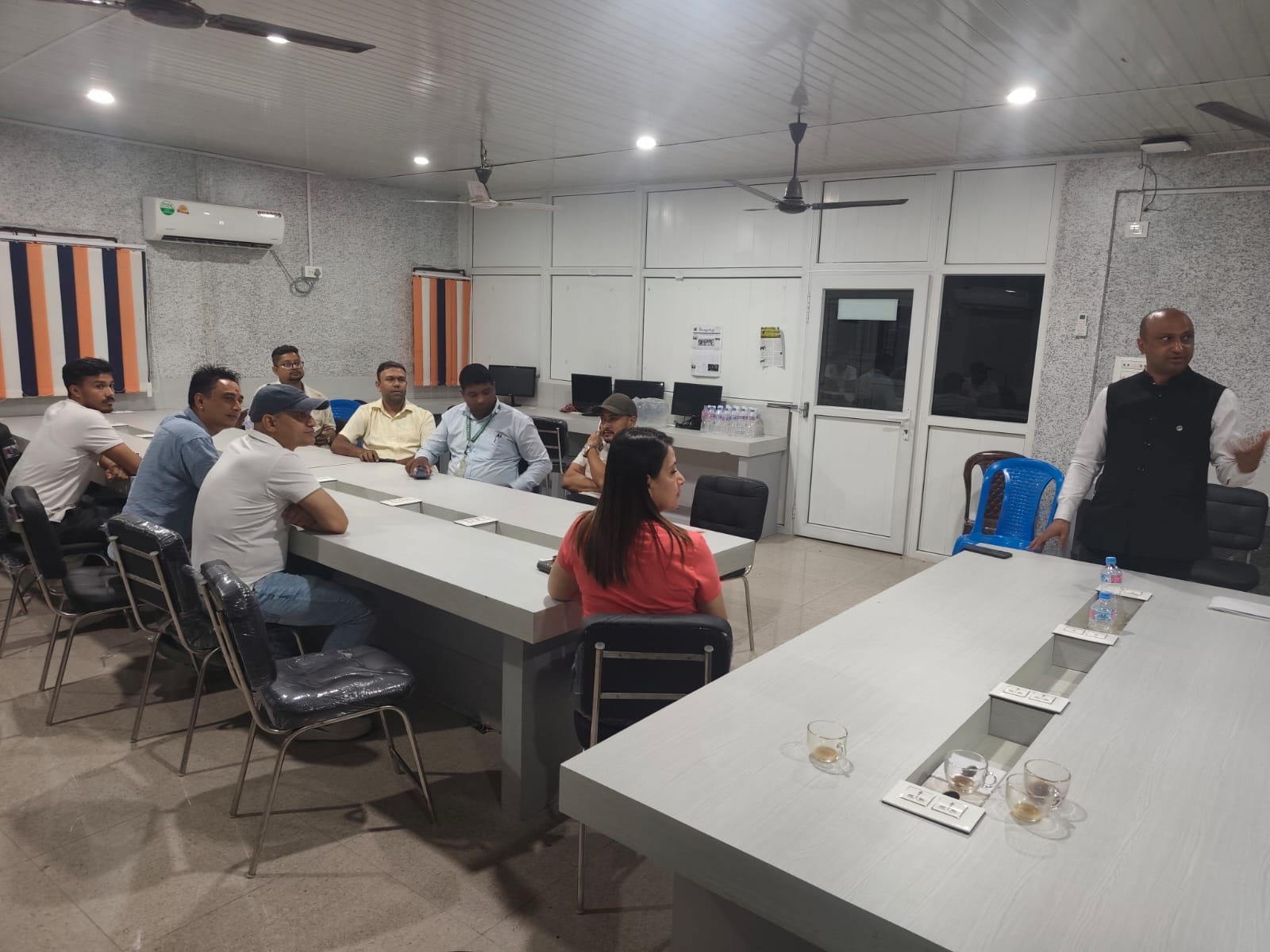
Kathmandu. Chiranjibi Adhikari, an information and communication technology (ICT) expert and acting president of Computer Association Nepal (CAN), presented the ‘Digital Koshi Vision’ with the objective of extending digital governance to the local level.
At the ‘Digital Koshi Sambad-2026’ jointly organized by CAN Federation Koshi Province and CAN Federation Jhapa chapter at Birtamod today, Adhikari presented a presentation on the theme ‘Digital Good Governance at Local Levels and Provinces: Vision, Status, Efforts and Way Forward’.
The program was attended by CAN Federation central secretary Thakur Kumar Shrestha, former secretary of CAN Federation Bhupendra Mainali, former central member of CAN Federation Dipesh Pathak, office-bearers of CAN Federation Jhapa chapter, local people’s representatives and IT entrepreneurs.
On the occasion, Krishna Ghimire, secretary of Koshi Province of CAN Federation, said that the ‘Digital Koshi Vision’ prepared by Adhikari was an important document to accelerate the digital transformation of the local level. Shubha Kumai Pathak, president of CAN Federation, Jhapa, said that digital transformation was the need of the hour and expressed the belief that Adhikari’s strategic approach would contribute to the development of the entire Koshi Province.
According to the United Nations’ e-Government Development Index (EGDI), Nepal has moved from ‘middle’ to ‘high’ level. With this, Nepal is in the leading group of least developed countries along with Bhutan, Bangladesh and Cambodia.
The PSDI has been upgraded from ‘C’ to ‘B’ level. However, the Citizen Participation Index (DCEI) has dropped from ‘C’ to ‘D’. This shows the need for electronic participation and an interactive system to increase citizen participation in the decision-making process.
Although the expansion of mobile services has improved the telecommunication infrastructure, overall access is still challenging, he said.
The presentation also highlighted the comparative status of the ICT capabilities of the provinces. Koshi Province has been at the forefront in the development of the core system.
The survey of 434 local levels showed that there is a huge disparity in digital access despite the widespread use of budget management, revenue records and official websites.
According to him, some 4 to 13 percent local levels are still using internet speed less than 1 to 2 Mbps. He said that such local levels have to pay more than Rs 13,000 to Rs 16,000 per month.
The official said that the problem of ‘data silos’ is due to the excessive use of systems developed separately by different vendors. According to him, public services have been affected due to the lack of exchange of data in one system with another.
“Unless interpreted, data is just a number and will not be used,” he said. Our development has stalled, because our data itself is in a closed state. ”
Weak network design, dependence on a single vendor and lack of data and electricity backup have obstructed essential services at local levels, he said.
Adhikari presented 10 strategic bases under the ‘Digital Koshi Vision’ to make the digital transformation effective. These include Digital Infrastructure, Digital Education, Digital Tourism, Cyber Security and Data Management, Digital Entrepreneurship, Digital Good Governance, Digital Health, Digital Agriculture, Digital Finance and Smart City.
Officials said that some policy and technological reforms are urgently needed to make digital transformation a reality.
He suggested the use of localized Large Language Model (LLM) based sovereign artificial intelligence in accordance with the National Minimum Security Standard to safely automate the routine work of the local level.
He also stressed the need to mandatorily implement the National Minimum Security Standard (NMSS) in all local level public applications, municipal portals and citizen app.
He was of the view that only one percent corporate tax should be made in domestic IT companies for promotion of local IT industry and ‘software made in Nepal’ should be given priority in public procurement.
He suggested that the State should be guided to the ‘Infrastructure as a Service (IaaS)’ concept by establishing green data centers and regional ICT innovation labs through the public-private partnership model.
Adhikari stressed the need for coordinated efforts among the federal, state and local levels to make digital governance a success. According to him, ‘federal leadership, facilitation of the province and initiative of the local level’ are necessary for effective e-government.
He expressed his confidence that Nepal would enter a new era of digital democracy if the information technology could be viewed as the basic infrastructure of development and not spending and investing in digital literacy of rural entrepreneurs.















प्रतिक्रिया दिनुहोस्