

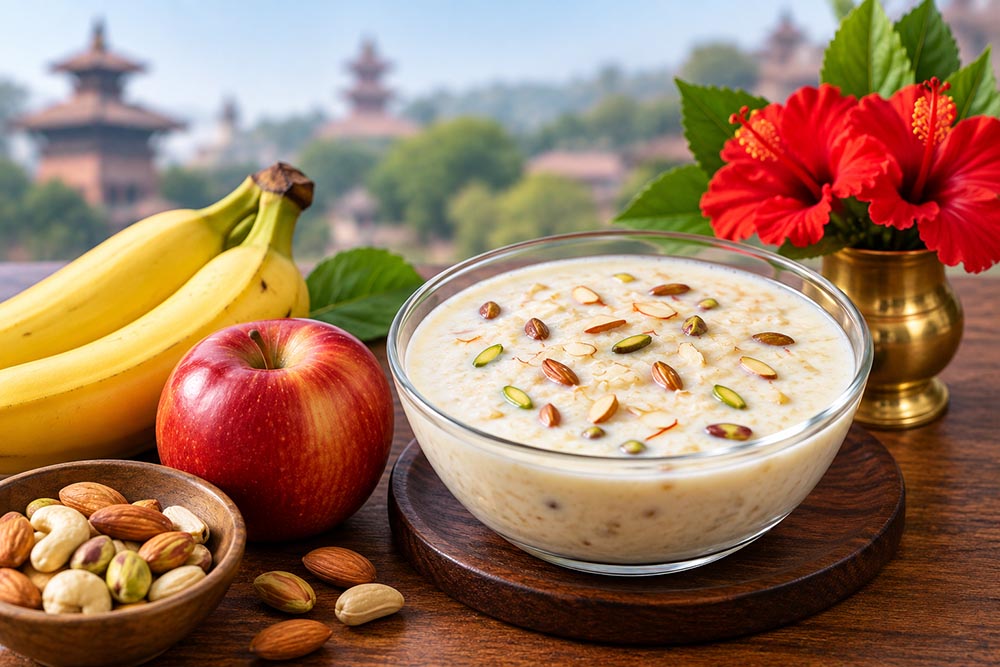
Kathmandu. Nepali women are preparing to eat the rate today to get strength for the Haritalika (Teej) fast. The four-day Teej festival begins from today.
Especially on the first day of Haritalika i.e. Teej i.e. Bhadra Shukla Dwitiya, which is celebrated by Nepali women, today is eaten. There is a tradition of feeding Dara to the mother. As a rate, pure dishes made from milk are eaten. Which makes the day of fasting more difficult. Religious scholar Prof. Toyaraj Nepal has the experience that eating wheat bread and ghee makes it more difficult for the fasting people.
The Teej festival, which was celebrated only in Nepal last year, has been celebrated in India due to media publicity in recent times. The song of Teej has also started showing priority on Indian television channels.
Culture of the day before the Nirahaar Vrat
}
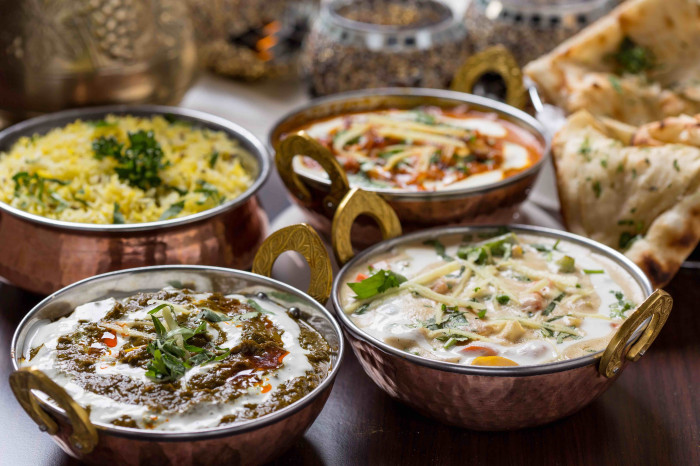
Since those who fast on Teej remain fasting, today the fasting people prepare for Monday’s fast by eating sweet and sloppy dishes as a rate to gain strength. Especially, mothers and brothers call daughters, disciples and sisters and feed them. Religious expert Nepal said that there is a scriptural rule that every two parts should be eaten by night.
Women also use Teej as a festival to express their sorrows, pains, and pains throughout the year. On the occasion of Teej, women express such sorrows through songs. Women express their sorrows, pains, and pains while living in the workplace from their birthplace.
Teej culture is becoming a distortion
In recent years, complaints have been heard about the increase in unruliness and extravagance in the name of Teej. Sociologist Kirti Kumar Rai said that activities such as eating doors, displaying jewelry and dresses for a month have been trying to distort the culture of Teej. He said that the rate of eating in the evening on the day before Bhadra Shukla Tritiya for the power to fast for months and the presence of tamasic things in the food eaten in the name of fasting has also led to the distortion of the culture.
Cultural experts, theologians and sociologists have also stressed that such activities should be stopped as they make the non-believers sad. Although the practice of eating the rate has started increasing in recent times, the evening of Bhadra Shukla Dwitiya has been classically designated as the day to eat the rate. Prof. Dr. Devmani Bhattarai, a former member of the Nepal Calendar Determination Development Committee, who is also the head of the Department of Theology at Nepal Sanskrit University, Valmiki Vidyapeeth, said that the reason for this day was to fast on the day of Tritiya.
Lately, even in government offices, there has been a lot of fanfare in the name of Teej program since a month ago. The government office, which has the responsibility of stopping the distortions that have started in the society, has become institutionalized as it has become a distortion. Religious scholar Bhattarai argues that it is not good for the institutions run by the tax of the citizens to take the culture as a distortion.
Four-day Teej starting with }{TAG_CLOSE_strong_35}}
}
The Teej festival, which formally starts after eating on Sunday evening, is celebrated till Rishi Panchami. On the day of Tritiya, Haritalika Vrat, on the fourth day, worship Lord Ganesha, and on the fifth day, after bathing, worship the Saptarishi along with Arundhati, Teej concludes.
This year, Ganesh Chauthi, which is believed to be the birth of Lord Ganesha, is celebrated on Tuesday, September 30. According to the calendar, Rishi Panchami will be celebrated on Tuesday, September 30. Ganesh Chauthi is celebrated on the day of the morning tithi. Rishi Panchami is celebrated on the day of Panchami in the afternoon.
Mythology of Haritalika (Teej) Festival
With the arrival of Teej, there is excitement among Nepali women. In the Satya Yuga, Himalaya’s daughter Parvati got the boon of getting a husband by staying in Gaurighat and doing penance. But it is described in various Puranas that when her father Himalaya tried to marry Vishnu against Parvati’s wishes, she narrated her problems to her friends.
When Parvati came to know that she was in trouble, her friends kidnapped her and hid her in a place where no one could see her. It is also mentioned in the Puranas that Parvati fasted at the place where her friends hid her and got Mahadev as her husband.
In this way, the day of Parvati was abducted by her friends, it is on the day of Bhadra Shukla Tritiya, so the practice of fasting on Haritalika (Teej) started from that time. On the occasion of Haritalika (Teej) festival, millions of women queue up at Shiva temples across the country, including Pashupatinath. On the occasion of Teej, women meet old friends and friends. During the meeting, they talk about the joys and sorrows of the year.
With the beginning of Teej, radio and television have also started playing the song ‘Teejko Rahar Aayo Bari Lai’. With the arrival of Teej, the whole atmosphere has become festive. After Teej, the big festivals celebrated by Nepalis, Bada Dashain and Tihar, come to the courtyard of Nepalis.











प्रतिक्रिया दिनुहोस्