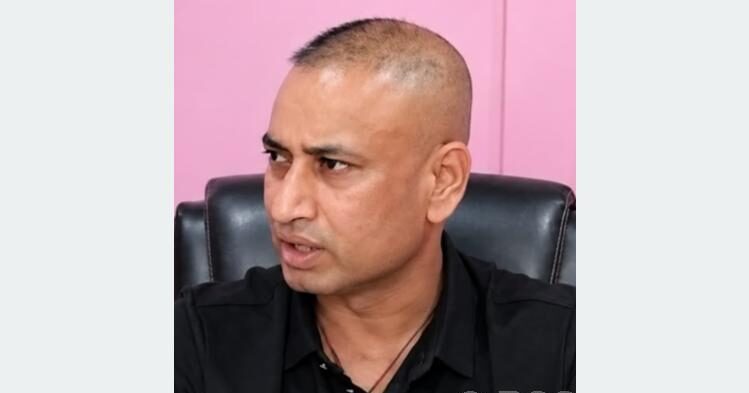
Rs 6 billion spent annually on gas supply: Pradeep Sah
लगानी न्यूज
. Cooking LP gas is a mixture of flammable hydrocarbons. It is colorless as a gas. It is stored as a liquid in cylinders. LP gas is a mixture of propane (60 percent) and butane (40 percent). It emits less greenhouse gases.
According to a study, a household’s annual carbon footprint can be reduced by up to two tons when cooking shifts from conventional energy to LP gas. Natural gas was first discovered in Iran. Several early articles describe natural petroleum leaks in the Middle East, especially in the Baku region, now known as Azerbaijan. China leads the world as the world’s largest LPG importer with a total import value of $20.2 billion in 2023. The rapidly growing Chinese economy and expanding industrial sector have led to an increase in gas imports.TAG_OPEN_div_61
L TAG_OPEN_div_59 P gas has now reached most of the kitchens in Nepal. Nepali industrialists have been importing LP gas from various depots of Indian Oil Corporation (IOC) in coordination with Nepal Oil Corporation. At present, there are 58 gas industries in Nepal. Nepal is completely dependent on India for the import of LP gas. India produces about 20 percent of LP gas from its own mines and imports the remaining 80 percent. India has invested heavily in the supply and storage of LP gas.
In order to facilitate the supply of LP gas, IOC alone has built about 18,00 TAG_OPEN_div_57 0 km LP gas pipeline network. Nepal has been importing petroleum products from the 69-kilometer-long inter-country petroleum pipeline from Motihari of India to Amlekhgunj of Bara. Diesel, petrol and kerosene have been imported from this pipeline, which has been in operation since 2076 BS. Now work is underway to extend the pipeline to Lothar of Chitwan.
There has been a shortage of LP gas for cooking in Nepal from time to time. Consumers have been facing problems for one cylinder of gas. The reason for the shortage of gas in Nepal from time to time is due to the lack of storage and supply system. Storage houses of dilation, petrol and kerosene have been built in different parts of the country. According to the policy of the Government of Nepal, storage houses are being expanded to meet the demand for at least three months, but the storage houses of LP gas, which is a major component of energy security, have not been constructed yet. The small storage centers of the concerned industrialists have not been able to meet the demand during the shortage.
In order to find a long-term solution to the gas shortage, the Nepal Oil Corporation (NOC) has started a plan to build a gas storage house in Sarlahi to meet the demand for at least one month. Although there is a lot of potential for hydropower in Nepal, we are not in a position to fully utilize it. Due to the existing situation of electricity supply and the ease of the consumers, the general public is completely dependent on LP gas.TAG_OPEN_div_53
At present, about 50,000 metric tons of gas is being consumed in Nepal monthly. The consumption of gas seems to have increased a bit in the winter months. But we do not have gas storage at present. The problem of gas shortage can be solved if storage can be built to meet the demand for at least one month. Nepal has been paying about six billion rupees annually in transportation fee for the import of gas.
Indian bullets are being used in gas transportation. At present, six hundred to seven hundred Indian bullets are being used to transport gas in Nepal. A large amount of money is being sent out of the country every year. If the LP gas pipeline from Motihari to Sarlahi and a storage capacity of at least 50,000 metric tons is constructed, then the long-term solution to the gas shortage and the amount of transportation can be stopped. The full operation of Nepali gas bullets will also be done and domestic employment will be created. This project can become a new dimension in the energy security of the country.TAG_OPEN_div_50
Although the storage capacity is being expanded to meet the demand for at least three months for diesel, petrol and kerosene, LP gas, which is a major component of energy security, does not have a storage house of its own at the government level. Small storages of private industrialists cannot meet the demand during the crisis. The role of the corporation is only to co-ordinate in gas. This problem is repeated when the depots, storage and sales are all in the hands of the private sector. The corporation has managed about 16 bighas of land for the construction of gas storage in Sarlahi. According to preliminary estimates, the distance from Motihari to Sarlahi is about 130 kilometers. A storage and pipeline of 50,000 metric tons can be constructed at a cost of about Rs 26-26 billion at this place. That is almost four years of transportation in the current manner.
The nearest LPG refinery from Nepal is Barauni in India. It is about 300 kilometers away from the Nepal-India border. In Barauni too, if the production is low, one has to go to Durgapur and Paradip and load the gas in the bullets. Which is thousands of kilometers away from the border. It takes at least 10 days for the bullets to come from these places. The refineries of petroleum products are very sensitive. Regular maintenance has to be done along with the ‘upgrade’ in the new technology. As soon as one refinery goes for repair, Nepal has to go to another refinery and fill the gas. Therefore, the gas may not be supplied on time, the transportation cost can be high. The only solution to all these problems is to build an LP gas pipeline and a storage to meet the demand for at least one month.TAG_OPEN_div_46
The topographical survey of the land for the construction of the LP gas storage is being done. The storage house can be constructed in about two years. The Indian Oil Corporation has already prepared the Detailed Project Report (DPR) of the project and submitted it to the corporation. The corporation does not have to depend on the same investment model for the construction of pipelines and storage houses. Different models may be suitable for raising the investment for the construction of the project. The project can be constructed in government-government collaboration between the Nepal Oil Corporation and the Indian Oil Corporation. Similarly, the Build-Operate-Transfer (BOOT) model or the public-private partnership (PPP) model can be adopted to build the project with the investment of the private sector and hand it over to the government after operating for a certain period. Through these options, the construction of the project should be accelerated by mobilizing the necessary investment.TAG_OPEN_div_44
The projects to be constructed include the construction of a 50,000-ton LP gas storage house to meet the demand of about one month, the establishment of a bottling plant with a capacity to fill at least 25,000 cylinders daily, and the construction of a tanker lorry filling set that can load at least 100 gas bullets daily. Unless the Nepal Oil Corporation builds a storage of LP gas, there will be no long-term solution to the gas shortage. The immediate problem will be solved immediately by increasing the import, reducing the consumption of the citizens, and if the storage is not made to meet the demand of at least one month, the problem will be seen again after one or two years. After the construction of these infrastructures, there will be a revolutionary change in the management of gas supply in Nepal.TAG_OPEN_div_42
The issue of keeping gas cylinders in two colors and the price of gas in two colors opens the door to manipulation. Setting different prices creates misuse, irregularities and difficulties in monitoring cheap gas. A new system can be developed to provide relief to the citizens, students and lower classes living below the poverty line. At present, the national identity card has been made mandatory in all government services. On the basis of this, the system can be developed to keep a record of gas consumption and the relief amount can be deposited by the government to the target group.
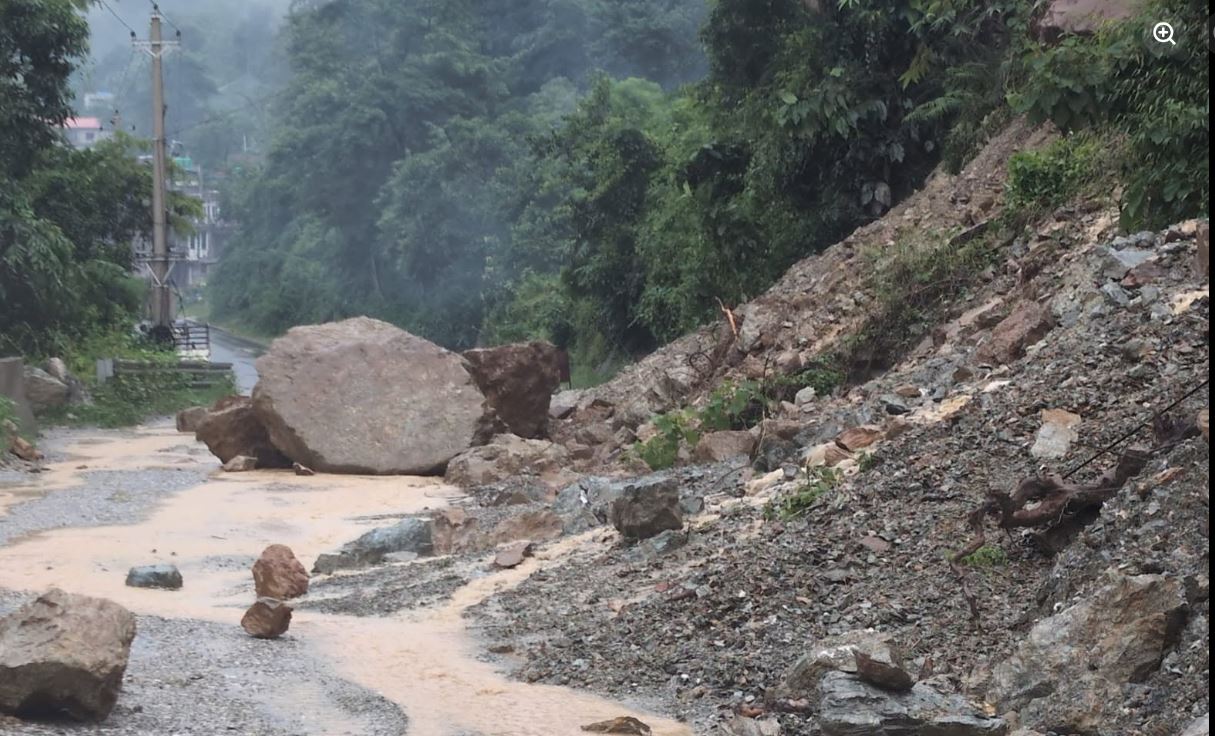
TAG_OPEN_div_38 Although Nepal is naturally beautiful, it is in a highly vulnerable situation due to disasters. Only a few months ago, the Bhotekoshi flood eroded the Krishnabhir section of the Prithvi Highway, causing a lot of difficulty in supplying petroleum products to Kathmandu. There was no shortage of diesel, petrol and kerosene at the corporation’s depot in Thankot, Kathmandu. However, there was no shortage of petroleum products due to the supply of petroleum products through careful alternative routes.
The corporation is also selling petrol, diesel, kerosene and aviation fuel. There has never been a problem in the sale and distribution of these petroleum products, but the question may arise as to why there is so much problem in gas alone. The role of the corporation in the import and sale of gas is negligible. The corporation neither has a gas depot nor a storage house. The storage is almost zero. The private sector imports and sells gas. The current situation is that the corporation only coordinates with the IOC. This is the reason why there is a problem in cooking gas again and again.TAG_OPEN_div_36
The only way to solve this problem is to build a storage house. The consumption of gas in Nepal is high in Kathmandu Valley, Chitwan and Central Region. The supply of gas can be made easier only if arrangements can be made to store gas in Sarlahi through pipelines or bullets and send it to the industries as needed. If the situation is created that the Nepali people do not have to suffer to fill one cylinder of gas, then the gas storage should be built as soon as possible. If the work is done without building ‘gas storage’, then the problem will be solved in the short term, but in the next one or two years, the problem will be the same again.
(This opinion is based on a conversation with Pradeep Yadav, Deputy Director of Nepal Oil Corporation and Chief of Storage Capacity Enhancement Project)


















प्रतिक्रिया दिनुहोस्