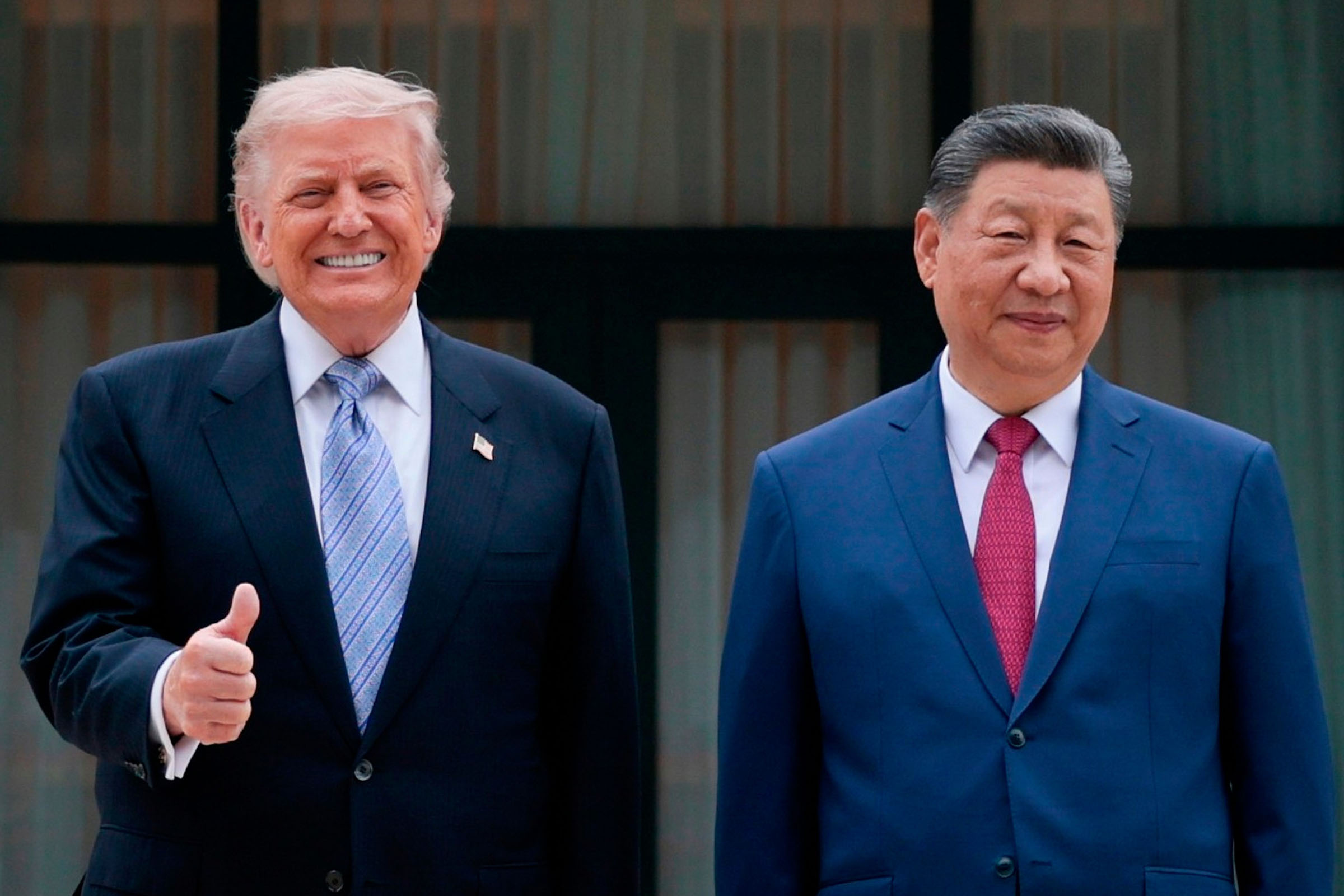
. China has agreed to significantly increase purchases of US agricultural products after a high-level summit between US President Donald Trump and Chinese President Xi Jinping in Beijing.
The agreement to expand trade, especially for products such as beef, chicken and soybeans, has given new hope to U.S. farmers who have been grappling with the long-running trade war.TAG_OPEN_div_78
China has agreed to buy $17 billion worth of U.S. agricultural products annually for 2026, the White House said Sunday.TAG_OPEN_div_76 The same level of procurement will be maintained in 2027 and 2028 as well. The Trump administration has touted this as an important achievement for the US agricultural sector.
Under the agreement, China will reopen market access for U.S. beef and resume imports from states that have been declared free of bird flu by the U.S. Department of Agriculture.TAG_OPEN_div_74 According to the White House, these commitments will be in addition to China’s previous agreement to buy American soybeans.
Over the past few years, U.S. farmers have lost a huge market like China because of the trade war.TAG_OPEN_div_72 Soybean farmers were particularly affected, as China has traditionally been considered the largest foreign buyer of American soybeans. China almost stopped buying American soybeans after the Trump administration imposed additional tariffs on Chinese goods.
According to data from the U.S. Department of Agriculture, China imported $38 billion worth of agricultural products from the U.S. in 2022.TAG_OPEN_div_70 But as trade tensions escalated, the amount was reduced to just $8 billion in 2025. Soybean purchases fell from about $18 billion in 2022 to $3 billion in 2025.
China has pledged to buy 12 million metric tons of U.S. soybeans in the current market year and 25 million metric tons each year over the next three years, according to the White House.TAG_OPEN_div_68 However, it is not clear how much China will increase its soybean purchases under the new agreement.
Meanwhile, China is also diversifying the source of agricultural imports as it begins to link food security with national security.TAG_OPEN_div_66 China has also increased imports of soybeans, beef and other agricultural products from other countries, including Brazil and Argentina, reducing its dependence on U.S. production.
There was no immediate official confirmation of all the terms of the agreement from the Chinese side.TAG_OPEN_div_64 However, China’s commerce ministry said on Saturday that the two sides had made “significant progress on some non-tariff barriers and market access issues” related to agricultural goods.
According to the ministry spokesperson, the US will play an active role in addressing China’s concerns regarding dairy products, seafood and other agricultural exports.TAG_OPEN_div_62 In return, China has pledged to address U.S. concerns about the registration of U.S. beef processing facilities and the importation of poultry from some states.
The Chinese side also agreed to reciprocate tariff reductions on the “range of specific products”, the Chinese side said.TAG_OPEN_div_60 However, the details of which products will be reduced have not been made public.
{{TAG_OPEN_div_58}The Trump–C summit was limited to agricultural trade. The two leaders also discussed giving U.S. businesses greater access to Chinese markets and increasing Chinese investment in U.S. industries. For this, an agreement has been made to establish a separate joint committee on trade and investment. These mechanisms are expected to cooperate in the management of trade in non-sensitive goods and in the settlement of disputes related to investment.
According to the White House, the trade committee will provide a channel for continued dialogue between the two countries on issues including tariff cuts on certain products.TAG_OPEN_div_56 China’s commerce ministry also said the two countries agreed on the principle of “reducing tariffs on the same level” on products of relevant sectors.
Meanwhile, another TAG_OPEN_div_54 pressure is mounting on the Trump administration. Shipping through the Strait of Hormuz has been affected due to the war waged by the US and Israel against Iran. This has disrupted global fertilizer supplies and caused price spikes, the effects of which are being felt even by American farmers.
The U.S. beef industry is also hoping for relief from the deal.TAG_OPEN_div_52 According to the White House, hundreds of US beef refineries run by companies like Tyson and Cargill will be able to export to China again. U.S. exports plummeted last year after China refused to renew permits at hundreds of U.S. beef refineries.
According to data from the U.S. TAG_OPEN_div_50 Department of Agriculture, the value of U.S. beef exports to China fell to less than $500 million in 2025, while China purchased $2.14 billion worth of U.S. beef in 2022 alone.
There was also a significant decline in the export of chicken meat.TAG_OPEN_div_48 U.S. exports of poultry and related products to China fell to $286 million in 2025, up from $1 billion in 2022.
Soy is one of the major U.S. agricultural exports.TAG_OPEN_div_46 In the past, exports of soybeans, widely used to produce animal feed and biofuels, accounted for nearly half of U.S. agricultural exports to China.
According to the U.S. Department of Agriculture, as of May 7, the U.S. has exported 10.9 million metric tons of soybeans to China.TAG_OPEN_div_44 This indicates that China is on track to meet its previous purchase commitments by the end of the current year. But this quantity is still much lower than the 25 million to 30 million metric tons that China has been buying in the past.
When preliminary plans for Trump’s visit to Beijing were revealed at the end of March, the American Soybeak Association urged the government to make soybean a priority in talks with China.TAG_OPEN_div_42 Scott Metzger, president of the association, said it was important for farmers to have stability and certainty in the market.
He said that market confidence will be important for U.S. farmers to make investment and production decisions for the coming year, and he wants to see more purchase commitments from China and continued implementation.TAG_OPEN_div_40


















प्रतिक्रिया दिनुहोस्