

Kathmandu. He said that the government and banks should work hand in hand to achieve economic growth by expanding the economy.
Finance Minister Wagle said this during a discussion with CEOs of commercial banks organized by the Ministry of Finance on Tuesday to discuss the implementation of the new budget and the state of financial markets.
He further said that the Ministry has been holding discussions to listen to the problems of the banks, take the government’s initiatives for resolving them and to join hands to achieve the larger goal of economic growth. Urging the banks and bankers to speak about the problems of their areas without any hesitation, he said the government would resolve the problems honestly.
“We have turned the ship of economic governance to expand the economy,” Wagle told the bankers, adding, “The size of the economy is Rs 74 trillion.” For this, investment should be increased. We have to create jobs. How you can help, contribute. Tell the government what needs to be done. He also questioned the bankers as to why the banks have not been able to extend loans.
“What is the problem with the banks in extending loans? If the government needs to do something, tell me. We facilitate. On the occasion, Finance Minister Wagle urged the bankers to submit the policy-level and practical difficulties facing the banks to the Ministry in an integrated manner.
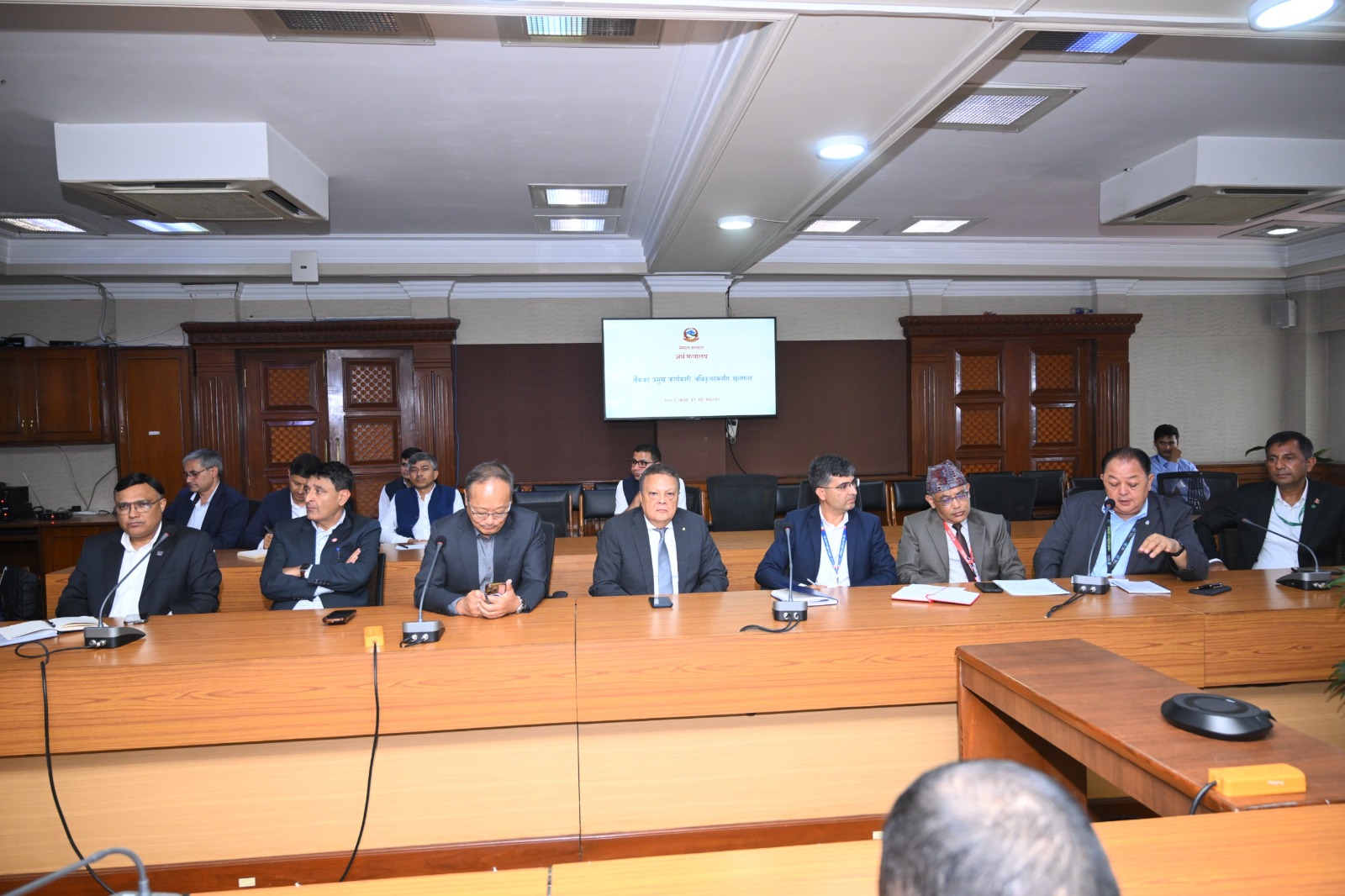
During the discussion, the CEOs of the banks said that the banking sector is now in a difficult situation due to some old regulatory remedies, but it is solvable.
Bankers said that there is a gradual increase in demand in other sectors as banks are competing for investment in the hydropower sector. They said that some of the facilitation works that the government and the Nepal Rastra Bank should do immediately would make the economy dynamic.
Machhapuchchhre Bank’s Chief Executive Officer Santosh Koirala, who is also the President of Nepal Bankers’ Association, drew attention towards further facilitating investment in the hydropower sector.
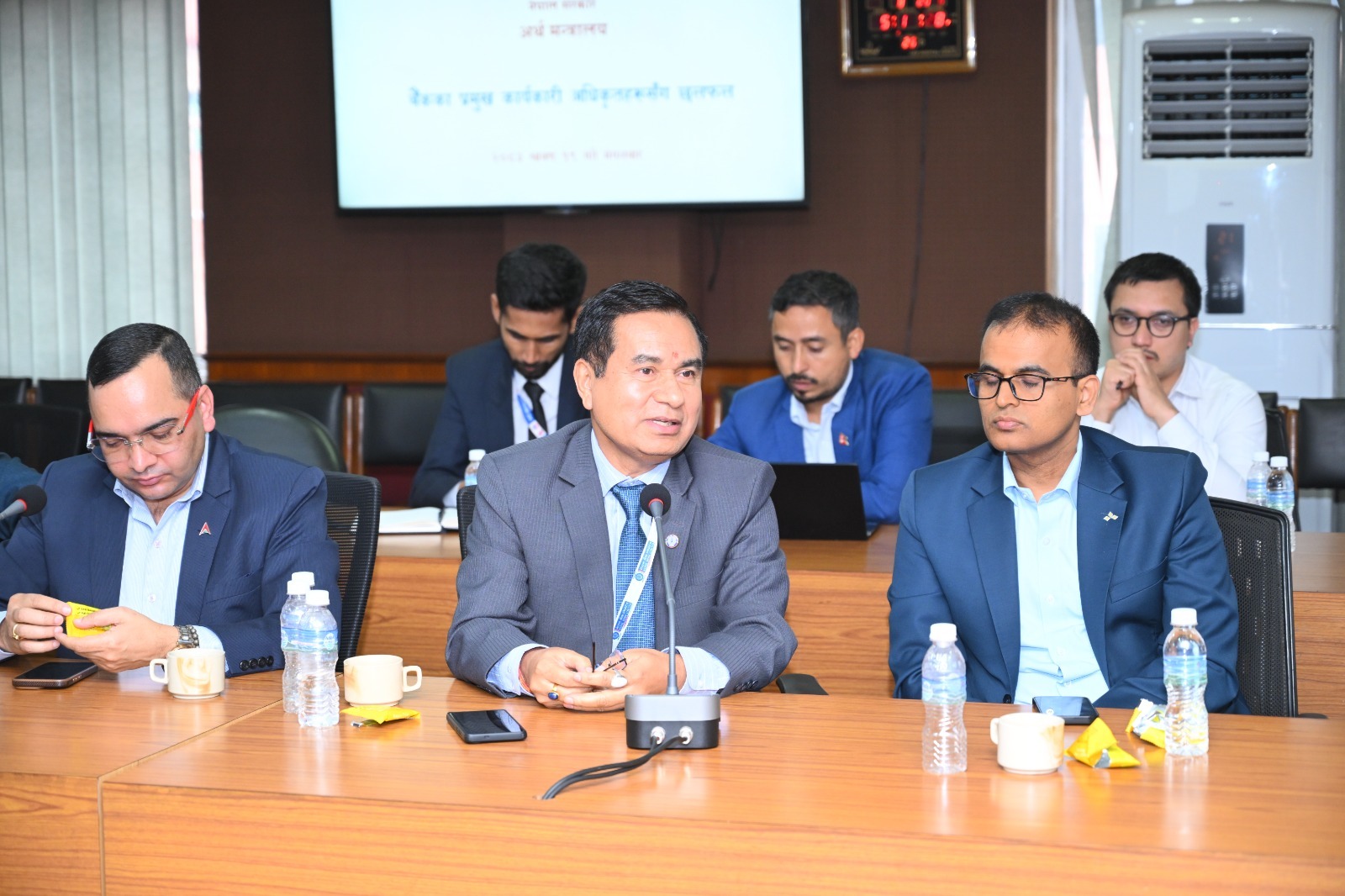
Suggesting that the government should carry out works to complete big projects on time, he said the government should carry out works taking small and big entrepreneurs into confidence.
Ganesh Pokharel, chief executive officer of Citizens International Bank, said that the current sluggishness in the banking sector should be understood as a regular and a cycle.
“There is a struggle to find investment in hydropower. It’s not as weak as it looks on the outside. It’s a cycle,” Pokharel reiterated.
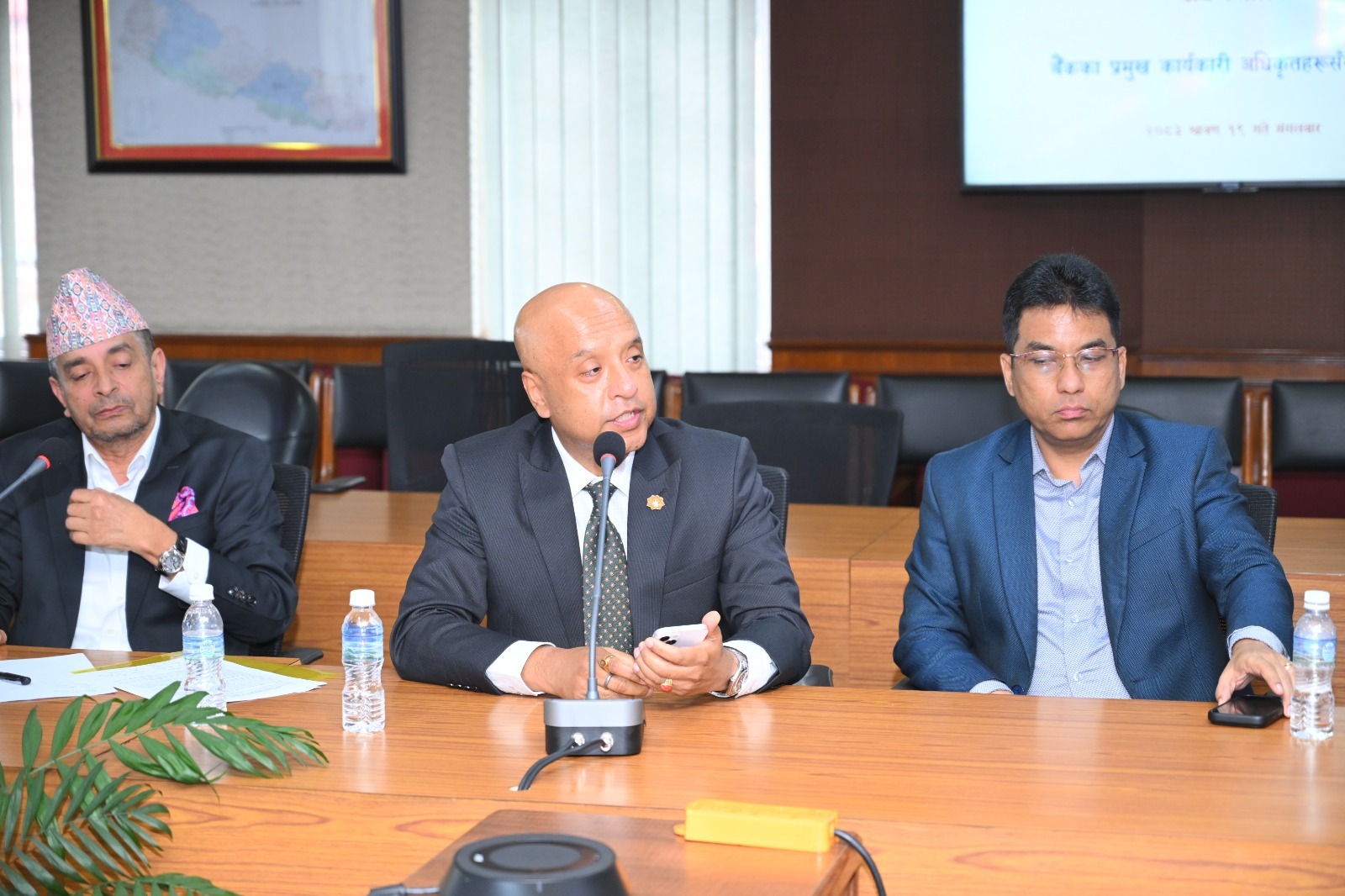
Global IME Bank’s Chief Executive Officer Surendra Regmi urged the bank to address the decline in confidence of business community in the market. He said that the NRB should make policy facilitation to increase the lending capacity of the banks. He expressed confidence that the non-banking asset management company that the government was going to establish would be opened soon.
Chief Executive Officer of Everest Bank, Sudesh Khaling, stressed on the need to extend credit to the rural and impoverished people. Stating that the government should increase capital expenditure, he stressed on capacity building of government offices to make the economy dynamic.
Ashok Rana, Chief Executive Officer (CEO) of Himalayan Bank, said that the investors and businessmen are eager to invest in the new fiscal year. “Industrialists and businessmen have started coming to ask whether they will breach their limits for the new year, which is a good sign. ”
Similarly, Chief Executive Officer of NIC Asia Bank, Sujit Shakya, said that a policy arrangement was necessary to resolve the problems seen in the loans given to small entrepreneurs during the pandemic.
He said that there was a need to revise the provision of blacklisting the borrowers and provisioning of loans considering the good practices of the neighbouring countries. “Hundred per cent provisioning in a year is a neck-and-neck,” he added.
Gorakh Shumsher Rana of Standard Chartered Bank said that the limit of current capital loan is reviewable.
According to Rameshwor Basyal, Chief Executive Officer (CEO) of Siddhartha Bank, the contraction in the economy is due to external and internal factors, which has affected the quality of loans. He also urged the government to review the provision of hundred percent provision of loan within a year.
Nepal SBI Bank’s Chief Executive Officer Ram Kumar Tiwari suggested that the government should invest in big infrastructure for economic development and expansion, comparing the economies of Nepal and India.
Jyoti Prakash Pandey of Nepal Investment Mega Bank said that the demand for food and construction sectors will also increase soon like hydropower. He also pointed out that the banks which have been affected by the forced merger are now facing problems in expanding their investment. Stating that the banks have been suffering from the problem of non-payment of loans, he said support from the government was expected for this.
Ajaya Shah, CEO of Laxmi Bank, said that investment should be increased in SMEs. He also drew the attention of the government not to intimidate the banks and businessmen and to work in confidence. At the same time, he said that the economy has slowed down due to the sluggishness of investment in real estate.
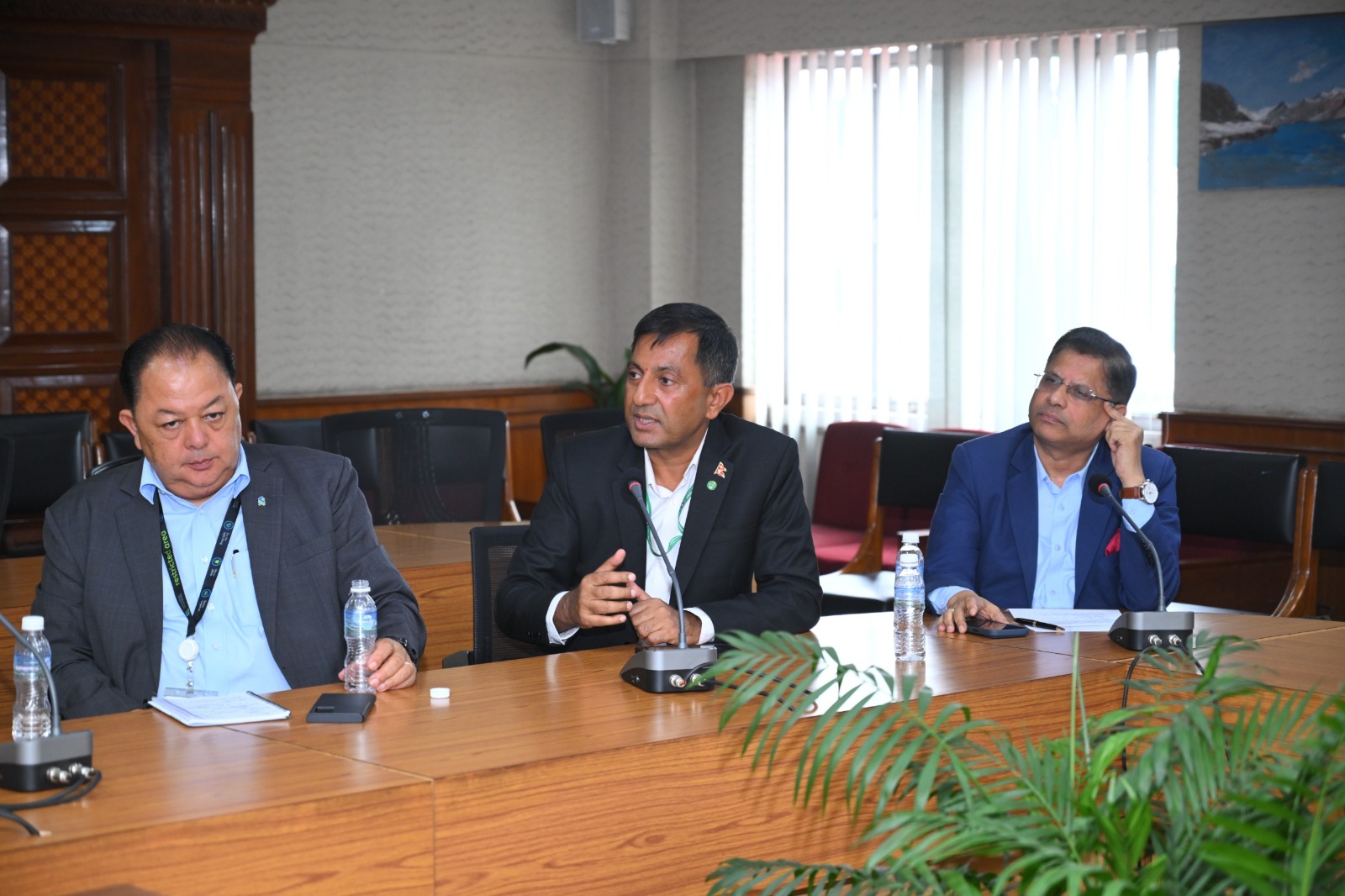
Sanjeev Manandhar, chief executive officer of Prime Commercial Bank, said that the morale of the bank and business sector has gone down in recent times.
Manoj Gyawali, chief executive officer of Nabil Bank, said that the policy on bad loans should be changed. He said that there is a lot of people in the blacklist, both cheque disrespect and debt, and there is no proper solution to this problem.
Chief Executive Officer (CEO) of Nepal Bank, Tilak Pandey, said that banks are overwhelmed by non-banking assets and effective measures are needed to address this problem.
















प्रतिक्रिया दिनुहोस्