

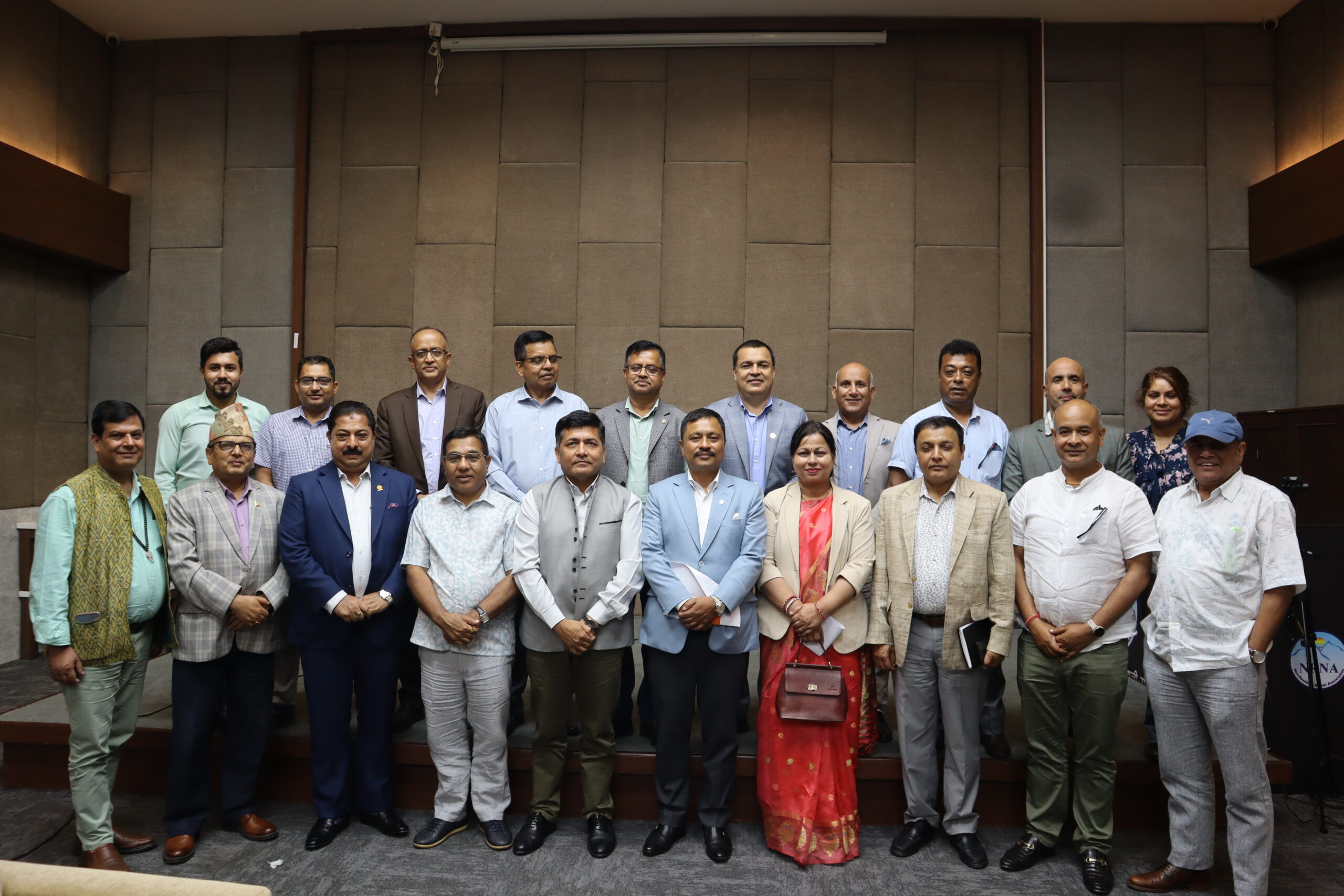
Kathmandu. A special interaction program was organized among the Non-Resident Nepali Association (NRNA), former administrators, experts from the private sector and stakeholders with the objective of supporting the country’s governance system, sustainable economic development and evidence-based policy making.
At the program organized at the NRNA Secretariat, a detailed discussion was held on the possibilities of long-term policy reforms by identifying the policy gaps seen in the country.
It has been concluded that a capable mechanism is needed for the effective use of experienced, skilled and academic experts for study, research and policy advocacy on multi-disciplinary and contemporary issues.
On the occasion, he stressed on the need of expanding collaboration among Non-Resident Nepalis, Nepal’s academic scholars, retired civil servants, successful entrepreneurs, legal practitioners and researchers to increase institutional contribution in policy making.
The event focused on the formulation and implementation of structural transformation-oriented economic policies for the long-term and inclusive economic development of Nepal.
The participants were of the view that special attention should be given to policy formulation for increasing production and productivity, industrialization, digital economy, green economy, job creation and strengthening public-private-cooperative partnerships.
The knowledge, skills and
capital of the Non-Resident Nepalese around the world should be recognized by assimilating the concept of “Once Nepali, Forever Nepali”.
Likewise, the meeting also discussed cooperation in formulating the legal and policy framework required for mobilizing Nepal in an effective manner for Nepal’s prosperity and development. The participants also put forth their views regarding the legal arrangement to ensure the economic, social and cultural rights of the Non-Resident Nepalis as stipulated in the Constitution.
On the occasion, he stressed on the need of institutionalizing the international experience and knowledge of Nepali experts in the policy-making and development process in Nepal. They also agreed to create a common platform for policy dialogue, research and strategic suggestions by coordinating with the private sector, educational institutions and Nepali experts abroad.
Law, Constitution and Good Governance, Economy, Trade and Investment, Climate Change, Sustainable Development and Natural Resource Management, Social Sector (Health, Education and Sanitation), Foreign Affairs and Connectivity, Science, Technology and Innovation, Agriculture and Rural Development, Energy, Labour, Immigration and Foreign Employment Management, Tourism, Culture and Heritage Protection, Infrastructure Development, Urbanization and Transport Management, Disaster Management and Crisis Reduction, Human Resource Development & Vocational Skills Training,
Industry, Production and Supply and Inclusion of Youth Experts: Nepali experts in the Diaspora have been advised to prioritize their knowledge, skills and international experience.
Non-Resident Nepali Association (NRNA) President Dr. Hemraj Sharma, outgoing president Dr. Dr. Badri KC, General Secretary Dr. Deputy General Secretary Dinesh Kumar Ghimire, Treasurer Krishna Timilsina among others expressed their views on the occasion.













प्रतिक्रिया दिनुहोस्